The Benderson Brief: TSMC eyes 3,200 Texas acres for a $22.6 billion chip fab
TSMC files for a Texas tax break on a 3,200 acre fab site, Applied Digital books a $5.4 billion lease, a 1 GW data center pitch meets organized opposition on the Columbia, and two robot parts suppliers make their move.

Good morning. TSMC has a $22.6 billion fab plan sitting on 3,200 acres of Texas land, a data center landlord just signed another 18 year lease, and two suppliers are betting that the money in robots is in the parts. Here is what matters today.
TSMC eyes 3,200 acres in Brazos County for a $22.6 billion fab
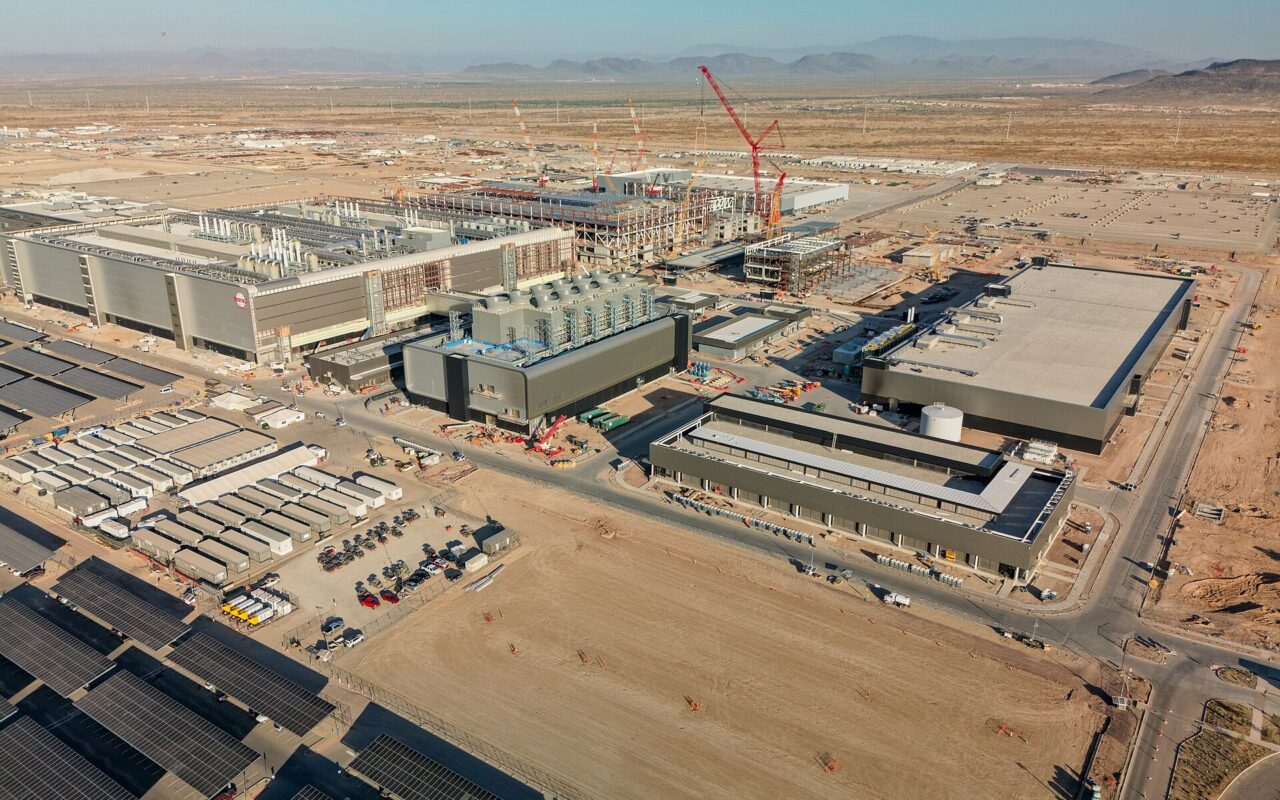
TSMC has applied to Texas’s JETI program for a 10 year school district property tax break on a site of just over 3,200 acres in Brazos County, KBTX reports. The project is an estimated $22.6 billion investment and as many as 2,099 direct jobs averaging $133,000 a year, for at least one fab making logic chips at 2 nanometers or more advanced. The parcels are under contract but not purchased, TSMC has not made a final investment decision, Sherman and Arizona are named as competing sites, and College Station ISD could vote as early as mid December. Power would come from Bryan Texas Utilities through an expanded Koppe Bridge substation.
Brandon’s Take: A 3,200 acre site is sized for a campus, not one building, and keeping Sherman and Arizona in play is how a buyer gets the best incentive package. From the tooling side, the number to watch is not the fab budget but how many fixture, machining and maintenance suppliers can stand up within driving distance before the first tool moves in. Our chip equipment analysis shows where that spending is already heading.
Applied Digital signs a $5.4 billion, 18 year lease for 150 MW
Applied Digital leased 150 megawatts of critical IT capacity to an unnamed investment grade hyperscaler for $5.4 billion over an 18 year base term, Reuters reported. With renewals out to 33 years the deal is worth about $12.7 billion, and delivery is expected to begin in the first half of 2028, subject to development milestones, utility arrangements and regulatory approvals. The CFO said the build will be financed through the company’s $5 billion equity partnership with Macquarie Asset Management, followed by project financing.
Brandon’s Take: The base term works out to about $300 million a year, or $2 million per megawatt per year, for capacity that is not due until 2028. The tenant is paying for energized megawatts, and the phrase “utility arrangements” is the real schedule; see how utilities now bill for it in our large load tariffs analysis.
A 1 GW data center pitch meets organized opposition on the Columbia
Residents of Dallesport, in Klickitat County, Washington, are organizing against a pitch for a one gigawatt data center on a nearly 300 acre site along the Columbia River, KUOW reports. The marketing deck from Cushman and Wakefield says it is in talks with the Bonneville Power Administration for up to 1 GW, and no permit applications have been filed. Opponents want local and statewide moratoriums, and one plans to push for a statewide pause in the coming legislative session.
Brandon’s Take: No developer, no permits, and already an organized opposition. The fight now starts before the site plan, which means every schedule built on cheap hydro power needs a year of community risk added up front. Our ballot measures analysis shows how that ends when it reaches voters.
coprod raises $6 million to sell robots as standard parts
Swiss startup coprod raised a $6 million pre seed round led by Founderful and Prototype Capital, with General Catalyst participating, SiliconANGLE reports. It makes interchangeable power, battery, sensor and motion modules that run on one EtherCAT control bus with a single C++ and Python API; the first components are due in early 2027, with production planned in Shenzhen and Texas. The company claims a design iteration costs $5,000 to $25,000 and takes a few months, against two to three years of custom electronics work today.
Brandon’s Take: This is the standard mold base idea applied to robots: buy the frame off the shelf and spend engineering hours on the part that makes money. It only works if robot builders accept a common bus and connector, the way toolmakers had to accept standard plate sizes.
IL moves into humanoid joint actuators rated at 600 Nm
Korean company IL said on November 24 it will supply XYNOVA humanoid joint actuators to domestic robot makers, integrators and automation companies, building on its exclusive deal for XYNOVA robot hands, Seoul Economic Daily reports. Each actuator combines the motor, reducer, encoder and driver in one module with peak torque of up to 600 newton meters.
Brandon’s Take: The joint actuator is where a humanoid’s cost and reliability live: a precision gearbox, a motor and an encoder held to tight tolerances in one housing. Whoever makes these at volume sets the robot’s price, which is why our humanoid shipping tracker watches suppliers as closely as robot brands.
Number of the day: $41 billion
The floor under Applied Digital’s total contracted base term lease revenue after Monday’s deal, or about $100 billion with renewals, with about 75% tied to investment grade customers, per Reuters.
Get The Benderson Brief in your inbox every weekday morning. Follow @bendersonmedia on X for the daily charts.

Brandon Henderson
Brandon Henderson founded Benderson Media. He has spent more than 15 years in custom injection molding, tooling and global manufacturing, working with factories in China and Vietnam on programs for aerospace and consumer brands. He is a journeyman tool and die maker, CPSP certified, and a Six Sigma Green Belt. Benderson Media covers AI in the real economy: the factories, chips, power and money behind it.
Get The Benderson Brief
Five stories on robots, chips, power and AI money every weekday morning. Free. One click to leave.
Every figure in this piece links to its source. See our editorial standards. Nothing here is investment advice.