Gritt Raises $34M to Send Robots Into Solar Construction
Here’s the complete Benderson Media article: —
Gritt Raises $34M to Send Robots Into Solar Construction
Gritt just came out of stealth with $34 million and one clear bet: the bottleneck in America’s solar buildout isn’t the panels, it’s the bodies. The company builds autonomous robots to physically construct large solar plants. Solar is the starting point. After that, Gritt wants everything else.
Why This Is Happening Now
The solar industry has a labor problem most investors aren’t talking about. According to projections from the Solar Energy Industries Association, the US solar workforce needs to more than triple in size by 2035 to hit national clean energy targets. That’s not a hiring gap. That’s a structural crisis dressed up as a staffing problem.
The Inflation Reduction Act committed roughly $370 billion to clean energy investment, according to the US Department of Energy. That money is moving. Projects are getting approved. But approved projects don’t build themselves. Developers are discovering fast that qualified installation crews are harder to find than financing.
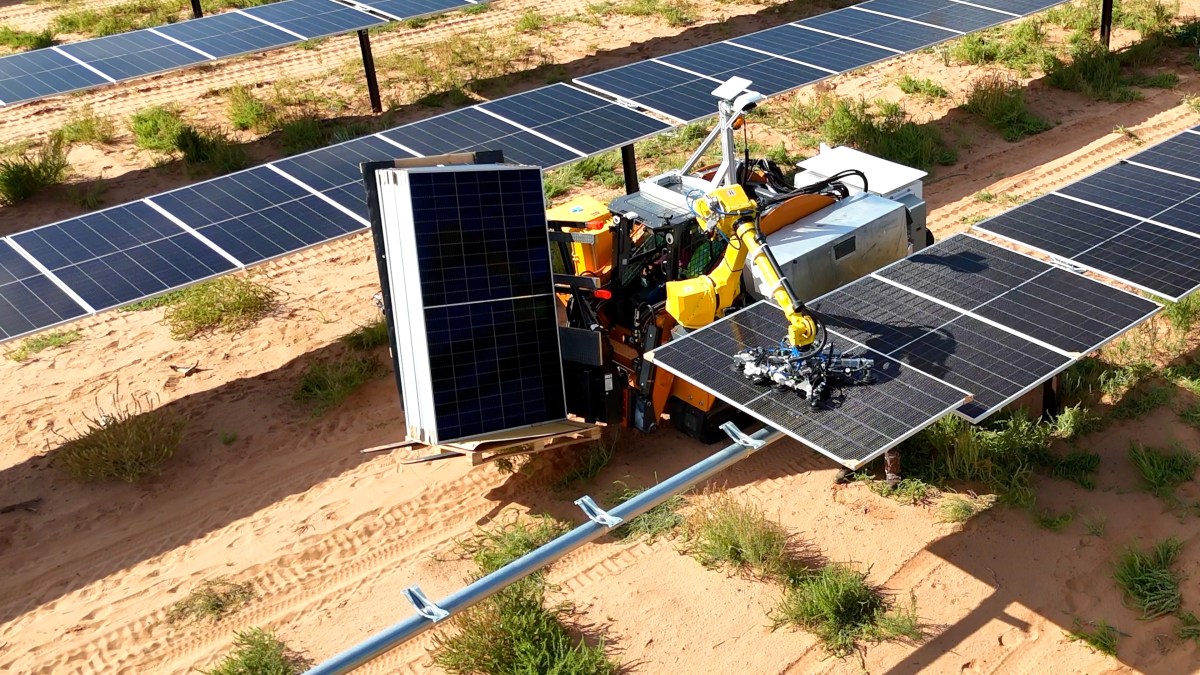
Gritt has been operating quietly since 2023. The company builds autonomous robots for the specific physical demands of large solar installations: moving and placing panels, mounting hardware, and running connections across outdoor sites with uneven terrain. The $34 million round will fund fleet expansion and commercial deployments across the US.
What Most People Are Getting Wrong About This
Everybody knows the solar panel story. According to BloombergNEF, solar module prices fell more than 90% between 2010 and 2024. Panels are practically a commodity. The margin in panels is thin and getting thinner.
Labor is the story nobody wants to tell. According to the Bureau of Labor Statistics, construction wages rose roughly 22% between 2020 and 2024. Qualified solar installers are even scarcer than general construction labor. On a large utility scale project, labor can represent 40 to 50 percent of total installation cost.
Here’s how I think about it: when a commodity gets cheap and the constraint shifts to something else, the company that solves the constraint captures the margin. Gritt is betting it can be that company. Not the panel company. The labor company.
The “then, everything else” part of Gritt’s pitch is where it gets serious. The robots being built for solar aren’t magic. They’re specialized. But the core software, the site mapping, route planning, and autonomous material handling all transfer to other construction verticals. Data centers. Warehouses. Commercial builds. Any sector where repetitive outdoor work is hard to staff.
I’ve watched plenty of robotics companies pitch “we’ll start in one vertical, then expand.” Most never leave the first one. But solar is a smart beachhead. Projects are large. Sites are relatively predictable. Schedules are set months in advance. It’s a better testing ground than residential construction or road work.
The size of the check matters too. $34 million out of stealth is not seed money. That kind of raise signals real commercial traction. You don’t pull that much capital from stealth on a slide deck alone.
Rich mindset vs. poor mindset: the average person sees “solar robot company” and files it under ESG. The sharp operator sees a construction automation company that picked one high demand vertical to prove out its technology, with a clear path to repeat the model in every sector where physical labor is the bottleneck. One’s a theme. The other’s a business model.
If you’re building content around construction tech or the clean energy buildout, tools like InVideo AI let you turn news like this into short video content fast, before the story cools off. The robotics and energy angle is pulling serious traction right now, and video is the fastest way to plant your flag in a space that moves this quickly.
What I Would Do With This Information
I’m not telling you to go find a way to buy Gritt shares. They’re private. What I’m saying is this: the people paying attention to who’s solving the labor problem in construction are going to see the next wave of value creation before everyone else does.
Watch what verticals Gritt expands into after solar. If they move into data center construction, the technology is production ready and the commercial market is large enough to absorb the pivot. Data center construction is running at a pace the industry hasn’t seen in decades, with hundreds of billions in committed spend from major cloud providers over the next five years.
If you’re a developer or operator in construction or clean energy, start piloting automation tools now. Not in 2028. Now. The companies that get comfortable with these systems in the next 18 months will have a cost structure that undercuts companies still running fully manual crews. That gap compounds.
If you’re building a small business that serves construction or energy clients, get your software stack right while prices are still reasonable. AppSumo has lifetime deals on the project management, research, and workflow tools that lean teams use to operate efficiently without paying monthly SaaS fees forever. Get your operations tight before you’re forced to compete on price.
The broader signal for anyone watching this space: Gritt’s raise means serious capital is starting to treat outdoor autonomous construction as an infrastructure problem, not a robotics research project. That framing shift is what matters most.
The Bottom Line
Gritt’s $34 million isn’t a solar bet. It’s a bet on who controls the cost of building things in America. Labor is the constraint. Robots are the answer. Solar is the proof of concept. If it works at scale, nothing keeps these machines on solar farms. The question isn’t whether this technology spreads to other construction sectors. The question is how fast.
Frequently Asked Questions
What does Gritt do exactly?
Gritt builds autonomous robots that physically construct utility scale solar plants. The robots handle the repetitive physical tasks of large solar installations, including panel placement, hardware mounting, and site connections. The company came out of stealth in 2026 after raising $34 million in private funding.
Why is solar construction a good market for robots?
Solar installation is labor intensive and qualified workers are in short supply. According to the Solar Energy Industries Association, the US solar workforce needs to more than triple in size by 2035. Large solar sites also offer predictable terrain and structured schedules, which makes them easier environments for autonomous systems to operate in compared to other construction settings.
Is Gritt publicly traded?
No. Gritt is a private company. The $34 million raise is a private funding round. There is no public stock available at this time. Investors can track the company’s progress and commercial expansion to gauge when a public offering might be on the horizon.
What other industries could Gritt’s robots expand into?
The company has signaled that solar is the starting point with broader construction markets as the longer term target. Data centers, warehouses, and commercial construction projects are the most likely next verticals. They share similar characteristics with large solar installations: outdoor work, repetitive tasks, and tight labor markets.
How does this affect the total cost of solar energy?
If Gritt’s robots can perform installation work at lower cost than manual crews, it would cut the labor portion of total solar project costs significantly. According to BloombergNEF, panel prices have already dropped over 90% in the last decade. A real reduction in installation labor costs would push total utility scale solar costs even lower.
Get stories like this in your inbox. Daily.
Free. No spam. The AI, tech, and finance stories that move money.