AI Generated Music Is Now Half of All Deezer Uploads
AI Generated Music Is Now Half of All Deezer Uploads
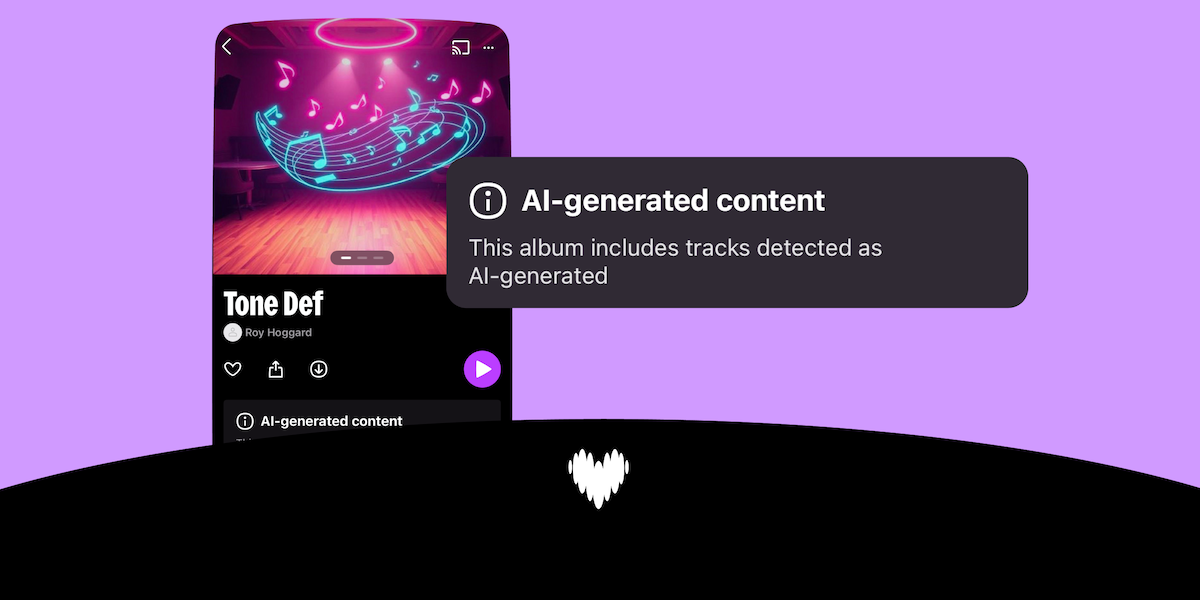
Half of everything Deezer receives each day is made by a machine. According to Deezer’s own data, more than 50% of daily uploads are AI generated tracks. The music industry has a flooding problem, and most artists don’t know what it’s costing them yet.
What Is Actually Happening
Deezer is a French music streaming platform with more than 10 million active users, according to the company. In late 2024, the platform went public with a stark warning: AI generated content was overwhelming their catalog at a rate they hadn’t anticipated. That number has continued to climb through 2025 and into 2026.
This isn’t a Deezer problem alone. According to the Recording Industry Association of America, streaming revenue now accounts for 84% of all recorded music revenue in the United States. That’s the whole pie. When AI tracks pour into that pie, every stream they capture is a stream a human artist doesn’t get paid for.
According to Billboard, major labels including Universal Music Group have been pushing streaming platforms to devalue or remove AI generated tracks that don’t represent real human artistry. The platforms are moving slowly. Meanwhile, the uploads keep coming.
The Real Money Problem Nobody Is Talking About
Most people miss this part. Streaming platforms pay royalties from a shared pool. Spotify, Apple Music, Deezer, they all use a pro rata model. Every stream on the platform earns a fraction of the total payout pool. When millions of AI generated tracks each pull a handful of streams, the whole pool gets diluted for everyone else.
Think about it this way. According to Spotify’s 2023 Loud and Clear transparency report, a track needs roughly 1,000 streams to earn about four dollars. That sounds reasonable until you realize an AI can generate and upload hundreds of tracks in the time it takes a human artist to finish one song. The math doesn’t favor the human.
I’ve been watching this space closely. The people who will lose the most aren’t the superstars. Taylor Swift doesn’t care about royalty dilution. The people who get hurt are the middle tier independent artists who built their entire income around streaming revenue. They’re now competing against machines that have zero studio costs, zero time investment, and no limits on output volume.
What should make any sharp operator pay attention is this: the tools creating this flood are cheap and getting cheaper. You can generate a decent sounding track with AI for less than a dollar today. If you want to take that audio further and turn it into short form video content for YouTube or social media, a tool like InVideo AI lets you build that content in minutes without any technical skill. The production cost for AI content is approaching zero. The race to the bottom has already started.
What This Means for You
If you’re a creator, don’t panic. Think like an owner, not a worker.
Pure streaming income was already a bad business model for anyone outside the top 1% of listened artists. Deezer’s announcement just confirms what smart music entrepreneurs have known for years. The money isn’t in the stream itself. It’s in the relationship with the audience.
Here’s what I would do. Stop treating streams as the product. Treat them as marketing. Every stream is a chance to pull someone into your world, your email list, your merch store, your live shows. AI can copy your sound. It cannot copy your story or your community.
Second, understand the tools your competition is using. If you’re not using AI to speed up your own workflow, someone else is using it to undercut you. That doesn’t mean abandoning your craft. It means getting smart about where you spend your time. Use AI for repetitive tasks. Save your real energy for the work only you can do.
Third, if you’re building a content business and not just a music career, cut your software overhead wherever you can. Platforms like AppSumo offer lifetime deals on tools that help creators run leaner. When production costs drop to near zero for your competition, your advantage has to come from speed, quality, and relationships, not raw output volume.
The platforms will eventually add harder filters on AI content. They have to. Royalty pool dilution hurts them too. But “eventually” could mean two more years. Don’t wait on platforms to protect your income.
The Bottom Line
Deezer just told the world that more than half of its daily uploads come from machines. That number will keep climbing. The independent artists who built their income on streaming royalties are standing in front of a rising flood. The ones who survive won’t be the ones who make the most music. They’ll be the ones who build the best communities. That’s the only moat AI cannot automate away.
Frequently Asked Questions
What percentage of Deezer uploads are AI generated?
According to Deezer, more than 50% of daily music uploads to the platform are AI generated. This figure reflects a sharp increase driven by the falling cost of AI music creation tools throughout 2024 and 2025.
Does AI generated music earn royalties on streaming platforms?
Yes, AI generated tracks currently earn royalties on most major streaming platforms under the same pro rata model as human made music. This dilutes the payout pool for human artists. Some platforms are exploring filters, but no major policy change has taken effect as of 2026.
How does AI generated music affect independent artists?
Independent artists are the most exposed to royalty dilution from AI music uploads. Unlike major label acts who earn through licensing and live shows, many independent musicians rely heavily on streaming income. When AI tracks flood the platform and pull streams, the per stream payout drops for everyone else.
Is AI generated music legal on Deezer and Spotify?
As of 2026, AI generated music is not banned on major platforms including Deezer and Spotify. Platforms have added policies against AI content that uses a real artist’s voice without permission, but purely synthetic music is generally permitted. This policy environment is actively shifting.
What can musicians do to compete with AI music flooding streaming platforms?
The strongest move is to treat streams as marketing rather than income. Build direct relationships through email lists, live events, and exclusive content. AI can replicate your sound but not your community or your personal story.
Get stories like this in your inbox. Daily.
Free. No spam. The AI, tech, and finance stories that move money.