Gritt Raises $34M to Make Robots Build Solar Farms
Here is the full article: — “`html
Gritt Raises $34M to Make Robots Build Solar Farms
Gritt just raised $34 million to replace human solar installation crews with
autonomous robots. Not someday. Right now. Most people will read this as a clean
energy story. It isn’t. It’s a cost compression story, and the money behind it
is larger than the headline suggests.
What Gritt Actually Did
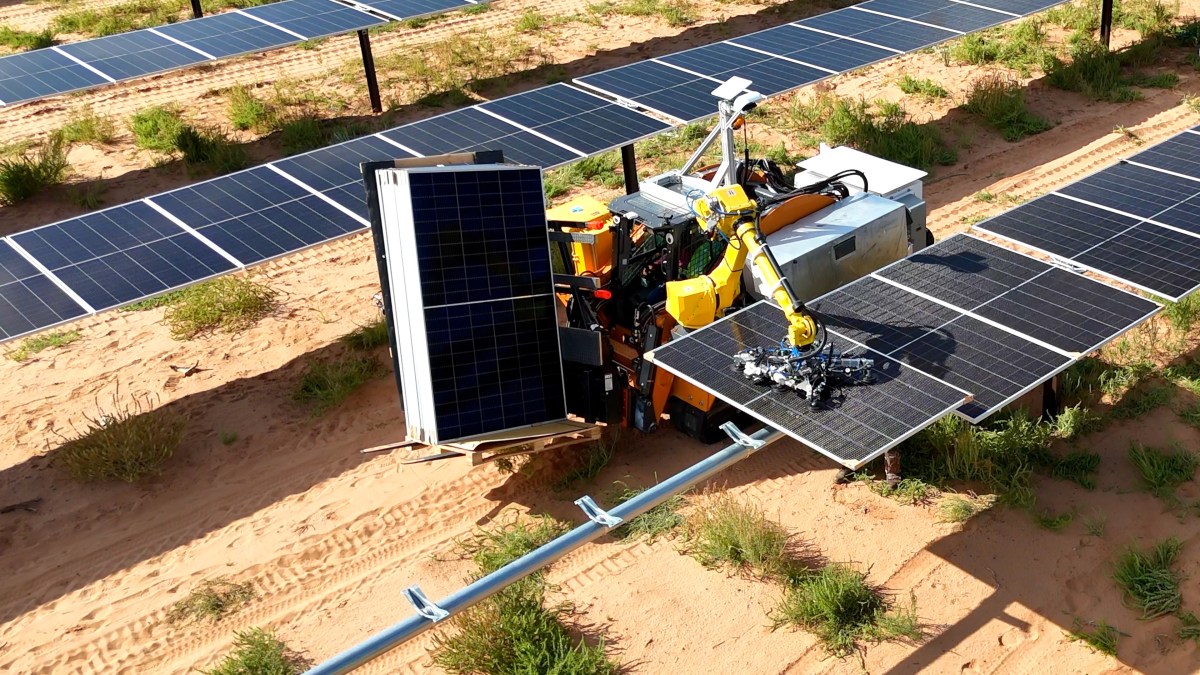
Gritt spent years in stealth building robots that handle the physical work of
solar farm construction. Moving panels, positioning racking systems, wiring
arrays. The tasks that eat the most labor hours on a utility-scale project. The
company exited stealth in 2026 with a $34 million round and a two-word promise
that tells you everything: “then, everything else.”
That phrase matters. Solar is the first market, not the only market. Gritt
chose solar farms because the conditions are nearly perfect for automation: flat
terrain, repetitive tasks, large open spaces, and predictable layouts. Prove the
robot on a solar farm and you have the foundation for any large-scale
construction site. Warehouses, infrastructure, commercial builds, roads. The
$34 million is not just for solar. It’s a bet on an entire category.
The timing is not random. According to the Solar Energy Industries
Association, the U.S. needs to install roughly one terawatt of solar capacity to
meet its clean energy targets. That’s tens of millions of panels. Human crews
can only move so fast. The labor constraint is real, and it is getting worse.
The Real Money Angle Everyone Is Missing
Here’s what I think most people get wrong about this story. They see “robots”
and they think “job cuts.” That’s the wrong frame. Think about the cost
structure of a solar project instead.
According to the National Renewable Energy Laboratory, labor accounts for a
significant share of the total installed cost of utility-scale solar, which
averages around $1.30 per watt. On a 100 megawatt project, that’s $130 million
in total spend. If Gritt’s robots cut physical installation labor costs by even
20 percent, you’re talking about millions of dollars saved per project. Every
project. Every developer. Every time.
That changes who builds more solar and how fast. Lower construction costs
mean more projects pencil out financially. More projects mean more grid
capacity. More grid capacity means cheaper electricity. The downstream effects
compound fast.
According to MarketsandMarkets, the global construction robotics market is
projected to reach $166 billion by 2030. Gritt is entering at the exact moment
when the infrastructure investment is accelerating and the labor pool isn’t
keeping up. According to the U.S. Bureau of Labor Statistics, solar installer
jobs are projected to grow 48 percent through 2033, one of the fastest rates
of any trade. Demand is outrunning supply. That’s the gap Gritt is filling.
The average person sees this and thinks “robots taking jobs.” The sharp
operator asks a different question: who captures the margin? The developers who
deploy Gritt’s robots first will finish projects faster and at lower cost. That
advantage compounds over years and dozens of projects. The operators who wait
will be competing against rivals who build cheaper and faster. That is how
wealth transfers happen in infrastructure. Not in a crash. In a slow,
compounding squeeze.
I keep coming back to the “then, everything else” framing. That is not
marketing copy. That is a roadmap. Gritt is building a general-purpose
construction robot platform that uses solar as the proving ground. Once the
software and hardware is battle-tested in the field, the addressable market
grows by an order of magnitude. This is the same playbook Amazon used with
books, Stripe used with online payments, and Tesla used with luxury EVs. Start
where the problem is cleanest. Then expand.
If you’re tracking this space and want to build an audience around it, the
window to become a go-to voice is open right now. Tools like InVideo AI let
you turn a news story or a market analysis like this one into video content in
minutes. The creators who document this transition early will own the audience
when it goes mainstream.
What I Would Do With This Information
If you’re an investor, watch who Gritt’s first utility customers are. The EPC
contractors and solar developers who adopt early will have a structural cost
advantage. That advantage shows up in their bids, their margins, and eventually
their valuations. Know who they are before the market does.
If you’re a developer or builder in the clean energy space, now is the time
to start building your brand around the shift to automated construction. The
companies that document this transition and build an audience now will have
massive reach when the technology goes mainstream. You don’t need a big
production budget to do it. AppSumo regularly features lifetime deals on
content creation and marketing tools that let small operators punch above their
weight without burning cash every month.
If you’re a construction company in any adjacent market, pay attention to
what Gritt proves on solar farms. The robot they refine on solar will come for
your category. That’s not a threat. It’s a forecast. The time to understand the
technology is before it’s competing against you, not after.
Watch the “then, everything else” expansion roadmap closely. The sectors Gritt
targets after solar will tell you where the next cost compression wave hits.
Real estate development timelines. Grid expansion timelines. Commercial
construction margins. Each of those markets is large enough to build a
significant company on its own.
The Bottom Line
Gritt isn’t building a solar company. They’re building the operating system
for physical construction. Solar is chapter one. The $34 million gives them the
runway to prove the model at scale and start writing chapter two. If the
platform works, this is one of the most consequential construction companies of
the next decade. The people who understand that now won’t need to catch up
later.
Frequently Asked Questions
What is Gritt and what problem does it solve?
Gritt is a robotics startup that exited stealth in 2026 with $34 million in
funding. They build autonomous robots that handle the physical labor of solar
farm construction, including panel placement, racking installation, and array
wiring. Their goal is to reduce the labor cost and time required to build
utility-scale solar projects.
Why are solar construction robots a big deal right now?
According to the U.S. Bureau of Labor Statistics, demand for solar installers
is growing 48 percent through 2033, but the labor supply can’t keep up. Robots
can work at a consistent pace regardless of crew availability. That removes one
of the main bottlenecks in scaling up solar deployment across the country.
What does “then, everything else” mean in Gritt’s announcement?
It signals that Gritt views solar farm construction as a starting point, not
a final destination. The robots they build and refine on solar projects are
designed to work in other construction environments over time. Solar offers ideal
conditions for proving the technology before they move into harder and more
complex job sites.
How large is the construction robotics market?
According to MarketsandMarkets, the global construction robotics market is
projected to reach $166 billion by 2030. Gritt is entering at a point when
both the clean energy buildout and general construction automation are
accelerating, which positions the company at the intersection of two large
capital flows.
Does this mean solar construction jobs will disappear?
Not immediately and probably not entirely. Demand for solar capacity is
growing fast enough that automation will mostly absorb labor shortfalls rather
than eliminate existing workers. The more important question is which roles
change and which new roles get created around maintaining, operating, and
managing robotic construction fleets.
“`
Get stories like this in your inbox. Daily.
Free. No spam. The AI, tech, and finance stories that move money.