The Benderson Brief: IEA sees data center power use doubling to 1,000 TWh by 2030
The IEA says data center electricity use doubles to 1,000 TWh by 2030. Plus Alphabet's $130.5 billion in unstarted data center leases, Intel's first outside 18A customer, MegaRobo's $200 million lab robotics round and KEENON's humanoid cleaning crew.

The IEA just put a number on the AI power problem, Alphabet showed how much of its buildout still sits off the balance sheet, and Intel finally has an outside customer for its newest node. Five stories that matter on the ground this Friday.
IEA: data center power use doubles to 1,000 TWh by 2030
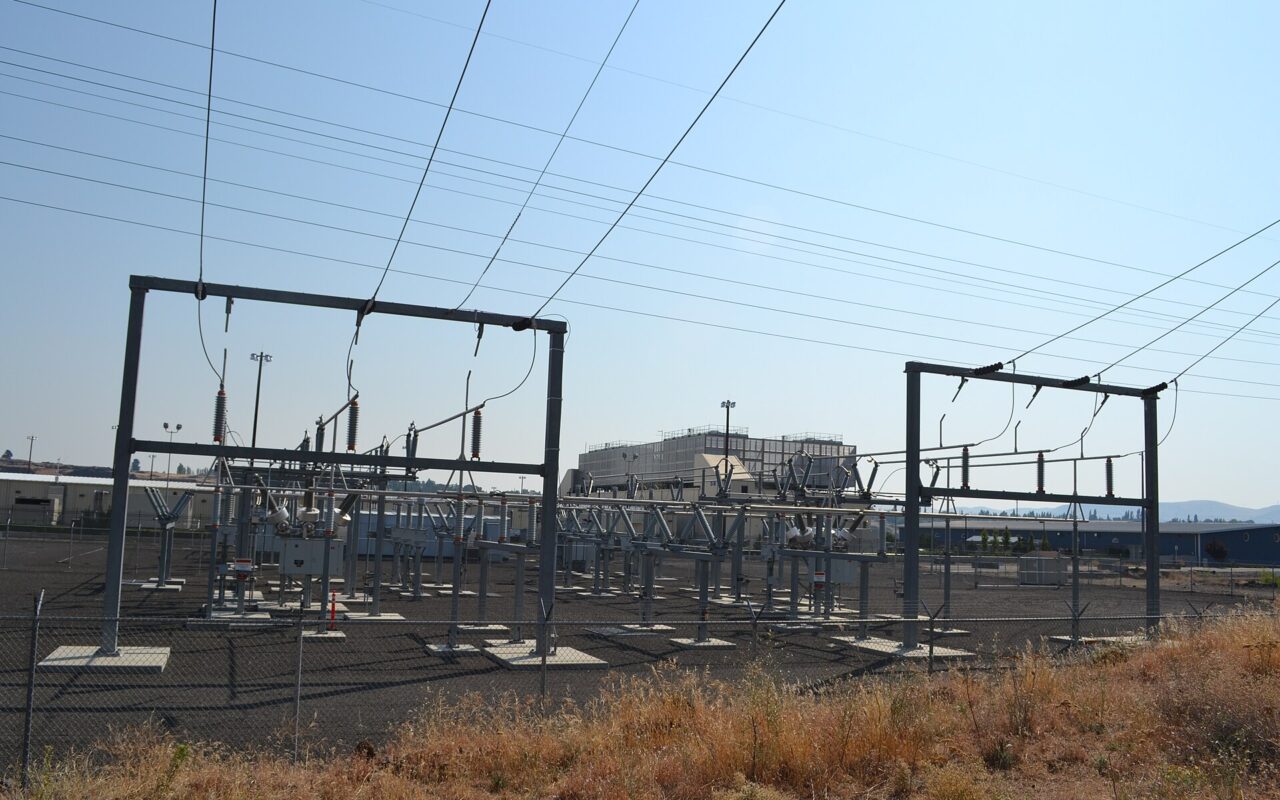
The International Energy Agency’s World Energy Outlook 2026 says data center electricity use doubles to 1,000 terawatt hours by 2030 in its stated policies scenario, and that the AI boom is exposing limits in grids, supply chains and, in some places, public acceptance. Bloomberg’s read of the report, republished by Energy Connects, adds that fewer than 100 major AI projects would need 50 gigawatts combined, roughly the peak demand of Great Britain, and that the IEA now tracks 93 AI campuses by satellite, showing a tenfold jump in capacity in two years. The IEA expects about $4 trillion of data center investment globally by 2030, after $565 billion in 2025.
Brandon’s Take: 50 GW is not a software number. It is transformers, breakers, turbines and switchgear, each with a factory queue measured in years, which is why we priced that queue per kilowatt in our gas turbine analysis and why utilities now push the risk onto campuses through large load tariffs.
Alphabet’s new bond filing shows $130.5 billion of data center leases still waiting
Alphabet filed a preliminary prospectus supplement on November 19 for a Canadian dollar note sale in five series, one floating rate and four fixed rate, with sizes and coupons still blank. The filing says that as of September 30 Alphabet had signed leases, primarily related to data centers, that have not yet commenced, with future lease payments of $130.5 billion not yet recorded on its balance sheet. Proceeds go to general corporate purposes, which may include repaying debt.
Brandon’s Take: Quarterly capex understates the commitment. Signed but unstarted leases are buildings someone still has to pour, wire and cool, so do not expect lead times on electrical gear to ease just because one quarter’s spending looks flat.
Intel wins Microsoft for EMIB packaging and an unnamed 18A customer
Microsoft is the first company to announce use of Intel Foundry’s EMIB advanced packaging for its own Azure silicon, under a long term agreement that also confirms multiyear Xeon supply including next generation Diamond Rapids server chips, Intel said on November 18. Separately, CEO Lip-Bu Tan said Intel “just signed the first customer” for 18A without naming it; Intel’s technology chief later said the deal covers the upgraded 18A-P node, and 18A yields have reportedly reached 70%, TrendForce reported citing CNBC and Crypto Briefing.
Brandon’s Take: Packaging has been the choke point for AI chips, so a second source for it may matter more than the wafer win. A reported yield with no named customer is a promise, not a ramp; watch for the name and a volume date. Our chip equipment analysis shows where the US fab spending is already landing.
MegaRobo raises nearly $200 million for robot run labs
Beijing based MegaRobo Technologies said Thursday it raised nearly $200 million, with an Omani state backed fund joining investors including CMB International, Asia Investment Capital, Granite Asia and Sinovation Ventures, the Oman Observer reported. Its Megalaxy Lab platform lets researchers and AI agents run programmable experiments on automated equipment for more than 200 customers, and the company has raised about $600 million in earlier rounds.
Brandon’s Take: This is physical AI that gets paid today: robots doing repetitive lab work where every run produces data. The test is the same as any automation cell on a shop floor, repeatability and uptime, not the demo video.
KEENON pairs a humanoid with floor scrubbers instead of replacing them
At the ISSA cleaning show in Las Vegas, KEENON Robotics showed its XMAN-R1 humanoid clearing clutter and tidying tabletops so dedicated machines such as the KLEENBOT C40 can sweep and scrub the floor, according to the company’s release via PR Newswire. KEENON says it has shipped more than 100,000 service robots and deployed them in more than 70 countries and regions.
Brandon’s Take: That split is the honest version of the humanoid pitch. Purpose built machines do the volume work and the humanoid handles the odd jobs no fixture was designed for, the same pattern we found comparing who is actually shipping humanoids.
Number of the day
$130.5 billion. Future payments on Alphabet data center leases that are signed but not started, and not yet on its balance sheet, per its November 19 SEC filing.
Get The Benderson Brief in your inbox every weekday morning. Follow @bendersonmedia on X for the daily charts.

Brandon Henderson
Brandon Henderson founded Benderson Media. He has spent more than 15 years in custom injection molding, tooling and global manufacturing, working with factories in China and Vietnam on programs for aerospace and consumer brands. He is a journeyman tool and die maker, CPSP certified, and a Six Sigma Green Belt. Benderson Media covers AI in the real economy: the factories, chips, power and money behind it.
Get The Benderson Brief
Five stories on robots, chips, power and AI money every weekday morning. Free. One click to leave.
Every figure in this piece links to its source. See our editorial standards. Nothing here is investment advice.