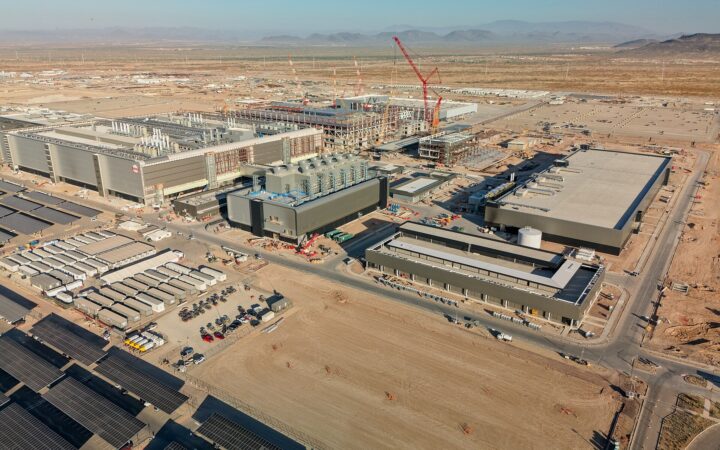
Data Center Transformer Shortage 2026: Why Transformers and Switchgear Are the Bottleneck
Generator step up transformers now wait over 160 weeks and data center switchboards 52 to 84 weeks. Where the gear sits in a data center, why factories cannot catch up, what Executive Order 14421 changes, and what buyers should ask.

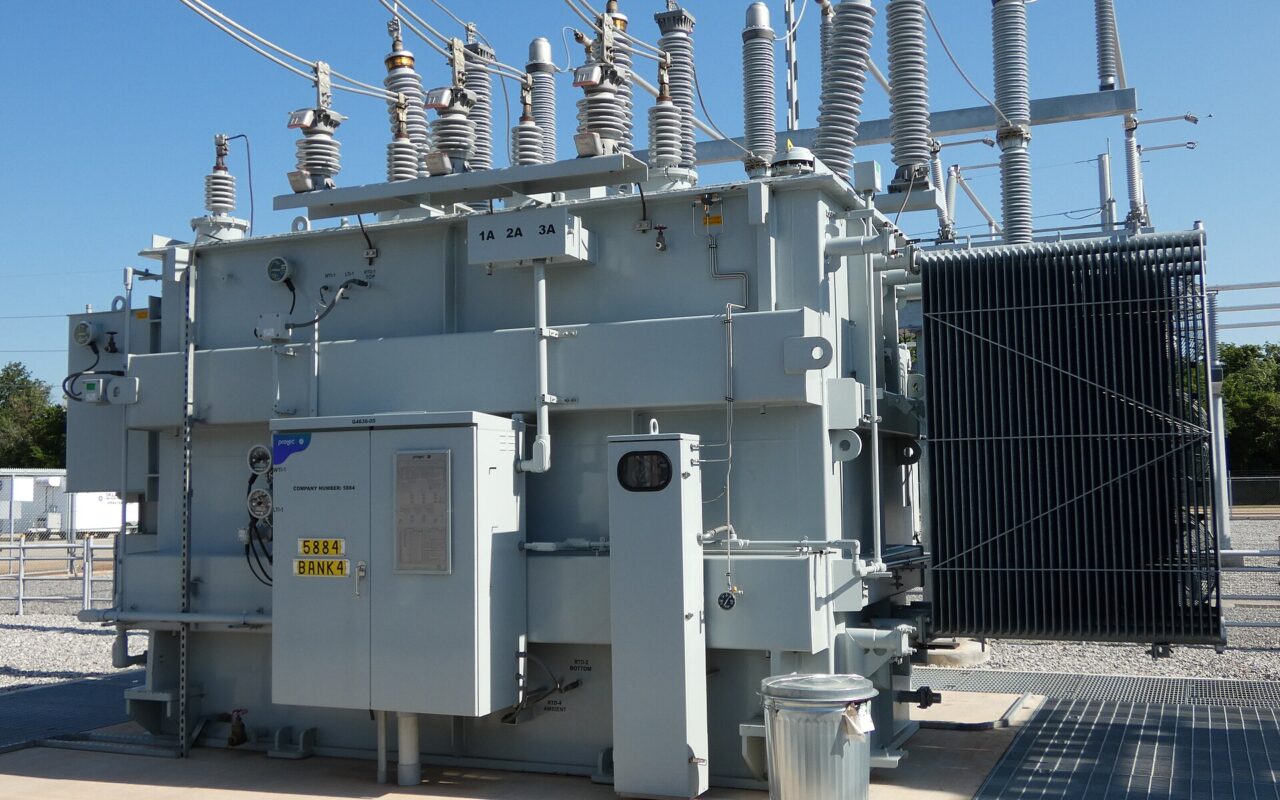
Transformers and switchgear are the bottleneck for data center power because every megawatt has to pass through them several times between the transmission line and the server rack, and the factories that build them were sized for a grid that barely grew for two decades. In 2026, generator step up transformers wait more than 160 weeks, high voltage circuit breakers about 125 weeks, and even the padmount units a hyperscale campus needs run 40 weeks or more. Data centers now want up to 40% of the whole US electrical equipment market, up from just under 2% in 2020. A building can go up in 18 months. The gear that feeds it often cannot.
This guide explains where transformers and switchgear sit in a data center, how long each piece takes today, why factories cannot simply make more, what the August 2026 executive order on Chinese grid equipment changes, which new plants come online and when, and what a buyer should ask before signing a schedule. It is written for engineers, developers, procurement teams and investors who want the physical constraint, not the headline.
The short answer in numbers
Most articles on this topic quote one lead time. That hides the real problem, because each class of equipment has its own queue. The table below pulls the latest published figures together, with the date and source of each.
| Equipment | Where it sits | Latest lead time | Price change | Source and date |
|---|---|---|---|---|
| Generator step up (GSU) transformer | Power plant to grid, and on site generation | Over 160 weeks (Q1 2026), up from 143 weeks in 2024 | Up 45% since 2019 | Wood Mackenzie via Reuters (Jul 2026); POWER |
| Substation power transformer (50 to 100+ MVA) | Campus substation, high voltage to medium voltage | 128 weeks average (Q2 2025 survey) | Up 77% since 2019 | Wood Mackenzie via POWER |
| High voltage circuit breaker | Campus substation | 125 weeks (H2 2025), up from 77 weeks in 2023 | Circuit breakers up 47% since 2021 | Wood Mackenzie via Reuters; POWER |
| Medium voltage switchgear | Distributes 11 to 34.5 kV power around the campus | 44 weeks published average; data center specs approaching two to three years in contractor quotes | Up 50% since 2021 | POWER; Giga Energy (Aug 2026) |
| Three phase padmount transformer (about 2.5 to 3 MVA) | Beside each data hall pod, medium voltage to 415 V | 40+ weeks in EPC quotes | Demand up 77% since 2019 | Giga Energy |
| Low voltage switchboards | Inside the building, ahead of UPS and PDUs | About 52 weeks standard; power circuit breaker switchboards past 84 weeks | Not published | Giga Energy |
| Distribution transformers, all classes blended | Mostly utility feeders and homes | About 30 weeks, down from a peak above 100 weeks in 2023 | Some classes up as much as 95% since 2019 | Wood Mackenzie via Giga Energy; POWER |
Two things stand out. First, the blended distribution transformer number looks like the problem is fading, but it mixes small pole top units for houses with the three phase padmount units data centers buy. Giga Energy, a supplier, points out that padmount demand grew 77% since 2019 while pole top demand grew only 30%, so the average tells a data center buyer almost nothing. Second, switchgear is a separate queue. A transformer that arrives on time does not energize anything if the switchboard beside it is still 30 weeks out.
Wood Mackenzie’s own shortage estimates have moved too. A 2025 analysis reported by POWER modeled a 30% shortfall for power transformers and 10% for distribution units. Its August 31, 2026 release puts the 2026 shortage at 15% for power transformers and 8% for substations, and says the 100 MVA and up segment is where it is most acute.
Where transformers and switchgear sit in a data center
The reason one campus needs so much of this gear is that power is stepped down and switched several times. SemiAnalysis laid out the standard chain in its data center electrical anatomy (October 2024), and it still describes most US builds today.
| Stage | Voltage | Main equipment | Typical size | Why it is slow |
|---|---|---|---|---|
| 1. Campus substation | 138, 230 or 345 kV in, 11 to 33 kV out | Power transformers, high voltage breakers | 50 to 100 MVA each, usually N+1 | Custom built for each transmission line; long factory test; huge cores of grain oriented electrical steel |
| 2. Medium voltage distribution | 11, 25 or 33 kV | Medium voltage switchgear lineups | Feeds every data hall from two sources | Same breaker and enclosure capacity is shared with utilities and factories |
| 3. Pod transformers | Medium voltage to 415 V | Padmount or unit substation transformers | 2.5 to 3 MVA, one per pod | Highest growth class; hyperscale demand forecast to rise about six times by 2030 |
| 4. Low voltage switching and backup | 415 V | Low voltage switchgear, automatic transfer switches, a matching generator per transformer | 2 to 3 MW per generator | Power circuit breaker switchboards now past 84 weeks |
| 5. Ride through and rack feed | 415 V AC, then 54 V DC in the rack | UPS with batteries (usually 2N), PDUs, busway | 5 to 10 minutes of battery | Batteries and power electronics compete with grid storage |
Stage 1 is the one most outlets mean when they say “transformer shortage.” Stages 2 through 4 are where data centers differ from every other customer, because the count of units scales with megawatts. Wood Mackenzie’s April 2026 study forecasts hyperscale demand alone growing from 1,573 padmount transformers in 2025 to 9,395 in 2030, medium voltage switchgear and automatic transfer switches each from 786 to 4,698 units, PDUs from 1,966 to 11,745, and panel boards from 5,111 to more than 30,500.
What a 100 MW campus has to buy
Here is a rough count for 100 MW of IT load, using the sizing rules SemiAnalysis describes: 2.5 MVA pods, one generator and one transformer per pod, N+1 at the substation and 2N on UPS. This is a Benderson Media estimate to show scale, not a design. Real campuses vary with pod size, redundancy tier and voltage.
| Item | Approximate count | Lead time band today |
|---|---|---|
| Substation power transformers (50 to 100 MVA) | 3 (two running plus one spare) | About 2.5 years or more |
| High voltage breakers | Several per substation bay | About 2.4 years |
| Pod transformers (2.5 MVA) | About 40 to 44 | 40+ weeks |
| Generators (2 to 3 MW) | About 40 to 44 | Separate queue; see our gas turbine piece |
| Low voltage switchboards with transfer switches | About 40 | 52 to 84+ weeks |
| UPS systems (2N) | About 80 | Varies by vendor |
The math: 100 MW divided by 2.5 MW pods is 40 pods. Operators often add about 10% for power factor, which pushes some designs to 44. The point is not the exact number. It is that one 100 MW building needs dozens of the exact units every other data center, factory and utility is also ordering, and a few very large ones that are built one at a time.
Why factories cannot just make more
Transformer demand did not drift up. It jumped. Wood Mackenzie data cited by pv magazine USA shows generator step up demand up 274% from 2019 to 2025 and substation transformer demand up 116%. Supply cannot follow that fast for five reasons.
- The core steel is scarce. Transformer cores use grain oriented electrical steel (GOES), and there are few producers. SemiAnalysis and pv magazine both name it as the main material limit, along with copper for the windings.
- Large units are engineered to order. High voltage transformers are custom made for each line’s characteristics, so there is no shelf stock to pull from.
- Domestic supply covers a small share. tEDmag, citing the Department of Energy, reports only about 20% of US transformer demand is met by domestic supply.
- Tariffs raised the cost of the imports that fill the gap. Since August 18, 2025, transformers containing non US steel and aluminum pay a 50% Section 232 tariff on the value of that content, per tEDmag. POWER reports copper now faces tariffs of up to 50%. Those duties hit domestic builders too, because they import cores and steel.
- The industry was built for low growth. POWER describes transformer manufacturing as historically low margin and capital intensive. New plants take two to three years to build, and the first wave of US expansions lands in 2027 and 2028.
Importers filled part of the gap. Tom’s Hardware, citing Wood Mackenzie data reported by Bloomberg, says imports of high power transformers from China rose from fewer than 1,500 units in 2022 to more than 8,000 in 2025 through October. One California utility, Roseville Electric, told Reuters that about three fourths of its transformer bids now come from foreign suppliers such as China and South Korea, and that domestic suppliers usually quote longer lead times and higher prices.
The August 2026 executive order changes the import math
This is the part most top ranking pages leave out. On August 26, 2026, the President signed Executive Order 14421, which declares a national emergency to secure the US bulk power system. It was published in the Federal Register on August 31. Some coverage, including Wood Mackenzie’s release, calls it Executive Order 14420; the Federal Register lists it as 14421.
According to Orrick’s summary, the order lets the Secretary of Energy prohibit buying, importing or installing bulk power system equipment from a “covered foreign entity,” which today most notably means China and Russia, where the equipment poses undue risk. The definition is broad: substation transformers, reactors, capacitors, grid connected inverters, battery storage, generators and industrial control systems, possibly including software and firmware. Equipment acquired before August 26, 2026 is not banned, but DOE may later set conditions on it. DOE must issue the implementing rules by December 24, 2026, and may publish a list of prequalified equipment and vendors that are exempt.
Wood Mackenzie says the order could affect a market of more than $22 billion in imports since 2025, and that China accounts for almost all bulk power imports in that period. Its supply chain analyst Ben Boucher said utilities have largely avoided Chinese suppliers already, so “a bulk of the impacts will be centered around data centers who have been using Chinese units to minimize lead times,” especially in the 100 MVA and up class. He also flagged the open question: it is still unclear how the bulk power definition applies to data center loads.
For a buyer, the practical reading is simple. Any campus counting on an imported Chinese substation transformer to beat the domestic queue should treat that unit as at risk until DOE’s rule is out, and should write schedule relief for a change in law into the contract.
Who is adding capacity, and when it lands
Manufacturers are spending, and their order books show why. Eaton reported on November 3 that its Electrical Americas twelve month rolling orders were up 39% organically and backlog up 33% year over year, while Electrical Global backlog was up 121% (Eaton Q3 2026 release). Siemens Energy said on November 11 that Grid Technologies orders rose 14.5% to €24.0 billion in fiscal 2026, US orders rose 70.8% to €27.7 billion group wide, and backlog hit a record €164 billion (Siemens Energy release). GE Vernova, which owns Prolec GE, ended the third quarter with $197 billion of backlog and said equipment growth at Power and Electrification drove it (GE Vernova Q3 2026 release).
| Manufacturer | Project | Investment | What it builds | Expected start |
|---|---|---|---|---|
| Hitachi Energy | South Boston, Virginia | $457 million, about 825 jobs | Large power transformers; billed as the largest such US plant | Ground broken June 29, 2026; 2028 per POWER |
| Hitachi Energy | Varennes, Quebec | CA$270 million | Nearly triples large power transformer output | Under way |
| Siemens Energy | Charlotte, North Carolina | $150 million | Its first US large power transformer plant | Early 2027 |
| Eaton | South Carolina | $340 million | Three phase transformers | 2027 |
| Prolec GE | Goldsboro, North Carolina, plus Louisiana and Mexico | More than $300 million | Medium power and padmount units | Phased |
| Virginia Transformer | Georgia | $40 million | Raises output 70% | Phased |
| HD Hyundai Electric | Alabama | Not stated | Aims to raise US production 30% by 2026 | 2026 |
Sources: Hitachi Energy release (June 29, 2026) and POWER for the rest. POWER counts nearly $2 billion committed to new or expanded transformer capacity since 2023, while Wood Mackenzie still expects the padmount three phase shortage to get worse because of data centers, factories and EV charging.
Read the dates against your schedule. A campus that needs a large power transformer energized in 2028 is ordering today from factories that mostly exist today. The new plants help projects that energize in 2029 and later.
Is the shortage real?
Not everyone agrees it is a pure capacity problem. POWER interviewed Patrick Tarver, owner of broker Bolt Electrical, who said “there is not a shortage” and that once drawings are approved he can deliver a standard substation power transformer in 12 to 14 months in any voltage class. His view is that utility and EPC vendor lists, not factories, are the bottleneck. POWER notes his claims are hard to verify, since large power transformers are custom, heavily regulated assets with real testing, cybersecurity and domestic content rules.
The fair reading: approved vendor lists and late specifications do add months, and buyers willing to qualify new suppliers can find capacity. But the executive order now narrows the pool of foreign suppliers that made the fastest quotes possible, and the order books at Eaton, Siemens Energy and GE Vernova do not look like an industry with idle lines.
What could replace the transformer
The longer term answer is fewer conversion steps. NVIDIA’s 800 VDC architecture aims to support 1 MW racks starting in 2027, with full scale production timed to its Kyber rack systems. NVIDIA says moving from 415 VAC to 800 VDC carries 85% more power through the same conductor and cuts copper by 45%, and that it is studying both traditional transformer based and solid state transformer (SST) designs.
Tesla’s Powercore, announced at RE+ in November 2026, is one such product. ESS News reports it combines a solid state transformer, switchgear and inverter in one enclosure, rated up to 7.4 MW (9 MVA) at 34.5 kV, takes feeder power and outputs 800 V DC to servers in one step, and is planned for US manufacture with operation in 2027. Eaton bought SST developer Resilient Power Systems in August 2025 for $86 million, according to its Q3 release.
Two cautions. Solid state units replace the pod transformer and some switchgear inside the fence. They do not replace the high voltage substation transformer that takes power off a 230 kV line, which is where the longest waits are. And they are new: a buyer is trading a supply chain risk for a field reliability risk until there are years of operating data.
What buyers should ask before signing a schedule
If you are a developer, EPC, tenant or utility planner, these questions separate a real energization date from a hopeful one.
- Is the date a factory slot or an estimate? Ask for the production slot, the factory, and the test bay date in writing. Wood Mackenzie says manufacturers have come back to customers with year old purchase orders and imposed 20% price increases to hold delivery dates.
- Which lead time are you quoting? Get separate dates for the substation transformer, high voltage breakers, medium voltage switchgear, pod transformers and low voltage switchboards. The longest one sets your date.
- Where is the core made, and by whom? Under EO 14421 and Section 232, country of origin of the transformer and its core steel now affects both cost and whether you can install it.
- Is the unit already on the books before August 26, 2026? Equipment acquired before that date is outside the ban, though DOE can still set conditions on operating it.
- Can we standardize? Pods sized to common 2.5 or 3 MVA units and 3 MW generators are easier to buy than custom sizes, as SemiAnalysis notes. Standard specs also let you swap between projects.
- What happens if the date moves? Write change in law and supply delay relief into the contract. Orrick recommends express schedule relief, since offtake contracts rarely give it.
- Is refurbishment or a spare an option? Utilities told Reuters they are refurbishing older units and buying equipment five years ahead. A refurbished spare can protect an N+1 design while the new unit is in queue.
- Who pays the prepayment? Reservation fees and upfront payments now buy slots. Know whether the tenant, developer or utility carries that cash.
Brandon’s Take
From the tooling side, this looks like every capacity crunch in custom manufacturing: the bottleneck is queue time, not machine time. A large power transformer is closer to a one off mold than to a stamped part. It is engineered to the order, built around a core that takes specialized material and skilled hands, and tested before it ships. You cannot add shifts to fix that. You add plants, and plants take years. That is why the projects that win are the ones that freeze specs early, standardize everything below the substation, and hold slots before the lease is signed. The executive order raises the stakes: the cheap, fast imported unit that bailed out many 2025 schedules is now a compliance question. If I were planning a 2028 campus, I would assume the substation transformer is the critical path and design the rest of the site around its date.
This article is education only and is not investment advice. Company results are cited to explain the supply chain, not to recommend any security.
FAQ
Why is there a transformer shortage for data centers?
Demand jumped faster than factories can grow. Generator step up demand rose 274% and substation transformer demand 116% from 2019 to 2025, according to Wood Mackenzie, while supply is limited by grain oriented electrical steel, custom engineering for large units, and a domestic industry that covers only about 20% of US demand.
How long are transformer lead times in 2026?
Generator step up transformers passed 160 weeks in Q1 2026. Substation power transformers averaged 128 weeks in Wood Mackenzie’s 2025 survey. Three phase padmount units for data centers run 40 weeks or more in contractor quotes, even though the blended distribution transformer average is about 30 weeks.
Is switchgear also a bottleneck?
Yes. Switchgear averaged 44 weeks in Wood Mackenzie’s survey, high voltage breakers reached 125 weeks in late 2025, and contractors report data center grade switchboards at 52 to 84 weeks or more. Wood Mackenzie expects breakers and switchgear to face larger deficits as data center construction grows.
Does the 2026 executive order ban Chinese transformers?
Not yet by itself. Executive Order 14421, signed August 26, 2026, lets the Department of Energy prohibit bulk power system equipment from covered foreign entities such as China. DOE must issue rules by December 24, 2026. Wood Mackenzie says the biggest effect will be on data centers that used Chinese 100 MVA and larger units to shorten lead times.
Will solid state transformers fix the shortage?
Only part of it, and not before 2027. Products like Tesla’s Powercore and NVIDIA’s 800 VDC designs can replace pod transformers and some switchgear inside a data center. They do not replace the high voltage substation transformers with the longest waits.
When will transformer supply catch up?
New US plants from Hitachi Energy, Siemens Energy, Eaton and Prolec GE start in 2027 and 2028. Wood Mackenzie still expects extended lead times and high prices to persist without further investment, and projects data center electrical equipment spending to grow from $20 billion to $65 billion by 2030.
Sources
- Wood Mackenzie: US data center electrical equipment market surges to $65B (Apr 2026)
- Wood Mackenzie: US executive order banning Chinese bulk power equipment set to worsen transformer shortage (Aug 31, 2026)
- Federal Register: Executive Order 14421 (signed Aug 26, 2026)
- Orrick: Executive Order Restricts US Imports of Certain Bulk Power System Equipment (Sept 2026)
- Reuters via ColoradoBiz: US power companies face long waits for transformers (Jul 9, 2026)
- POWER: Transformers in 2026: Shortage, Scramble, or Self Inflicted Crisis? (Jan 2, 2026)
- pv magazine USA: Transformer lead times extend to four years (May 11, 2026)
- Tom’s Hardware: Half of planned US data center builds delayed or canceled (Apr 3, 2026)
- Giga Energy: The constraints that cause lead time delays for data centers (Aug 13, 2026)
- tEDmag: Trump Administration Increases Tariffs on Certain Transformers
- SemiAnalysis: Datacenter Anatomy Part 1: Electrical (Oct 14, 2024)
- Eaton third quarter 2026 results via Business Wire (Nov 3, 2026)
- Siemens Energy fiscal 2026 results (Nov 11, 2026)
- GE Vernova third quarter 2026 results (Oct 28, 2026)
- Hitachi Energy: South Boston groundbreaking (Jun 29, 2026)
- ESS News: Tesla unveils Powercore (Nov 19, 2026)
- NVIDIA: 800 V HVDC architecture for AI factories (May 20, 2025)
Related on Benderson Media: Data center large load tariffs 2026 and the gas turbine shortage.
Get The Benderson Brief in your inbox every weekday morning. Follow @bendersonmedia on X for the daily charts.

Brandon Henderson
Brandon Henderson founded Benderson Media. He has spent more than 15 years in custom injection molding, tooling and global manufacturing, working with factories in China and Vietnam on programs for aerospace and consumer brands. He is a journeyman tool and die maker, CPSP certified, and a Six Sigma Green Belt. Benderson Media covers AI in the real economy: the factories, chips, power and money behind it.
Get The Benderson Brief
Five stories on robots, chips, power and AI money every weekday morning. Free. One click to leave.
Every figure in this piece links to its source. See our editorial standards. Nothing here is investment advice.