The Benderson Brief: Data center power demand grows 19% a year while the grid grows 2%
Data center power demand has grown 19% a year against 2% for the grid. Plus TSMC and the 16nm rule, Mitsubishi Electric's US factories, a $60.7 billion robotics funding year and Atlas on wheels.


Good morning. The AI buildout has a pacing problem: the grid grows about one tenth as fast as the data centers plugging into it. Here are five stories from the weekend that matter on the ground.
Data center power demand grows 19% a year. The grid grows 2%.
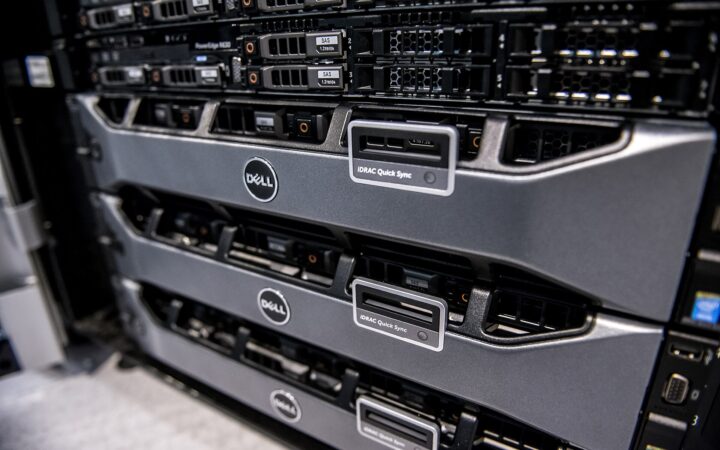
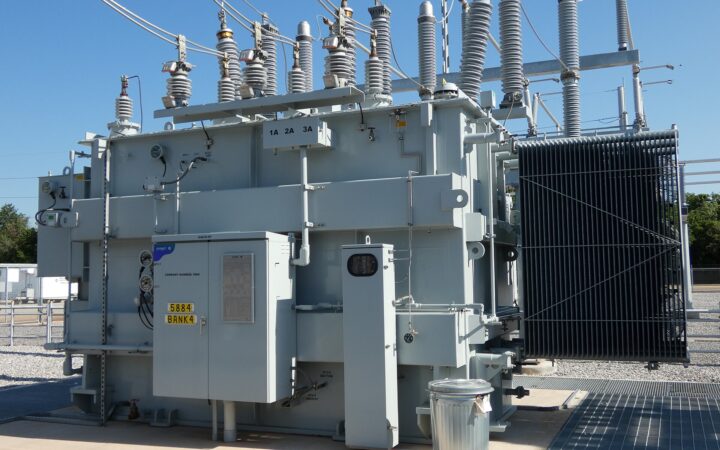
Since 2000, power to data centers has risen an average of 19% a year while US grid capacity has grown about 2% a year, according to an analysis by insurance broker Howden reported by Fortune. Data centers took about 5% of US grid capacity in 2025; holding that share through 2030 would mean sourcing up to 58% of their power off the grid, roughly 110 GW. A Marsh energy executive expects 50% to 60% of data center projects to slip past the one to two year timelines developers plan on, and BloombergNEF now tracks 181 GW of gas generation proposed next to data centers, against just 2 GW operating on site as of March.
Brandon’s Take: A 19% demand curve against a 2% supply curve is not a forecast, it is a queue. From the manufacturing side, the bottleneck shows up first in long lead equipment, which is why we keep tracking turbine slots and the tariffs utilities now charge for power a campus reserves.
TSMC will comply with a US rule that reaches down to 16nm chips
TSMC said it will comply with new Bureau of Industry and Security rules, effective November 19, that extend controls from advanced computing chips to all advanced logic chips and strip Chinese designers of an exemption for using overseas foundries, DigiTimes reported. Under the rule, foundries and packaging houses must presume chips made at 16nm, 14nm or more advanced nodes are controlled unless the designer documents the chip’s performance, per Tom’s Hardware, citing Nikkei Asia reports that TSMC put some shipments on hold. TSMC declined to confirm suspended orders.
Brandon’s Take: 16nm is a decade old node that sits in phones, TVs and car modules, so this is a paperwork wall for ordinary electronics, not just AI servers. Buyers of boards built on Chinese designed silicon should ask their suppliers now whether the chip designer has its certification filed.
Mitsubishi Electric tallies $2.9 billion in US bets, and $259.5 million of it is factories
Mitsubishi Electric outlined more than $2.9 billion in US investments, acquisitions and commitments over two years, Robotics and Automation News reported. The plant spending is $259.5 million across Kentucky, Pennsylvania and Ohio for more than 400 jobs, including $86 million for switchgear and power electronics in Pennsylvania and $30 million to expand data center cooling production in Ohio. The big checks are software: a planned $1.4 billion PCI Energy Solutions deal and the roughly $1 billion Nozomi Networks acquisition.
Brandon’s Take: Switchgear and cooling are exactly where AI campuses wait in line, so the $116 million aimed there is the part to watch. Reshoring headlines are often mostly acquisitions; the capacity that shortens a lead time is the smaller number.
Robotics funding heads for $60.7 billion while public robot stocks fall
Venture firm F-Prime Capital projects record robotics investment of $60.7 billion in 2026, up from $22.1 billion in 2025, in its State of Robotics report covered by Robotics and Automation News. About 84% of the $50.7 billion raised through September came in very large rounds. Citing IDC, F-Prime counts about 25,000 humanoids shipped worldwide in the first half of 2026, up 432%, for about $740 million in revenue, while selected public robotics stocks fell 21% on average over 12 months against a 19% gain for the Nasdaq.
Brandon’s Take: $740 million over 25,000 units is about $29,600 of revenue per humanoid, a price point that only works at real volume and real uptime. Our humanoid shipping tracker shows how few vendors are there yet.
Boston Dynamics bolts scooter wheels onto Atlas to stress test its motors
Boston Dynamics swapped Atlas’s feet for commercially available scooter rims on custom adapters attached to the ankle actuators, then trained rolling, sliding and a 360 degree jump in millions of simulated runs, Robotics and Automation News reported. “A wheeled Atlas isn’t a product. It’s a research testbed,” controls engineer Xiaoyu (Andy) Wu said. The company says the lessons on modeling motors accurately in simulation are going back into the standard Atlas, including handling actuator failures.
Brandon’s Take: This is the unglamorous part of physical AI: if the simulated motor does not match the real one, the learned behavior breaks on the floor. From the tooling side, that is a characterization and tolerance problem, and it decides whether humanoids hold uptime in a real plant.
Number of the day
19% vs 2%: average yearly growth in power to US data centers since 2000 versus growth in US grid capacity, per Howden’s analysis reported by Fortune.
Get The Benderson Brief in your inbox every weekday morning. Follow @bendersonmedia on X for the daily charts.

Brandon Henderson
Brandon Henderson founded Benderson Media. He has spent more than 15 years in custom injection molding, tooling and global manufacturing, working with factories in China and Vietnam on programs for aerospace and consumer brands. He is a journeyman tool and die maker, CPSP certified, and a Six Sigma Green Belt. Benderson Media covers AI in the real economy: the factories, chips, power and money behind it.
Get The Benderson Brief
Five stories on robots, chips, power and AI money every weekday morning. Free. One click to leave.
Every figure in this piece links to its source. See our editorial standards. Nothing here is investment advice.