The Benderson Brief: Jensen Huang resigns as Nvidia CEO
Jensen Huang resigns as Nvidia CEO, Cisco lifts its AI target to $9 billion, Applied Materials revenue jumps 53%, JPMorgan sizes US humanoid output, and Kraft floats a 900 MW campus.

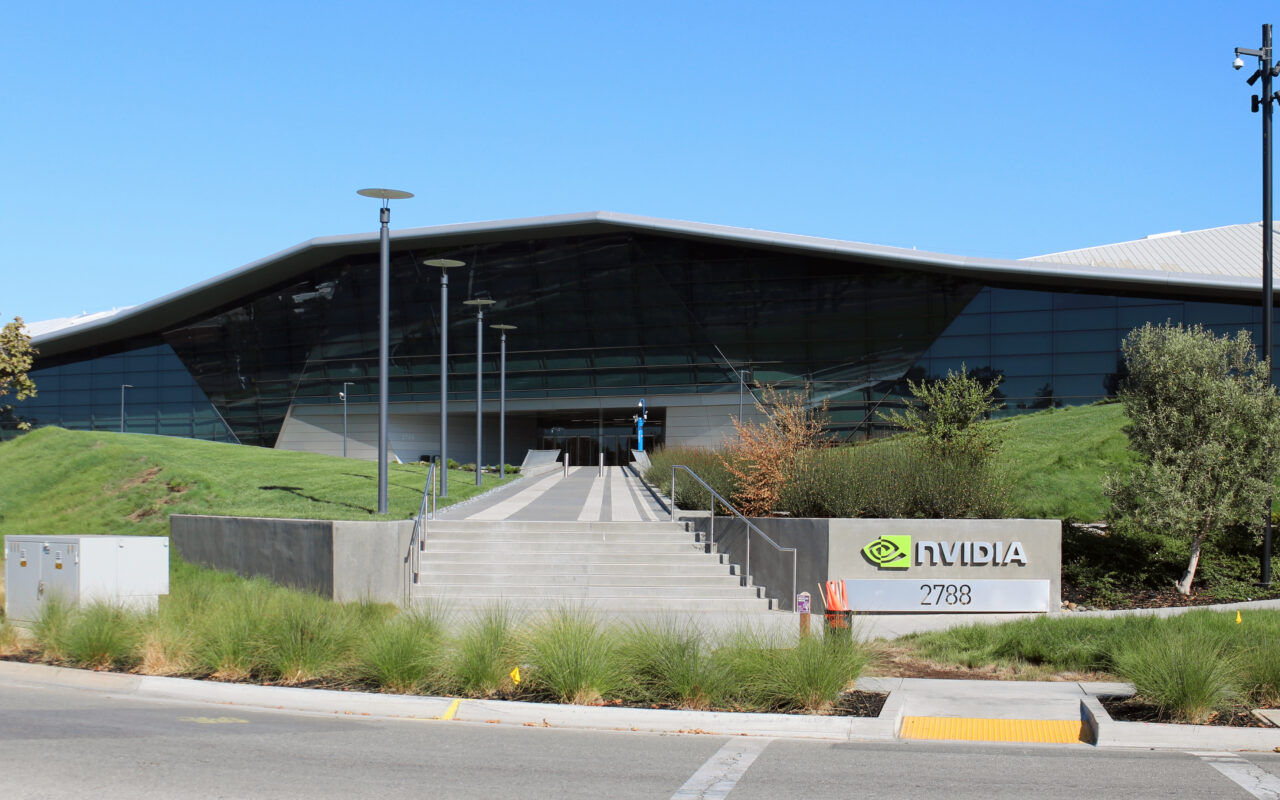
Friday, November 13. Nvidia lost its founder CEO, Cisco and Applied Materials posted AI driven records, and JPMorgan put a number on American humanoid output. Five stories, plain and sourced.
1. Jensen Huang resigns as Nvidia CEO
Nvidia’s board accepted Jensen Huang’s resignation as president, CEO and director, effective immediately, according to the company’s Form 8-K dated November 11. CFO Colette Kress is interim CEO and keeps the CFO job, longtime director Harvey C. Jones becomes the company’s first board chair, and the board will search for a permanent CEO among internal and external candidates, per the press release. The filing gives no reason. Shares were down more than 11% in premarket trading Thursday, TechCrunch reported. Third quarter results are still set for Tuesday, November 17.
Brandon’s Take: Nvidia customers buy on roadmap and allocation. The board says operations, customer commitments and the roadmap continue without interruption; Tuesday’s call is where buyers find out whether that holds.
2. Cisco raises its AI target to $9 billion, and memory bites the margin
Cisco posted record fiscal first quarter revenue of $18.5 billion, up 24%, and now expects AI infrastructure revenue of $9 billion in fiscal 2027, up from a $7.5 billion target and more than double fiscal 2026, according to the earnings call transcript. Product gross margin fell 350 basis points to 63.7%, which Cisco’s Mark Patterson tied to higher hardware mix and elevated memory costs. Asked about supply limits, he said the biggest one is probably optics.
Brandon’s Take: Memory pricing is now showing up in a networking company’s margin, not just at server makers. When Cisco names optics as the constraint, that is where the lead times are.
3. Applied Materials books a 53% jump in quarterly revenue
Applied Materials reported fiscal fourth quarter revenue of $10.41 billion, up 53% from a year earlier, and full year revenue of $34.45 billion, up 21%, in its earnings release. Foundry and logic made up 58% of chip equipment sales in the quarter and DRAM 33%. The company guided next quarter to $11.1 billion, plus or minus $500 million, and CEO Gary Dickerson said the chip equipment business is on track to grow more than 40% in calendar 2026.
Brandon’s Take: Equipment makers see demand first. A deposition or etch tool shipped this quarter is wafer capacity a year or two out, so this is the forward signal for chip supply in 2027 and 2028.
4. JPMorgan: 300,000 to 400,000 US humanoids a year by 2030
US humanoid robot production could reach 300,000 to 400,000 units by 2030 and 1.5 million by 2035, according to a JPMorgan report reported by FOX 26 with Reuters. Apart from Tesla, most US developers target 10,000 to 30,000 units a year. The bank named the binding bottlenecks: hands, actuators, the brain and production capacity.
Brandon’s Take: Hands and actuators are gears, motors, bearings and small precision molded and machined parts. Going from 30,000 a year to hundreds of thousands is a tooling and supplier qualification problem before it is an AI problem. Our humanoid shipping comparison shows how far today’s volumes are from that.
5. Kraft Group floats a 900 MW campus in Sutton, Massachusetts
The Kraft Group and Unified Global Packaging Group have proposed a data center campus in Sutton of roughly 900 MW at full build, estimated at about $16.75 billion, Baxtel reported from a town memo. Up to 10 buildings would open two at a time from 2029 through 2033, and the developer is in talks with ISO New England for power. Under a state executive order, agencies cannot advance a data center above 25 MW without local approval, and no application has been filed yet.
Brandon’s Take: A 345 kV line crossing the property is the real asset here. The 25 MW threshold keeps showing up, as it did in the November ballot measures; local votes now set the pace.
Number of the day
$10.41 billion. Applied Materials’ fiscal fourth quarter revenue, up 53% from $6.80 billion a year earlier (Applied Materials).
Get The Benderson Brief in your inbox every weekday morning. Follow @bendersonmedia on X for the daily charts.

Brandon Henderson
Brandon Henderson founded Benderson Media. He has spent more than 15 years in custom injection molding, tooling and global manufacturing, working with factories in China and Vietnam on programs for aerospace and consumer brands. He is a journeyman tool and die maker, CPSP certified, and a Six Sigma Green Belt. Benderson Media covers AI in the real economy: the factories, chips, power and money behind it.
Get The Benderson Brief
Five stories on robots, chips, power and AI money every weekday morning. Free. One click to leave.
Every figure in this piece links to its source. See our editorial standards. Nothing here is investment advice.


