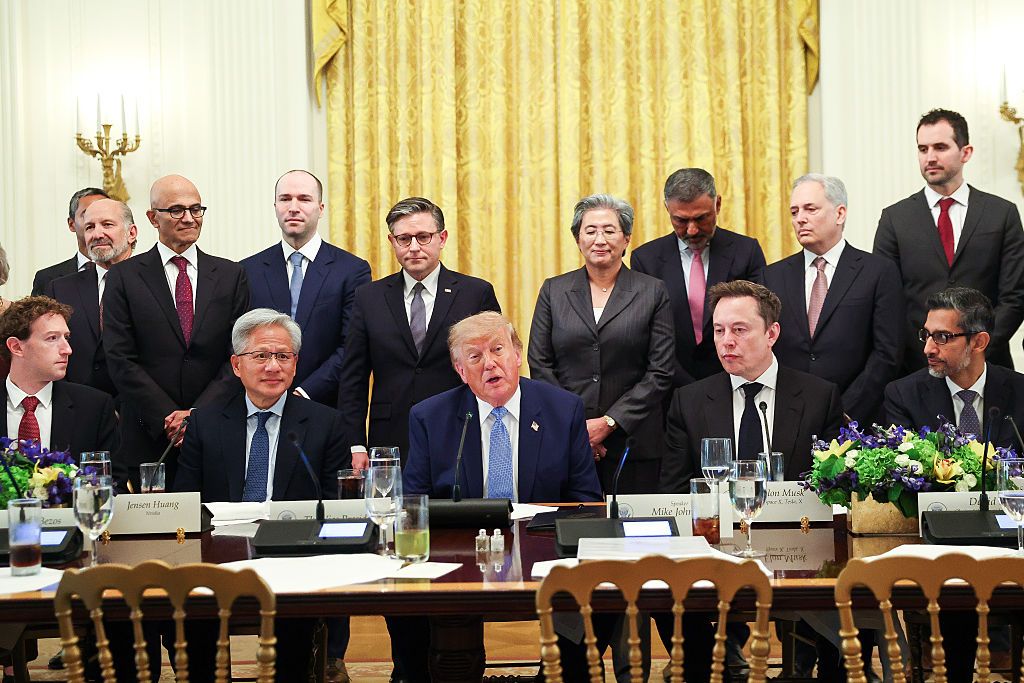
The White House just made AI the center of American economic policy. Trump’s Super Intelligence Force carries a $500 billion federal commitment and hands contracts to a short list of American companies. If you’re not thinking about where that money flows, someone else is already positioning to catch it.
What Just Happened
Trump signed an executive order in 2026 creating the Super Intelligence Force, a federal body tasked with directing AI development across defense, finance, and infrastructure. The initiative pools resources from the Department of Defense, the Treasury, and the National Security Council under one coordinated program.
According to Reuters, the program is projected to inject over $200 billion into domestic AI contracts over the next three years. That number could climb to $500 billion when you count state level matching funds and private sector co-investment mandates written into the order.
According to The Wall Street Journal, the Force is already in procurement talks with at least 14 major tech firms, including several that specialize in financial modeling and fraud detection tools built for federal banking regulators.
This is not just a defense story. It is a fintech story.
Why Most People Will Get This Wrong
Here is what I keep seeing. Regular investors see “government AI program” and think military contracts. They buy defense stocks and stop there. That is the poor mindset playing out in real time.
Rich people ask a different question. They ask: who controls the payment rails when the government starts pumping hundreds of billions into AI infrastructure? Who builds the compliance tools? Who manages the fraud monitoring for federal AI transactions?
The answer is fintech.
According to McKinsey, AI driven fraud detection in federal financial systems is expected to grow 340% between 2025 and 2028. The agencies overseeing this spending will need new tools to audit AI generated transactions at scale. That creates massive demand for financial technology built specifically for government compliance use cases.
This is the same pattern we saw with cloud computing in 2012. Amazon Web Services looked like a tech story. It was actually a government procurement story. AWS now pulls over $25 billion a year from federal contracts alone, according to Bloomberg Intelligence.
The companies that got rich off cloud were not the ones who made cloud hardware. They were the ones who built the software layers that government agencies could actually use. The same dynamic is playing out right now with AI.
I am watching the mid tier fintech companies closely. Not the giants. The ones building AI compliance software, government grade payment verification, and real time fraud scoring for federal disbursements. Those companies are sitting on top of a procurement wave most people have not noticed yet.
If you run a business that works with government agencies or federal contractors, you should already be thinking about your own financial infrastructure. Tools like Wallester let you issue business cards with custom spending controls so you can track AI software subscriptions and vendor costs without losing visibility into where the money goes. That kind of spending discipline matters when you are competing for federal work.
What This Means for You
If you run a business, here is what I would do right now.
First, check whether your industry touches anything the Super Intelligence Force is prioritizing: finance, healthcare, infrastructure, or defense supply chains. If it does, you are already in the window for indirect contract opportunities.
Second, start tracking which fintech companies land the first procurement deals. The first wave of government AI contracts will signal which tools become the federal standard. Once a tool gets written into government procurement specs, it becomes nearly impossible to displace. Those companies will print money for years.
Third, get your own team ready. The government is about to create enormous demand for AI adjacent roles: compliance analysts, data auditors, and engineers with security clearances. If you plan to grow into this space, you need people now. Gusto is worth looking at if you are bringing on contractors or full-time staff quickly and want to stay compliant without building an HR department from scratch.
Fourth, do not wait for the full $500 billion to land. By then the positioning is done. The money gets made in the first 18 months when the market has not fully priced in who the winners are.
The Bottom Line
Trump’s Super Intelligence Force is the biggest government directed capital event in the AI era so far. Most people will treat it as political news. Smart operators will treat it as a capital flow map. The money is moving right now. I know which side of that trade I want to be on, and it is not the side waiting for permission to act.
Frequently Asked Questions
What is the Super Intelligence Force?
The Super Intelligence Force is a federal initiative created by executive order in 2026. It directs AI development and procurement across defense, finance, and national infrastructure. It consolidates resources from multiple federal agencies under one coordinated program with a $500 billion total commitment.
How does the Super Intelligence Force affect fintech companies?
Fintech companies building compliance tools, fraud detection systems, and AI driven payment infrastructure are positioned to win federal contracts under this program. According to McKinsey, AI driven fraud detection for federal systems is expected to grow 340% through 2028. That creates direct revenue opportunities for the right companies at the right time.
Is the $500 billion figure confirmed?
The $200 billion direct federal commitment is confirmed according to Reuters. The $500 billion estimate includes state level matching funds and private co-investment mandates in the order. The full figure depends on how many states opt in and how quickly private capital follows the federal lead.
Should small businesses pay attention to the Super Intelligence Force?
Yes. Small businesses in finance, healthcare, infrastructure, and defense adjacent industries are already in the indirect opportunity window. Federal AI contracts create subcontracting and service opportunities that flow down to smaller operators. The time to position is before the main contracts are announced, not after.
What is the biggest risk investors should watch with this program?
Procurement delays are the biggest risk. Large government programs almost always move slower than announced timelines. Companies that build their entire business case around federal AI contracts before those contracts are signed are taking on real concentration risk. Spread your exposure across both government facing and commercial AI plays.