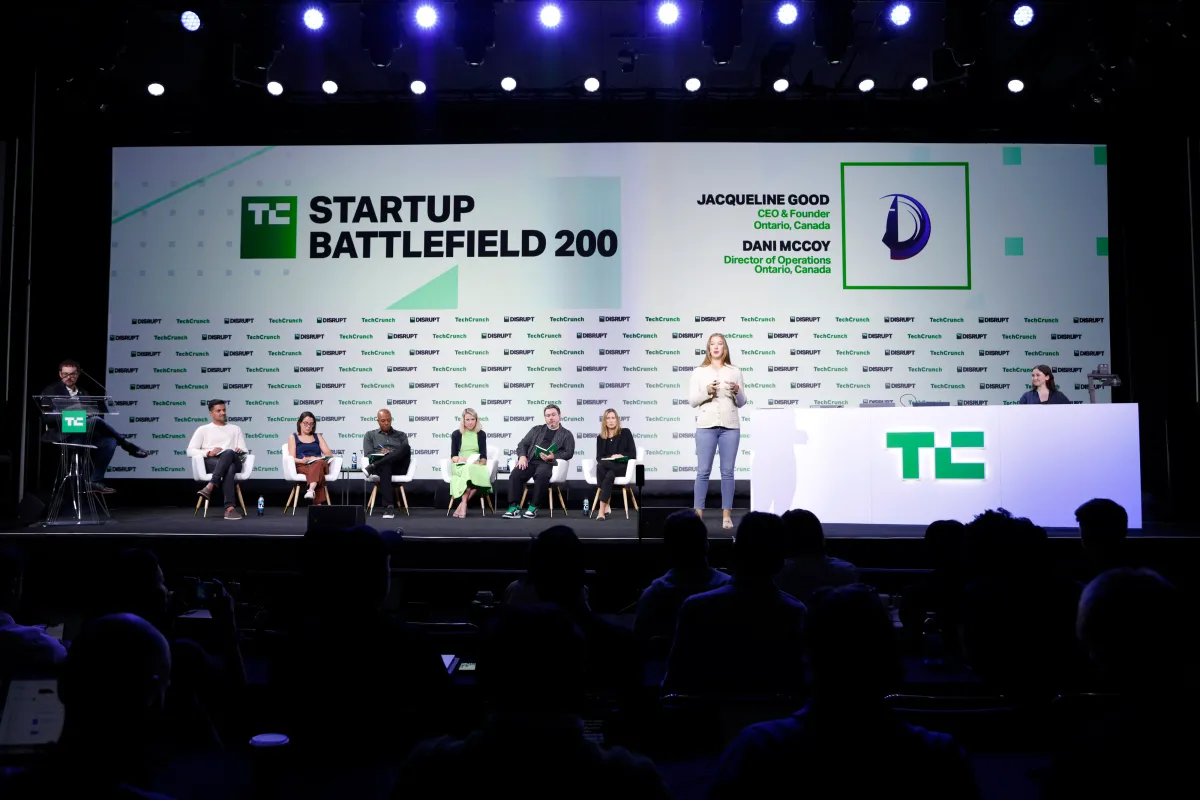
TechCrunch Disrupt opens in 3 days. Fintech entries in the Startup Battlefield are up 40% compared to 2024, according to TechCrunch. Most people will catch the highlight reel on Monday morning and think they’re informed. Smart operators are studying the pitch deck themes right now, before the crowd shows up.
Why This Disrupt Is Different
Every year TechCrunch Disrupt gets called the startup Super Bowl. Most years that’s hype. This year it earns it.
The Federal Reserve’s rate decisions over the past 18 months created a wide gap in small business credit markets. According to the Federal Reserve’s 2026 Small Business Credit Survey, 47% of small businesses that applied for financing in the past year were denied or received less than they requested. That gap is exactly what this year’s Battlefield fintech founders are targeting.
Global fintech investment hit $92 billion in 2025, according to CB Insights. Early 2026 data shows no slowdown. Disrupt’s judges noticed. The fintech category this year is the most competitive in the event’s history.
The companies presenting in 3 days won’t be household names on Monday. By Q1 2027, a few of them will be running millions of dollars in payroll, lending, and payments for small businesses just like yours. The question is whether you find them now or wait until your competitors are already 12 months ahead.
The 5 Fintech Themes Dominating Disrupt 2026
I’ve watched Disrupt for years. The pattern is always the same. The companies that win aren’t the ones with the slickest demo. They’re the ones solving a problem everyone ignored because it wasn’t flashy enough.
This year, five categories are dominating the fintech Battlefield entries.
Real-time payroll. Workers want daily pay. Most payroll systems run on a two-week cycle built for the 1970s. Three Battlefield startups are attacking this directly. According to a 2026 ADP workforce survey, 72% of hourly workers say same-day pay access would reduce their financial stress, and employers who offer it report 23% lower turnover. That’s a business case you can take straight to your leadership team.
For founders managing rapid headcount growth and multi-state payroll compliance, tools like Gusto handle the regulatory burden so you can focus on your next raise instead of state tax filing deadlines.
Embedded lending inside B2B payments. If you’ve ever waited 45 to 90 days to get paid on an invoice, you understand the pain. According to Fundbox, late payments cost U.S. small businesses $825 billion in delayed cash flow annually. Several Battlefield companies are embedding lending directly into the invoice workflow so business owners stop using their own cash as free credit for their customers. That’s the rich versus poor mindset in action. An employee waits to get paid. An owner engineers cash flow so waiting is optional.
AI underwriting for non-traditional businesses. Banks use credit scores built for W2 employees. That model fails founders, freelancers, and LLC owners. The new underwriting tools coming out of Disrupt look at revenue patterns and transaction velocity instead of credit history. This is where the wealth gap quietly widens. People who know how to structure their business get capital. People who think their credit score is their worth get denied.
Virtual card infrastructure for business spending. The corporate card market is enormous and mostly controlled by legacy banks charging 2.9% on every transaction with almost zero spend controls. New entrants at Disrupt are offering real-time spend controls, automated expense categorization, and cashback built for founders instead of Fortune 500 procurement teams. If you’re managing vendor payments across multiple projects or team members, a business card platform like Wallester gives you the visibility and controls your bank account never will.
Cross-border payment rails for SMBs. Most small business owners overpay by 3% to 5% on every international wire. According to the World Bank, the global average cost to send $200 internationally was still 6.2% in 2026. The Battlefield startups addressing this aren’t building another consumer app. They’re building the infrastructure that other fintechs will eventually run on. Get there first.
What I Would Do Starting Today
Skip the main stage keynotes. The real intelligence is in Startup Alley, where founders do live demos with no PR buffer. You can talk to the actual CEO, ask what it costs, and ask what it breaks. That conversation is worth more than any press release they’ll issue in January.
Watch which Battlefield finalists announce their Series A within 90 days of Disrupt. That’s the real signal. Disrupt doesn’t make companies. It surfaces companies that were already moving. When a finalist closes a round fast after the event, it means the smart money already knew before the demo started.
For business owners who won’t be in San Francisco, the move is simpler. Audit your current financial stack this week. What are you paying for payroll per employee? What does an international transfer cost you? What spend controls do you have on team cards? If you can’t answer those questions in under 60 seconds, the startups at Disrupt are about to offer you something better than what you have.
According to a 2026 Intuit study, the average small business wastes $18,000 per year on inefficient financial tools. That number is coming down fast. But only for the owners who are paying attention right now.
The Bottom Line
TechCrunch Disrupt 2026 opens in 3 days. Most people will catch the recap next week and think they’re informed. A handful of operators will identify the right companies now, test them in Q4 2026, and build financial infrastructure their competitors won’t discover until 2027. The difference between those two groups isn’t intelligence. It’s timing. Right now you still have it. Use it.
Frequently Asked Questions
What is TechCrunch Disrupt 2026?
TechCrunch Disrupt is an annual conference where early-stage startups compete in Startup Battlefield for $100,000 in prizes and major investor attention. The 2026 event runs October 13 to 15 in San Francisco. It’s one of the best places to identify companies before they raise their Series A and show up in mainstream business press.
Which fintech startups should I watch at TechCrunch Disrupt 2026?
The strongest fintech entries this year are in real-time payroll, B2B embedded lending, AI underwriting for non-traditional businesses, virtual card infrastructure, and cross-border payment rails. According to TechCrunch, fintech entries in the Battlefield are up 40% over 2024. Any startup solving invoice delays or international transfer costs for small businesses is worth following closely.
How do I track the best Disrupt startups before they go mainstream?
Check the Startup Alley exhibitor list on the TechCrunch website before the event starts. Follow Battlefield finalists on LinkedIn and X immediately after their presentations. The fastest signal is tracking which finalists announce funding within 90 days of the event.
Why does TechCrunch Disrupt matter for small business owners?
Most financial tools small businesses use today were first announced at Disrupt years ago. Paying attention now means you get 12 to 18 months ahead of the adoption curve before your competitors catch on. The average small business wastes $18,000 annually on inefficient financial tools, according to Intuit. The founders at Disrupt this week are building the replacements.
What fintech tools should small businesses audit before Disrupt 2026?
Look at what you’re paying for payroll processing, international transfers, business cards, and invoice financing. If any of those cost more than 2% per transaction or take more than 48 hours to clear, the startups at Disrupt are targeting exactly that pain point. A financial stack built in 2022 or 2023 is already several generations behind what launches this week.