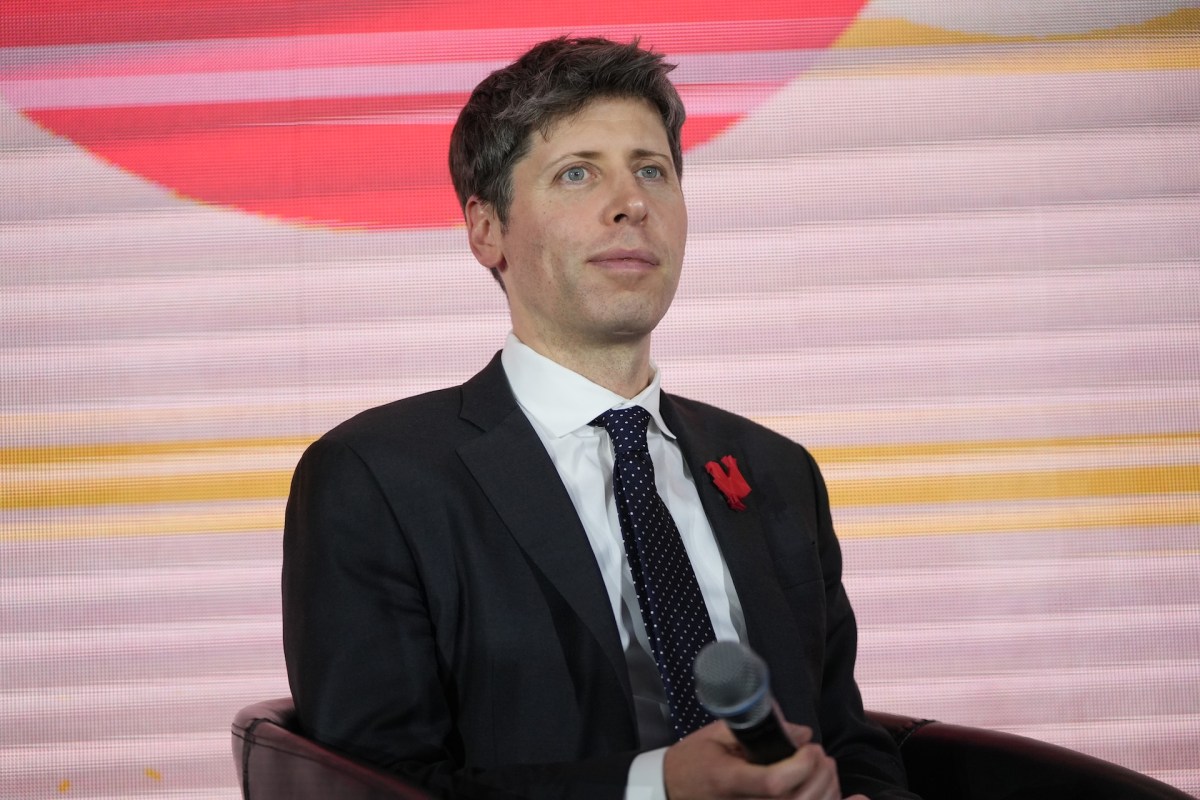
Sam Altman just told the world that taking OpenAI public in 2026 would be “ill-advised.” Most people heard caution. I heard a confession. When the CEO of a $157 billion company says he does not want public investors looking at his books yet, that tells you something important about what is actually in those books.
Why This Is Bigger Than It Looks
OpenAI closed a funding round in late 2024 that valued the company at $157 billion, according to Bloomberg. That made it one of the most valuable private companies in American history. The round pulled in $6.6 billion from investors including Microsoft, which had already committed $13 billion in prior rounds.
So why would Altman pump the brakes on an IPO? The answer is not modesty. According to The Information, OpenAI posted roughly $5 billion in operating losses in 2024 on about $3.7 billion in revenue. The company is spending money faster than most small countries. Going public means showing those numbers every single quarter to people who vote with their wallets.
Public markets are brutal. They do not care about your vision. They care about your margin. Right now, OpenAI does not have a margin story. It has a burn story.
The Rich vs Poor Read on This
Here is how two different people will read this news.
The average investor sees “no IPO” and moves on. Maybe a little disappointed. Maybe relieved because AI stocks have been volatile. Either way, they file it away and wait for the next headline.
The smart operator reads this and starts asking questions. If the valuation is $157 billion and the CEO does not want public scrutiny in 2026, what does he expect public scrutiny to reveal? What changes between now and whenever he does feel comfortable going public? And if you are already a private market investor in OpenAI, what happens to your position if the IPO keeps getting pushed?
I will tell you what I think. Private market valuations are built on narratives. Public market valuations are built on numbers. OpenAI’s narrative is extraordinary. Their numbers are still catching up.
According to The Information, OpenAI is targeting around $11.6 billion in revenue for 2025. If they hit that, the story gets better. But that is a target, not a result. And even if they hit it, they will still be spending at an enormous rate on compute, research, and talent.
The AI arms race is expensive. Microsoft, Google, and Amazon are all pouring billions into infrastructure. OpenAI has to keep up without the balance sheet advantages those companies have. They are ly a startup competing against three of the largest companies in the world. That is a tough position to defend on a quarterly earnings call.
If you are running a business in the AI space right now, spend visibility at the team level is not optional. Wallester’s business card platform gives you live control over team expenses across every department. That matters when you are operating in a capital intensive environment and need to know exactly where every dollar is going before the month closes.
What This Means for You
If you are not a direct investor in OpenAI, you might think this does not affect you. I disagree.
First, OpenAI’s IPO timing will set the tone for every other major AI company considering going public. If the biggest name in consumer AI stays private in 2026, that gives cover to Anthropic, xAI, and others to stay private too. That means the wealth creation happening right now stays locked inside private rounds that most people cannot access.
Second, the longer OpenAI stays private, the more the valuation can drift from reality. Private investors agreed to $157 billion because they had to take Altman’s word for the growth trajectory. Public markets would have to agree based on audited financials. Those are very different standards.
Third, if you work in tech or AI, this signals that the companies paying the biggest salaries are still burning cash to get there. That is not necessarily bad. But the equity you are taking in exchange for a lower salary might take longer to convert into real money than you planned.
Here is what I would do. If you are building a team in 2026, treat your payroll like a strategic asset, not just an expense. Gusto makes it simple to manage compensation, benefits, and compliance for growing teams where you are adding headcount fast and need to stay organized without a full HR department. Know your true cost per head before you commit to the next hire.
And watch the secondary market. When companies stay private this long, early employees and investors often sell shares on secondary platforms like Carta or Forge. Those transactions give you a real read on what insiders actually think the valuation is worth when they need liquidity. That number is almost always lower than the headline figure.
The Bottom Line
Altman is not being humble. He is being strategic. The gap between a $157 billion private valuation and what public markets would actually pay is a number he does not want to discover on a Tuesday morning when the Nasdaq opens. When the CEO of the most talked about company in tech says wait, the question is not whether to listen. It is what he is protecting himself from.
Frequently Asked Questions
Why is Sam Altman against an OpenAI IPO in 2026?
Altman has said publicly that going public would be “ill-advised” at this stage. The most likely reason is that OpenAI’s financials, including heavy operating losses, are not yet in a shape that would hold up under public market scrutiny. An IPO forces quarterly transparency that private funding rounds simply do not require.
What is OpenAI’s current valuation and is it justified?
OpenAI was valued at $157 billion in its October 2024 funding round, according to Bloomberg. Whether that valuation holds depends on hitting aggressive revenue targets. According to The Information, the company is targeting around $11.6 billion in 2025 revenue but posted roughly $5 billion in losses in 2024 on much lower revenue.
How does OpenAI skipping an IPO affect regular investors?
Most retail investors cannot access private company shares. This means the biggest potential gains from OpenAI’s growth will go to venture capital firms and institutional investors. The secondary market is one option for accredited investors, but shares trade at a premium with no guaranteed liquidity timeline.
What should startup founders take away from the OpenAI IPO delay?
Cash management and financial discipline matter more than ever in 2026. Even the most hyped company in the world is under pressure to justify its valuation before going public. If you are building right now, know your burn rate, control your team spend, and do not assume a private valuation will hold when liquidity finally comes.
When might OpenAI actually go public?
No firm date has been set. Analysts and insiders have speculated about 2027 or later, depending on revenue growth and market conditions. OpenAI’s structural shift away from its original nonprofit model also needs to be fully resolved before a public offering becomes viable.