Crusoe Energy just scrapped a $1.25 billion plan to power AI data centers with Boom turbines. That decision tells you more about the AI energy crisis than any headline about chip shortages or GPU costs. The money was real. The plan was real. And they still walked away.
Why This Story Matters Right Now
AI data centers are the hungriest power consumers on the planet. According to the International Energy Agency, data centers consumed roughly 460 terawatt hours of electricity globally in 2022. By 2026, that number is on track to top 1,000 terawatt hours, driven almost entirely by AI workloads. That’s a doubling in under four years.
Crusoe built its business on a smart premise. They captured stranded natural gas from oil fields and used it to power compute facilities. It was cheap, it solved a real problem for oil producers who would otherwise flare that gas, and it let Crusoe build data centers without waiting in the grid interconnection queue. The company raised over $700 million according to PitchBook and expanded aggressively into AI infrastructure.
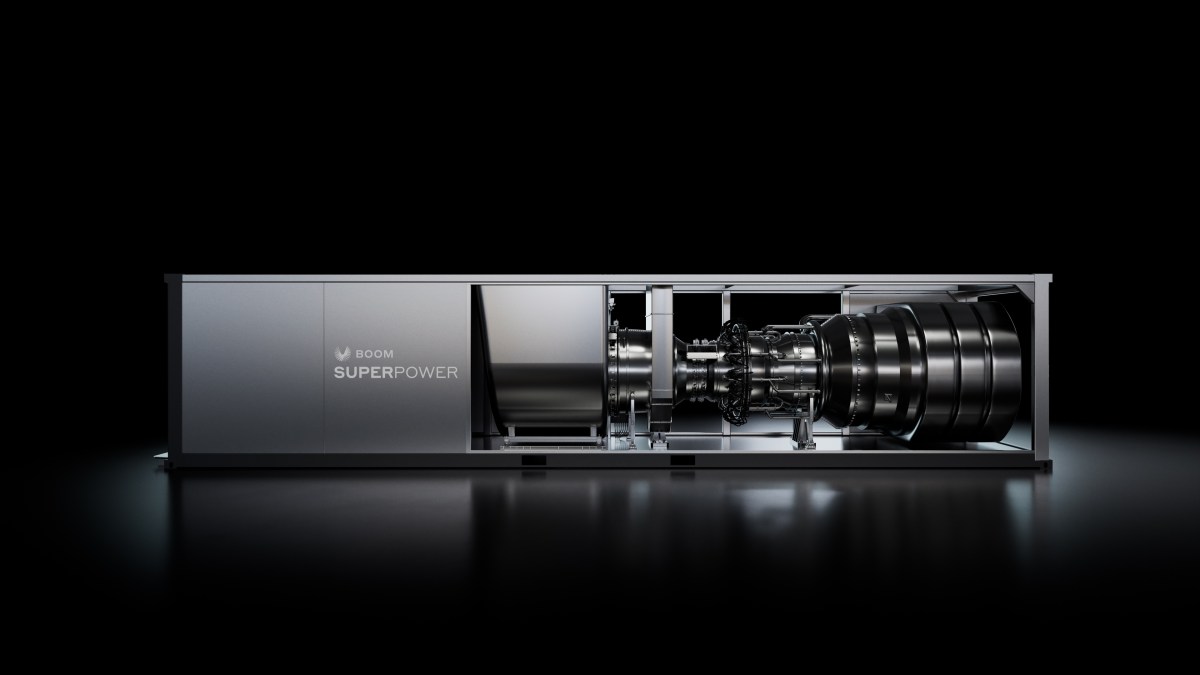
The Boom turbine partnership was supposed to be the next chapter. Advanced gas turbines, purpose-built for high-density computing loads, promised better efficiency and lower carbon intensity than pulling from the grid. A $1.25 billion commitment is not a pilot program. That’s a full-scale infrastructure bet. And Crusoe pulled the plug.
The Real Play Nobody’s Talking About
Here’s what I think is actually happening. The math on behind-the-meter power generation just changed. And the reason it changed is not technical. It’s financial.
Owning your generation sounds smart on paper. You control costs. You skip the grid interconnection queue that stretches five years into the future according to Lawrence Berkeley National Laboratory research. But the economics shifted hard against it in 2026.
Natural gas prices spiked again in Q1 2026 after cold snaps across the Midwest and Southeast. Henry Hub spot prices hit $4.80 per MMBtu in February according to the U.S. Energy Information Administration. For a data center running around the clock, that input cost matters enormously. A facility burning $1.25 billion on turbines and fuel doesn’t look cheap when the margin on gas generation compresses.
At the same time, the utilities finally moved. Microsoft, Google, and Amazon locked up long-term power purchase agreements at rates most independent operators can’t beat. According to Bloomberg New Energy Finance, corporate PPAs for AI infrastructure surpassed 40 gigawatts of committed capacity globally in early 2026. When the big players lock up cheap grid power and nuclear deals, the independent generation play gets squeezed from both sides.
This is exactly how wealth transfers work in infrastructure cycles. The companies with the most capital lock up the best assets first. Everyone else pays a premium for whatever’s left. Crusoe’s $1.25 billion was real money. But compared to Microsoft’s $10 billion grid investment or Amazon’s nuclear agreements, it wasn’t enough to secure a defensible position in the power market.
The average investor says, “Crusoe failed.” The owner asks, “Who wins from this exit?” The utilities win. The nuclear developers win. The companies that already locked up long-term grid power at 2024 rates win. The independent generators lose. If you’re trying to figure out how to position capital in the AI infrastructure buildout and you need financing options to act quickly, a tool like SuperMoney loan comparison can help you weigh your choices before rates move further.
What This Means For You
Most people will read this story and think it’s about Crusoe. It’s not. It’s about every company that thought they could solve the AI power problem by owning their own generation.
Here’s what I would do if I were allocating capital right now.
First, I’d look at who holds long-term power agreements. Not who has the most GPUs. Not who has the best chip deals. Who locked up cheap electricity for 20 years at fixed rates. That’s the durable asset in this cycle. GPUs get replaced. Electricity contracts don’t.
Second, I’d look at the utility companies serving markets where AI data centers are concentrating. Northern Virginia, Phoenix, Dallas, and parts of the Pacific Northwest are seeing load growth that utility earnings projections haven’t fully priced in. According to the Edison Electric Institute, U.S. utilities filed for over $45 billion in infrastructure rate increases in 2025 alone. That money flows directly to earnings.
Third, I’d be skeptical of any AI infrastructure company still pitching behind-the-meter generation as a cost advantage. Crusoe’s exit is a data point. It won’t be the last. The turbine dream is closing out. The grid is winning.
For builders and operators watching this space, the lesson is simple. Don’t compete on energy supply if you don’t have the scale to win that fight. Find a market where the power is already there and the grid connection is already in place. Co-location inside existing campuses will outperform greenfield turbine builds for the next three to five years at minimum.
The Bottom Line
Crusoe’s $1.25 billion exit isn’t a failure story. It’s a market signal. The era of scrappy behind-the-meter generation for AI data centers is ending. The companies that won are the ones that moved first on long-term grid deals. Everyone else is now paying a premium or walking away from the table. I’d rather own the utilities collecting those premiums than back the operators scrambling for their next power plan.
Frequently Asked Questions
What was Crusoe’s plan with Boom turbines?
Crusoe Energy committed approximately $1.25 billion to deploy Boom turbines as dedicated power generation for AI data centers. The plan was to provide reliable, behind-the-meter power that avoided grid interconnection delays slowing down data center expansion across the country.
Why did Crusoe abandon the Boom turbine plan?
The company has not fully disclosed its reasons. But the economics point toward rising natural gas costs, shrinking margins on independent generation, and the growing difficulty of competing against large tech companies that locked up long-term grid power agreements at lower effective rates before the AI buildout accelerated.
What does Crusoe dropping the Boom turbine plan mean for AI data center energy costs?
It signals that companies with existing grid access deals hold a real cost advantage over independent operators. According to Bloomberg New Energy Finance, corporate power purchase agreements for AI infrastructure exceeded 40 gigawatts globally in early 2026. That gap in energy cost will likely translate into a margin gap in AI services over the next few years.
Who benefits from Crusoe’s exit from the Boom turbine plan?
Grid utilities serving high-density AI markets stand to benefit most. So do companies that already secured long-term power purchase agreements at favorable rates. Nuclear developers with contracts to serve AI loads are also positioned well as the independent generation model loses favor.
Is behind-the-meter gas generation finished for AI infrastructure?
The window for it as a competitive strategy is closing fast. The companies that needed to own generation to get power in 2021 and 2022 made smart moves then. Today, grid connectivity has expanded enough in key markets that owning generation is often more expensive than buying long-term grid power. Crusoe’s exit is one indicator of that shift, not an isolated event.