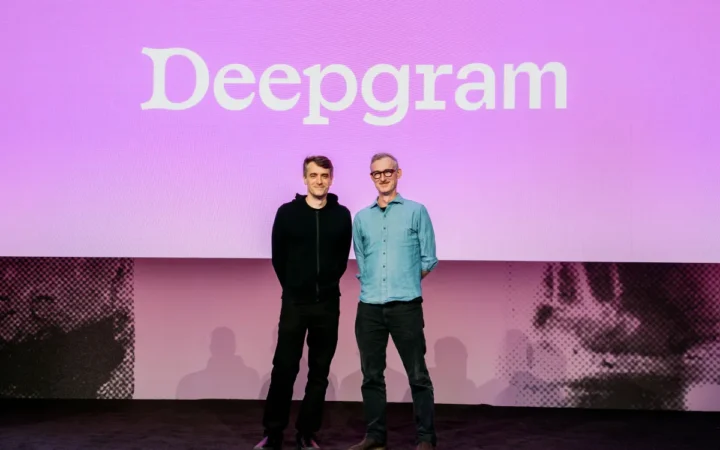
The co-founder of one of the most valuable design tools on the planet just said out loud what a lot of builders have been thinking quietly. MCP, the Model Context Protocol that Anthropic pushed as the universal glue between AI models and external tools, has real problems. Dylan Field is not wrong. And if you are building on top of MCP right now, you need to understand what those problems are before you ship something that breaks your users.
What Is MCP and Why Does It Matter
Model Context Protocol launched in late 2024 as Anthropic’s answer to a messy problem. Every AI model needed its own custom integration to connect to external tools, databases, APIs, and services. MCP was supposed to standardize that. One protocol. Any model. Any tool.
The pitch worked. According to Anthropic, MCP has been adopted by hundreds of companies and integrated into major platforms including Claude, Cursor, Zed, and Sourcegraph within its first year. The developer community ran with it. GitHub lit up with MCP server projects. By early 2026, MCP had become the default assumption for how AI agents connect to the outside world.
That kind of fast adoption is impressive. It is also exactly when the cracks start to show.
Dylan Field, co-founder and CEO of Figma, raised concerns about MCP’s design in public discussions about how AI tools should communicate. His core point is that MCP is functional but not well-suited for production-grade, complex workflows. This is not a fringe opinion. It matches what a growing number of engineers have been writing about in technical post-mortems and conference talks throughout 2025 and 2026.
The Real Problems With MCP
Here is where I think Field gets it right. MCP has three structural issues that matter for anyone building serious products on top of it.
First, the authentication model is weak. MCP servers can run locally or remotely, but the spec does not enforce strong auth by default. This means a lot of MCP implementations in the wild are running with minimal security controls. According to security researchers at Trail of Bits, early MCP server implementations showed common misconfiguration patterns that could expose tool access to unauthorized clients. When you are connecting an AI model to your database or your customer’s data, “minimal security controls” is not a sentence you want near that system.
Second, MCP is fundamentally stateless in ways that hurt complex agents. Each tool call is largely independent. If you are building a simple “search the web and summarize” workflow, that is fine. But if you are building a multi-step agent that needs to carry context across a dozen tool calls, MCP forces you to bolt on your own state management. You end up writing the hard part yourself anyway, which undermines the whole point of having a standard.
Third, error handling is inconsistent. Different MCP server implementations handle errors differently, which means the model sees inconsistent failure signals. According to developer forums on the Cursor community and similar spaces, agent loops that hit ambiguous MCP errors are one of the top causes of agent hangs and unexpected behavior in production. That is a reliability problem, not just a developer experience annoyance.
Field’s broader argument, from what he has shared publicly, is that protocols designed fast to capture adoption often encode the assumptions of their first use cases. MCP was built around the simplest possible tool call pattern. That was smart for adoption. It is a problem now that people want to build real products.
I think about this the same way I think about early fintech APIs. Stripe was not the first payment API. But it was the one that actually thought through edge cases, error states, and developer experience. MCP right now is a lot of the earlier payment APIs: functional, widely used, and full of sharp edges.
If you are a builder who uses AI tools in your workflow, tools like InVideo AI for content creation already demonstrate what a polished AI integration looks like. The difference between MCP-based tools that feel rough and ones that feel smooth often comes down to how much the team had to work around MCP’s limitations rather than with them.
What This Means For You
If you are a developer building on MCP right now, here is what I would do.
Do not wait for the spec to fix your auth problem. Wrap your MCP servers with proper authentication at the infrastructure level. OAuth, API keys with rotation, IP allowlisting. Treat the MCP connection like any other external API call. Because it is.
Build your state layer explicitly. Do not rely on the protocol to carry context for you. Use a lightweight database or a simple key-value store to track agent state across tool calls. This adds work upfront but it makes your agent predictable in production.
If you are evaluating AI tools for your business rather than building them, look for products that abstract MCP’s rough edges rather than exposing them. The best AI-powered tools handle the protocol complexity so you never see it. Platforms like AppSumo often surface early-stage AI tools at lifetime deal pricing, and it is worth looking at which ones have invested in production-grade integrations versus ones that are just wrapping MCP calls with minimal error handling.
For investors and founders watching this space, Field’s comments signal something important. The companies that win in the AI tools layer will not be the ones that were fastest to adopt MCP. They will be the ones that build abstraction layers that make MCP’s weaknesses invisible to end users. That is where the real product moat is forming right now.
According to data from the Stack Overflow Developer Survey 2025, over 60% of developers reported that API reliability and consistency were their top frustrations when building with AI tools. MCP’s inconsistencies are not a niche complaint. They are a mainstream pain point that the market has not fully priced yet.
The Bottom Line
Dylan Field is not saying MCP is broken. He is saying it is not good enough for where AI is going. I agree. Fast adoption of a flawed standard does not make the flaws disappear. It just means more people hit the same walls. The builders who treat MCP as a starting point rather than a finished answer will ship products that actually work. Everyone else will be debugging agent hangs and wondering why their AI tool keeps failing in production.
Frequently Asked Questions
What is MCP and who created it?
MCP stands for Model Context Protocol. Anthropic created it in late 2024 as a standard way for AI models to connect to external tools, databases, and services. It has since been adopted by a wide range of AI platforms and developer tools.
What specific problems did Dylan Field raise about MCP?
Field has raised concerns about MCP’s fitness for complex, production-grade workflows. The core issues include weak default authentication, stateless design that makes multi-step agent workflows harder to build, and inconsistent error handling across different implementations.
Is MCP going to be replaced by something better?
Not immediately. MCP has too much adoption momentum to disappear quickly. The more likely outcome is that a set of higher-level abstractions and wrapper libraries will grow up around it, similar to how frameworks grew around raw HTTP to make web development practical.
Should developers stop building with MCP?
No. MCP is still the best available standard for AI tool integration today. The smart move is to build on it while layering in your own auth, state management, and error handling rather than assuming the protocol handles those things for you.
How does this affect companies using AI tools rather than building them?
If you are buying AI tools rather than building them, watch for products that handle MCP complexity internally. If a tool exposes you to protocol errors or requires you to manage context manually, that is a sign the team has not done the hard engineering work yet.