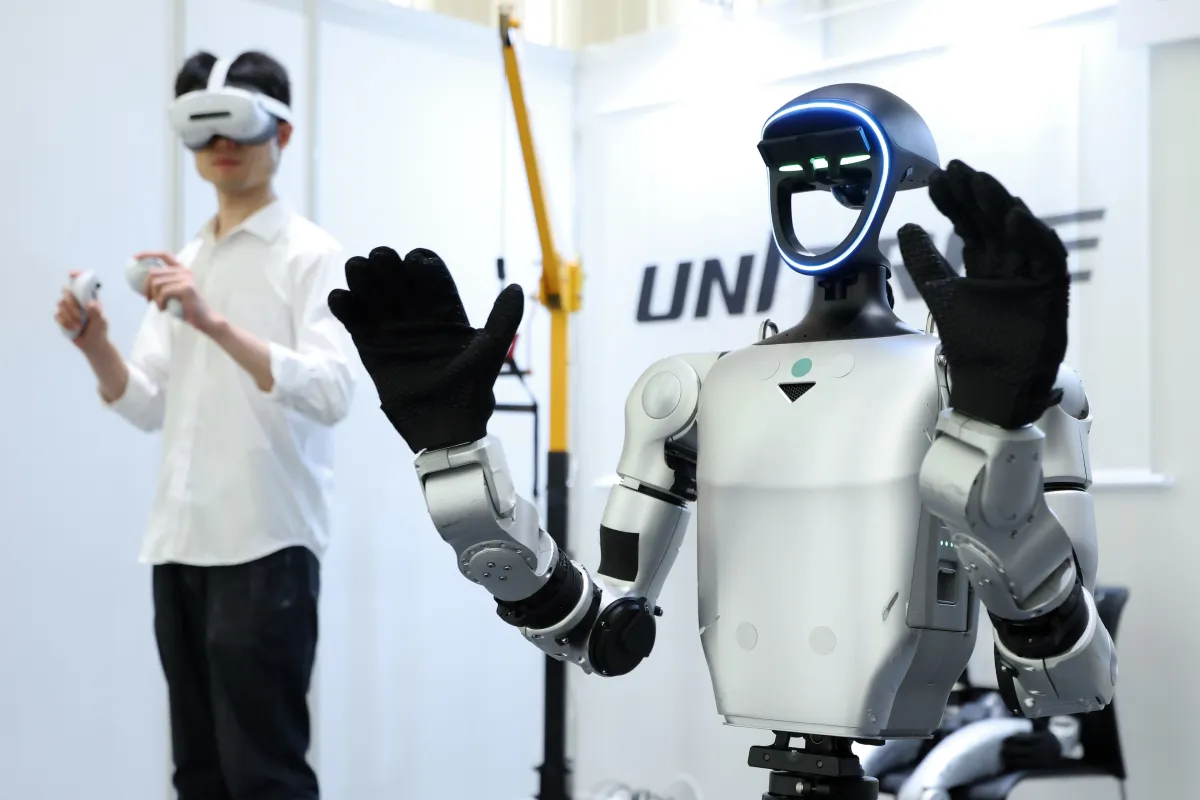
Humanoid robotics pulled in over $1 billion in venture funding in 2024, according to PitchBook. The demos are stunning. The hype is real. But one former Nvidia executive turned venture capitalist is making the rounds with a message the bulls don’t want to hear: robotics hasn’t had its ChatGPT moment, and pretending otherwise is how you lose money.
Why Everyone Is Excited and Why That Is the Problem
ChatGPT launched in November 2022 and hit 100 million users in two months, according to Reuters. That speed was possible for one reason: software has no shipping cost. You click a link and it works. No factory floor. No integration team. No six-month pilot agreement with a union shop.
Robotics doesn’t work that way. A humanoid robot costs between $50,000 and $250,000 per unit depending on configuration, according to Goldman Sachs research published in 2024. Deploying it requires physical infrastructure, trained technicians, and liability frameworks that most companies haven’t built yet. The software might be ready. The world around it isn’t.
That is the core argument from former Nvidia executives who have since moved into early-stage VC. The technology gap is closing fast. Nvidia’s Isaac robotics platform, CUDA-based sim-to-real training, and the company’s physical AI push have dramatically shortened the development cycle for robot foundation models. But a shorter development cycle doesn’t solve the deployment problem. It just moves the bottleneck downstream.
The ChatGPT moment for robotics requires three things to align at once: a robot that works reliably in unstructured environments, a deployment cost low enough that mid-market companies can afford it, and a use case so obvious that no one needs a consultant to explain the ROI. Right now, none of those three things are fully true at the same time.
The Investment Trap Most People Are Walking Into
Here’s what I see happening in the market. Investors who missed the large language model wave are terrified of missing the next one. So they’re writing checks into robotics companies based on demo videos shot in controlled lab conditions. That’s not due diligence. That’s FOMO in a hard hat.
According to CB Insights, over 60 robotics startups raised funding rounds above $10 million in 2024 alone. Most of them are chasing the same three customers: Amazon, Tesla, and the auto industry. That’s not a market. That’s a waiting room.
The rich mindset here isn’t to chase the hardware companies. It’s to look two layers up. The companies that will print money in the robotics era are the ones building the software, simulation tools, data pipelines, and operations infrastructure that make robots deployable at scale. Think of it the way picks-and-shovels investors thought about the gold rush. The miners go broke. The people selling shovels get rich.
If you’re running a business that might be affected by robotics in the next three to five years, now is the time to get financially organized. Managing vendor relationships, equipment contracts, and pilot program expenses gets complicated fast. I’ve seen founders use Wallester to set up dedicated business cards for R&D spend categories so they can track exactly what they’re burning on robotics experiments before committing to a larger deployment.
What the ChatGPT Moment Will Actually Look Like
When it comes, it won’t be a humanoid robot doing dishes in a kitchen. That demo has been done to death and it still doesn’t move units.
The actual moment will look like this: a logistics company deploys a fleet of 500 robots in a warehouse, cuts their injury rate by 40 percent, and posts the numbers publicly. Then every other logistics company CFO gets the same deck in their inbox on the same Monday morning. That’s the moment. Not a viral video. A business case that spreads through procurement departments.
According to the International Federation of Robotics, industrial robot installations hit a record 553,000 units globally in 2023. Growth is real. But it’s concentrated in automotive and electronics manufacturing, two sectors that have been automating for decades. The new sectors, food and beverage, healthcare, small-batch manufacturing, haven’t crossed the threshold yet.
The Nvidia insiders-turned-VCs are betting that the threshold gets crossed somewhere between 2027 and 2029. That’s not pessimism. That’s pattern recognition from people who watched GPU adoption curves for fifteen years before the AI wave hit.
What I Would Do Right Now
If you’re building in this space, stop trying to build the robot. Build the thing that makes the robot useful. Training data pipelines, sim-to-real tooling, fleet management software, compliance and liability frameworks. These companies will get acquired before the hardware companies hit profitability.
If you’re an operator whose industry will be affected, start your pilot now while everyone else is still skeptical. Pilots are cheap when demand is low. Waiting until the ChatGPT moment hits means you’re paying premium prices with everyone else during the adoption spike.
If you’re hiring engineers who will work on robotics projects, get your people operations in order before you scale. Robotics teams are small and specialized, which means every hiring decision matters more than in a generic software shop. Using Gusto for payroll and benefits management keeps that overhead clean so your technical leaders aren’t spending time on HR paperwork when they should be in the lab.
And if you’re an investor: stop chasing hardware valuations built on demo videos. Ask what the unit economics look like at 10,000 units deployed in real facilities. If the founder can’t answer that question clearly, the ChatGPT moment they’re promising is a long way off.
The Bottom Line
Robotics is real. The money flowing into it is real. But the ChatGPT moment hasn’t happened yet, and anyone telling you otherwise is selling something. The people who make money in this cycle will be the ones who understand the difference between a good demo and a deployable product. That gap is closing. It’s not closed. Position accordingly.
Frequently Asked Questions
What is the ChatGPT moment for robotics?
It refers to a single product or deployment that captures mainstream attention and triggers rapid adoption across industries, the way ChatGPT did for AI in late 2022. For robotics, this likely means a high-profile deployment that proves real-world ROI at scale, not just a lab demonstration. Most experts place this inflection point somewhere between 2027 and 2030.
Why hasn’t robotics gone mainstream yet?
The core problem is deployment cost and complexity. Unlike software, physical robots require installation, maintenance, integration with existing systems, and trained staff. According to Goldman Sachs, a single humanoid robot still costs $50,000 to $250,000, which prices out most small and mid-size businesses. The hardware is improving fast but the economics haven’t crossed the mass-market threshold.
Should I invest in robotics companies right now?
That depends on where in the stack you’re investing. Hardware companies carry the most risk because they burn cash and compete on unit economics that don’t yet favor them. Software companies building tooling, simulation, and fleet management infrastructure have better near-term exit paths. If you’re putting money into robotics, follow the picks-and-shovels logic, not the headline demo.
What role is Nvidia playing in the robotics space?
Nvidia’s Isaac platform provides GPU-accelerated simulation and training tools for robotics developers. Their physical AI strategy is about making it faster and cheaper to train robot models in simulation before deploying them in the real world. This is a meaningful infrastructure play that shortens development cycles, though it doesn’t solve the deployment and economics problems on its own.
Which industries will robotics hit first at scale?
Logistics and warehousing are the most likely first movers, driven by e-commerce growth and labor shortages in fulfillment centers. According to the International Federation of Robotics, automotive and electronics manufacturing already have high robot density. The next wave will likely be food production, healthcare support, and small-batch custom manufacturing, in that rough order.