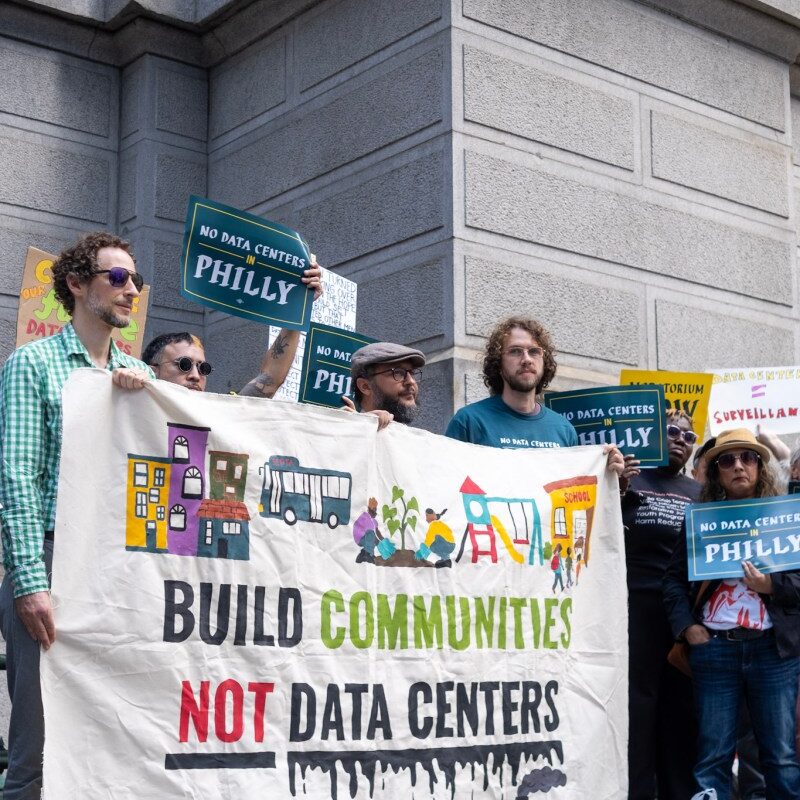
The AI industry is facing a revolt in its own backyard. Data centers now consume roughly 1 to 2 percent of global electricity, according to the International Energy Agency, and that figure is climbing fast. Some tech giants think dropping NDAs will calm local opposition. That bet might pay off. But only if companies actually follow through.
Why Communities Are Pushing Back
Data centers are not small operations. A single hyperscale facility can draw as much power as a mid-sized city. According to Goldman Sachs, data center power demand is projected to grow 160 percent by 2030. That kind of growth does not go unnoticed in towns where the power grid is already strained.
The opposition is loud and organized. Communities in Virginia, Texas, and Arizona have staged protests, attended zoning meetings, and blocked permits. The complaint is almost always the same: locals say they don’t know what’s being built next door until the construction crews show up. NDAs between tech companies and local governments have kept project details secret for years.
According to a 2025 report from the Natural Resources Defense Council, more than 100 proposed data center projects in the United States faced community opposition in 2024 alone. That’s not a fringe movement. That’s a structural problem for an industry that needs to build fast.
Dropping NDAs Is a Start. It Is Not the Answer.
I’ve watched a lot of industries try to buy goodwill with transparency. It rarely works on its own. But in this case, I think the AI industry has more to gain from openness than it realizes.
The NDA problem is real. When a company like Amazon Web Services or Microsoft buys a thousand acres outside a small town and won’t say what they’re building, trust disappears fast. Local officials sign NDAs because they want the tax revenue. Residents find out later. That’s not a great way to build a long term relationship with the people who vote on your permits.
Some companies are already testing the transparency strategy. Google has published water usage reports for its data centers since 2021. Microsoft launched a community engagement program in 2024 that gives local governments access to project details before construction starts. The early results are real. According to Microsoft’s 2025 sustainability report, projects with upfront community engagement saw 40 percent fewer permit delays compared to projects that used the traditional NDA approach.
That’s a real number with real dollar implications. Permit delays on a data center project can cost tens of millions. A community meeting costs almost nothing.
But here is where I push back on the optimism. Transparency without accountability is just good PR. Showing a community the plans for a facility that will consume 50 million gallons of water per year does not make them happy about it. It just makes them informed about why they should be upset.
The companies that will actually win this fight are the ones that combine transparency with genuine community benefit agreements. Think local hiring commitments, power grid investments, water recycling programs, and revenue sharing. If you’re running a business that works with data center suppliers or construction firms, you already know how much money moves through these projects. Managing that cash flow matters too. A platform like Wallester can help smaller contractors track expenses across multiple project sites without the overhead of traditional corporate card programs.
What This Means For You
If you’re an investor, a contractor, or a business owner in a market where a data center is being proposed, the NDA shift changes your position.
First, the opportunity. When companies drop NDAs and engage communities early, projects move faster. Faster projects mean faster cash flow for everyone in the supply chain. Construction firms, electrical contractors, HVAC suppliers, and staffing agencies all benefit. If you’re positioning to win contracts from these projects, now is the time to show up at community meetings and introduce yourself.
Second, the risk. If the AI industry fails to make real concessions alongside the transparency push, opposition will intensify. Some states are already moving toward legislation that would require environmental impact reviews for all data centers above a certain power draw. That could add 18 to 24 months to project timelines in affected markets.
Here is what I would do. Find out who the community liaison is for any developer near you. Ask what jobs are being created locally and what the hiring timeline looks like. If you’re scaling a team to support construction or facilities management, get your back office systems in order early. Gusto handles payroll for teams of any size and integrates cleanly with most accounting platforms you’re probably already running.
Think like an owner. The people who make money from data center expansion are not the ones protesting at zoning meetings. They’re the ones who understood the project six months before anyone else and positioned accordingly.
The Bottom Line
Dropping NDAs is smart. It’s not enough. The AI industry has convinced itself that secrecy is a competitive advantage. In 2026, it’s a liability. The companies that open their books to communities and back that openness with actual investment will build faster and cheaper than everyone else. The ones that treat transparency as a PR move will face the same opposition they’re facing right now, just with more informed critics. Choose accordingly.
Frequently Asked Questions
Why do AI companies use NDAs when building data centers?
Tech companies use NDAs primarily to protect competitive information, including location strategy and infrastructure specs. Local governments often agree to them in exchange for promised tax revenue and jobs. The problem is that communities feel excluded from decisions that affect their power grids, water supplies, and property values.
How much electricity do AI data centers actually use?
According to the International Energy Agency, global data centers consumed roughly 460 terawatt hours in 2022. AI workloads are pushing that number significantly higher. Goldman Sachs projects data center power demand will grow 160 percent by 2030, making this one of the fastest-growing sources of electricity demand in the world.
Are data center opponents actually stopping projects?
Yes. According to the Natural Resources Defense Council, more than 100 data center projects faced community opposition in 2024. Some projects in Virginia, Nevada, and Arizona were delayed or modified because of sustained local pressure on zoning boards and county commissioners.
What is a community benefit agreement in the context of data centers?
A community benefit agreement is a contract between a developer and local stakeholders that outlines specific commitments in exchange for project approval. These can include local hiring quotas, contributions to public infrastructure, water recycling requirements, and revenue sharing with local governments. They are legally binding, unlike voluntary transparency pledges.
Will dropping NDAs actually reduce AI data center opposition?
Transparency alone will not end opposition. Communities want to know about projects, but they also want a real say in how those projects affect them. Companies that combine open communication with genuine community investment will see fewer delays. Companies that use transparency as a cover for unchanged practices will find that informed opponents are more effective opponents.