Musk's xAI Runs 50 Gas Turbines Unchecked in Mississippi
“`html
Musk’s xAI Runs 50 Gas Turbines Unchecked in Mississippi
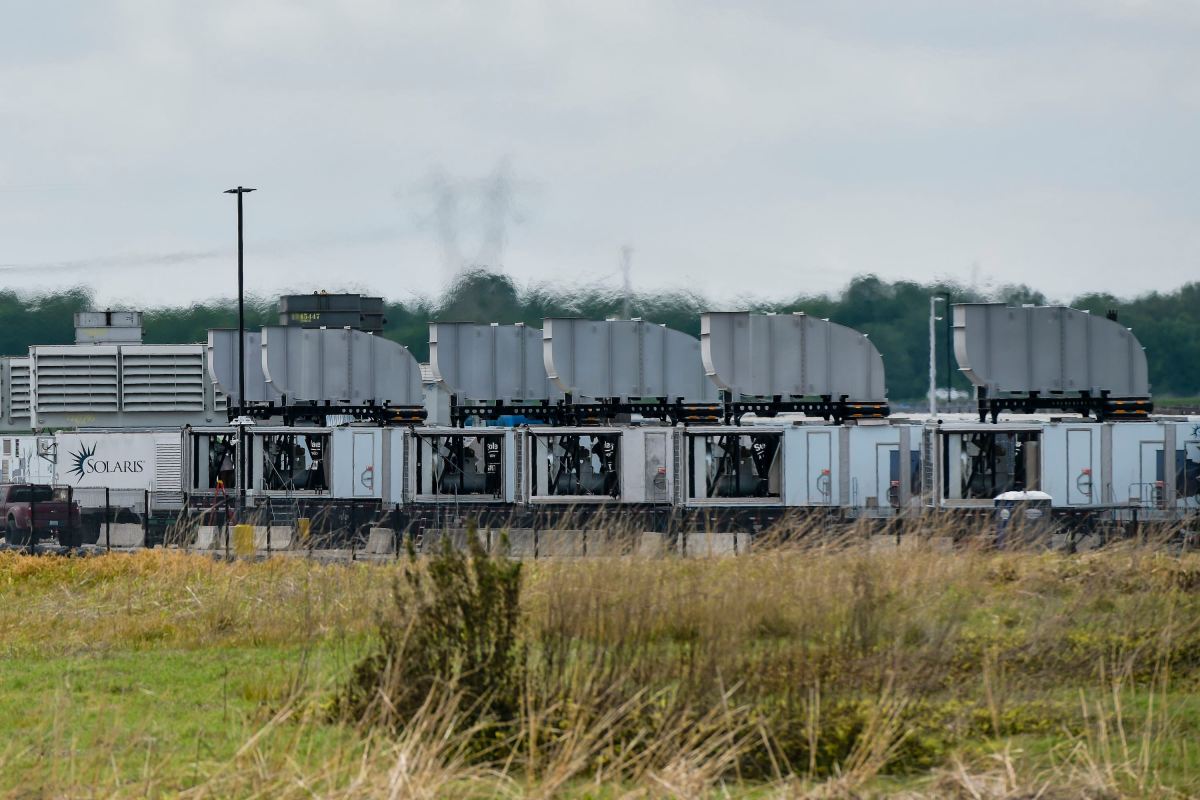
Elon Musk’s xAI is operating nearly 50 natural gas turbines at its Mississippi data center without proper air quality permits. At the same time, Musk sits in a California courtroom accusing Sam Altman of betraying humanity. The contrast isn’t subtle. It’s a story about who actually has clean hands, and the numbers tell you everything you need to know.
What’s Happening Right Now
The Musk v. Altman federal trial is running in Oakland, California. Musk’s lawsuit claims Altman “stole a charity” when OpenAI converted to a for profit Public Benefit Corporation. According to LiveMint (May 12, 2026), Altman called those claims “hair raising” from the witness stand. He testified that Musk once suggested OpenAI’s future leadership should pass to Musk’s own children, a demand Altman described as “extremely uncomfortable.”
Microsoft CEO Satya Nadella also took the stand this week. According to The Business Journal (May 12, 2026), Nadella framed Microsoft’s multibillion dollar OpenAI partnership as a “calculated risk” and kept his public support for Altman intact. OpenAI’s valuation currently sits at $852 billion, according to The Business Journal (May 12, 2026).
Meanwhile, at xAI’s Mississippi data center, nearly 50 methane gas turbines are reportedly operating without proper air permits. The surrounding community is lower income. Environmental regulators say the facility bypassed the standard public review process. Every major outlet is covering the trial. Almost nobody is covering the turbines. That gap is deliberate.
The Hypocrisy Is the Strategy
I want to be direct about what’s happening here. Musk is running one of the most aggressive reputation operations in tech history. He positions himself as the responsible adult while OpenAI goes fat and corrupt. The trial is part of that strategy. So is X. So is his government role. The image is simple: Musk cares about the mission. Altman cares about money.
But look at what xAI is actually doing on the ground. Nearly 50 gas turbines running without air permits isn’t a minor compliance slip. It’s a deliberate choice. Permitting takes time. Public comment periods invite scrutiny. Scrutiny slows down deployment. So you skip the line. The community absorbs the air quality costs. xAI gets its supercluster online faster. That’s the trade. Musk just doesn’t say it out loud.
Now compare that to what Altman is actually accused of. According to Reuters (May 13, 2026), Altman holds over $2 billion in personal stakes in companies that do business with OpenAI, including Helion Energy, Oklo, and Reddit. That’s a real governance problem. Former OpenAI Chief Scientist Ilya Sutskever testified on May 11, confirming he authored a 2023 memo accusing Altman of a “consistent pattern of lying” that damaged trust and productivity inside the company, according to The Business Journal (May 12, 2026).
So yes, Altman has real accountability problems. But Musk is airing those problems from a glass house with 50 unregulated gas turbines burning in the backyard.
The financial picture makes this even sharper. OpenAI is projecting a $14 billion loss for 2026, according to Medium (March 25, 2026). It carries $1.15 trillion in long term infrastructure obligations to Broadcom, Oracle, Microsoft, and Nvidia, according to Medium (March 25, 2026). The company missed multiple monthly revenue targets in early 2026, according to Morningstar (May 5, 2026). Anthropic is quietly winning enterprise clients by being more capital efficient. Anthropic currently generates $6 million in annualized revenue per employee compared to OpenAI’s $5.6 million, according to Morningstar (May 5, 2026).
Two things can be true at once. Altman has governance problems. Musk is running an unregulated industrial operation in an environmental justice community. The press is picking which story to tell. I’m telling you both.
If you’re a creator or independent journalist trying to cover stories like this one before the major outlets catch up, InVideo AI lets you turn written reporting into video content without a production team. In a news cycle this fast, that kind of speed is a real competitive edge.
What This Means for You
Here’s what I’d do if I were watching this as an investor or operator in the AI space.
First, I’d stop treating this as a simple Musk versus Altman story. Both companies have serious structural problems. xAI’s permit violations expose it to regulatory action that could slow or shut down Colossus operations. That’s not a small risk for a company whose entire product depends on that compute infrastructure. If the EPA or state regulators move aggressively, xAI’s model training timelines slip. Grok’s market position weakens. You don’t hear that priced into any coverage.
Second, I’d watch OpenAI’s IPO window closely. Analysts have pushed the realistic listing date to mid to late 2027, according to Morningstar (May 5, 2026). Public market investors want cleaner unit economics and a resolution to this litigation before they’ll commit capital. That means 12 to 18 more months of burn at $14 billion per year. The math is uncomfortable regardless of how bullish you are on the technology.
Third, I’d pay serious attention to Anthropic. It’s not in court. It’s not in the news for permit violations. It’s not burning cash at OpenAI’s pace. It’s quietly winning enterprise contracts and generating more revenue per employee than its larger competitor. In a market where institutional trust is the actual product being sold, clean and boring is a competitive advantage. That’s a lesson most founders still haven’t internalized.
For anyone building a research operation or media presence around AI and tech, AppSumo has lifetime deals on monitoring and intelligence tools that make it easier to track corporate behavior before it hits the mainstream press. The xAI gas turbine story was available in public regulatory filings for months before anyone ran it at scale. That lag is the opportunity for people paying attention early.
The loudest voice in the room usually has the most to hide. Musk’s courtroom performance is engineered to keep your eyes on Altman. Keep one eye on what Musk is building, and exactly how he’s building it.
The Bottom Line
Musk is in federal court accusing Altman of abandoning a humanitarian mission. His own company is burning methane without permits in a community that has no lobbyists and no lawyers on retainer. The trial will eventually end. The turbines will keep running. The question isn’t who’s more ethical between these two men. The question is who keeps paying the real cost of the AI arms race. It’s not the billionaires. It never is.
Frequently Asked Questions
What is xAI’s Mississippi data center and why is it controversial?
xAI’s Mississippi area data center powers the Grok AI models and the company’s broader research infrastructure. It’s controversial because the facility is reportedly operating nearly 50 natural gas turbines without proper air quality permits, bypassing the standard public environmental review process. The surrounding lower income community faces direct air quality impacts with no formal regulatory channel to contest that outcome.
Why are xAI’s gas turbines a legal and regulatory problem?
Operating industrial turbines at this scale typically requires air quality permits under the Clean Air Act and applicable state environmental regulations. Running nearly 50 units without those permits skips mandatory public comment periods and environmental review entirely. Regulators could force a shutdown or impose major operational restrictions, which would directly set back xAI’s AI model training timelines.
What is the Musk v. Altman trial actually about?
Musk is suing Sam Altman in federal court in Oakland, California, alleging that OpenAI’s conversion from a nonprofit to a for profit Public Benefit Corporation violated its original charitable mission. According to LiveMint (May 12, 2026), Altman called the claims “hair raising” from the stand and testified that Musk once sought effective personal control over OpenAI’s future leadership. The case is central to why OpenAI’s IPO timeline has slipped to 2027.
Is OpenAI actually in financial trouble despite its $852 billion valuation?
The company is projecting a $14 billion loss for 2026 and missed multiple revenue targets in early 2026, according to Morningstar (May 5, 2026). It also carries $1.15 trillion in long term infrastructure obligations, according to Medium (March 25, 2026). The IPO timeline has been pushed to mid to late 2027 as public market investors wait for cleaner unit economics and a resolution to the Musk litigation before committing.
How does Anthropic compare to OpenAI right now?
Anthropic generates $6 million in annualized revenue per employee compared to OpenAI’s $5.6 million, according to Morningstar (May 5, 2026). It’s positioned as a more capital efficient and safety focused alternative, which is winning enterprise clients who are watching OpenAI’s governance situation carefully. While OpenAI fights a federal trial and funds $14 billion in annual losses, Anthropic is building enterprise trust one quiet deal at a time.
“`
Get stories like this in your inbox. Daily.
Free. No spam. The AI, tech, and finance stories that move money.