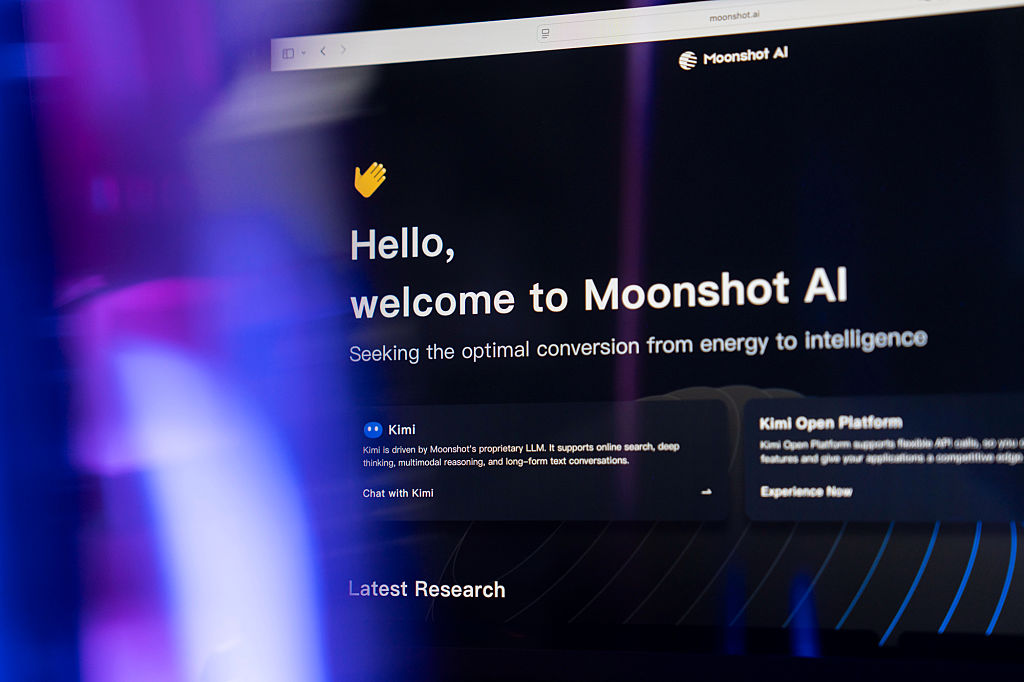
The White House has accused Chinese AI startup Moonshot of stealing the core of Anthropic’s Fable model through distillation, and Treasury is now threatening sanctions. If the allegations hold, this is the first time the US government has moved directly against a foreign AI lab for intellectual property theft rather than hardware. The money at stake runs into the billions.
What Just Happened
Distillation isn’t a new trick. You take a powerful model, run it on massive amounts of data, and use its outputs to train a smaller, cheaper model. The smaller model learns to behave like the big one at a fraction of the cost.
According to the White House briefing, Moonshot AI ran Anthropic’s Fable model through this process at scale. The claim is that Moonshot used Fable’s outputs to build a competing system they’re now offering to customers across Asia and Europe.
Treasury’s Office of Foreign Assets Control is reportedly reviewing a sanctions package that would restrict Moonshot’s access to US financial systems and cloud infrastructure. According to reporting from The Information, this review is already in its second phase, meaning a formal action could come within weeks.
Anthropic confirmed in a statement that they detected unusual API usage patterns consistent with large-scale distillation activity. They didn’t name Moonshot directly but said they had referred the matter to US government agencies.
Why the AI Industry Is Terrified Right Now
Here’s what most people don’t understand about distillation. It isn’t just cheaper. According to research published by MIT in early 2026, distillation can cut frontier model training costs by up to 90% compared to training from raw data. For a company like Moonshot, which raised over $1 billion in 2024 according to Bloomberg, that math is irresistible.
DeepSeek showed the world what distillation could do when they dropped their R1 model in early 2025. OpenAI accused DeepSeek of distilling from GPT models. The US government talked tough but did nothing concrete. Moonshot watched that play out and apparently decided the risk was acceptable.
They were wrong. The difference now is that the White House is involved before any model release, not after. That means the government moved faster than it did with DeepSeek, and that changes the calculus for every Chinese AI lab watching from the sidelines.
The rich versus poor mindset framing here is simple. Wealthy countries and companies invest billions building frontier models. Everyone else wants the same capabilities without the cost. Distillation is the shortcut. Shortcuts have a price.
For founders building AI products, this is a warning. According to a 2025 survey by Andreessen Horowitz, more than 40% of AI startups used some form of model output to train or fine tune their own systems. Not all of that is illegal. But the line is getting a lot clearer after this week.
If you’re building content or media tools on top of AI, you need to know where your model’s knowledge actually comes from. Tools like InVideo AI let you build video content with transparent, licensed AI pipelines. That matters when regulators start asking questions about your supply chain.
What This Means for You
If you’re a founder or investor, here’s what I would do right now.
First, audit your AI stack. If you’re using any model built outside the US, particularly Chinese models, find out exactly how it was trained. The compliance risk is real and it’s growing fast.
Second, watch Treasury’s next move. OFAC sanctions on a Chinese AI company would be unprecedented. If it happens, it could trigger retaliatory actions from Beijing. That would affect every company with operations or customers in China.
Third, understand that Anthropic’s Fable is now a household name because of this scandal. Models people have never heard of become famous the moment governments fight over them. That visibility will push more capital into Anthropic and into US AI labs generally. According to PitchBook, US AI funding in Q1 2026 already hit $34 billion, and this story will add fuel to that number.
Fourth, think about who wins when trust in Chinese AI collapses. US labs win. Enterprise customers who were evaluating Chinese models will pause. That means more business for OpenAI, Anthropic, and Google. If you’re building on those platforms, your competitive position just got better.
If you want tools to cover moves like this one and build content around them fast, AppSumo has lifetime deals on AI research and publishing tools that can cut your workflow cost significantly without locking you into Chinese model dependencies.
The window to act on this story is short. News cycles in AI move fast. The founders who understand what happened here and position around it will be ahead of the ones still reading about it next month.
The Bottom Line
The US government just drew a line in the sand. Distilling American AI models and selling the results will get you sanctioned. Moonshot bet that the rules from 2025 still applied in 2026. They were wrong. Every Chinese AI lab is now running the same calculation Moonshot ran, and they’re getting a very different answer this week. The race isn’t slowing down. The rules just changed.
Frequently Asked Questions
What is model distillation in AI?
Model distillation is the process of using a large AI model’s outputs to train a smaller, cheaper model. The smaller model learns to mimic the behavior of the larger one. According to MIT research, this can reduce training costs by up to 90%.
What is Anthropic’s Fable model?
Fable is an Anthropic model that was allegedly accessed without authorization, according to White House claims. The distillation allegation means Moonshot may have used Fable’s outputs as training data to build a competing system. Anthropic has referred the matter to US government agencies.
Can Treasury actually sanction a foreign AI company?
Yes. Treasury’s Office of Foreign Assets Control has broad authority to sanction foreign entities that threaten US national security or economic interests. A sanction would restrict Moonshot’s access to US financial systems, cloud providers, and US customers.
What happened with DeepSeek and distillation in 2025?
In early 2025, OpenAI accused DeepSeek of distilling from GPT models to build their R1 system. The US government responded with warnings but no formal enforcement action. The Moonshot case is moving faster, with Treasury already in an active review process according to The Information.
How does this affect founders building with third party AI models?
If you’re using any AI model in your product, you need to understand how that model was trained. According to Andreessen Horowitz, more than 40% of AI startups used model outputs for their own training in 2025. Regulators are now paying close attention to that practice, and the compliance risk is only increasing.