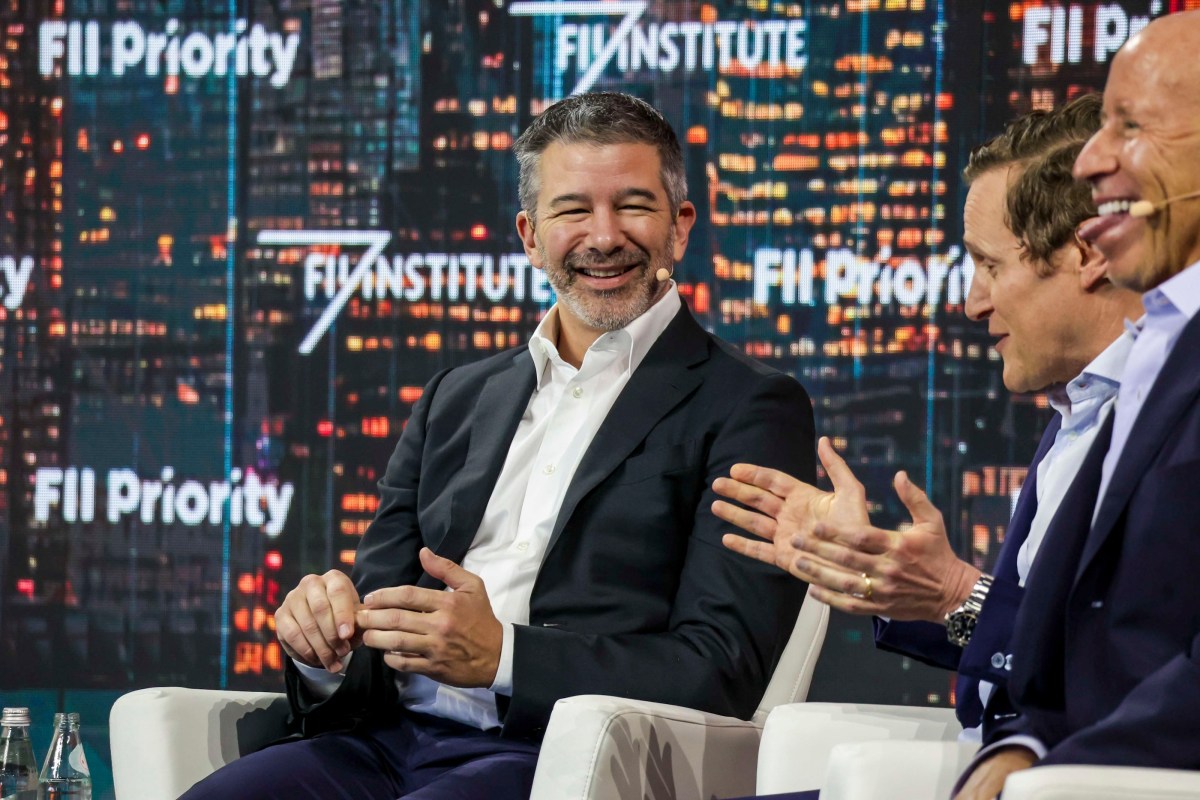
Travis Kalanick built Uber from zero to a $75 billion company. Then his board showed him the door. Now his new venture, Atoms, is reportedly eyeing the autonomous vehicle market. The man who changed how we move from point A to point B wants to do it again, only this time without a driver in the seat.
Why This Is Happening Now
Kalanick didn’t disappear after Uber. He launched CloudKitchens in 2018 and turned ghost kitchens into a sprawling real estate play valued at an estimated $15 billion, according to Bloomberg. That’s what operators do. They lose the battle and come back for the war.
Atoms is his latest move. The company has been operating quietly, but recent reports suggest it’s exploring autonomous vehicle deployment, specifically the robotaxi segment. This is the same market that Waymo, Tesla, and a dozen well funded startups are currently fighting over.
The timing isn’t random. According to McKinsey, the global autonomous vehicle market is on track to exceed $300 billion by 2030. More importantly, the regulatory climate shifted hard in 2025 and early 2026. Multiple U.S. cities expanded robotaxi permits. The window that was cracking open is now wide open.
Kalanick knows this market better than almost anyone alive. He watched Uber kill its own autonomous vehicle program after the 2018 Tempe fatal crash and the subsequent sale of the unit to Aurora Innovation. He knows where the bodies are buried, literally and figuratively.
Why Most People Are Missing the Real Story
The financial press is covering this as a comeback story. That framing is dead wrong. It misses what Kalanick is actually doing.
He’s not trying to build another Uber. Uber’s model is built on human drivers who eat the cost of vehicle ownership, insurance, and maintenance. That model has a ceiling. Robotaxis remove the driver cost entirely. According to ARK Invest, autonomous ride pricing could fall to under $0.25 per mile at scale, compared to roughly $1.50 per mile for traditional rideshare today.
That’s a 6x cost reduction. If you understand money, you understand what that means for margins.
Poor thinking says this is too risky because robotaxis have been “almost here” for ten years.
Rich thinking says the person who cracks unit economics at scale in this market will print money for decades.
Kalanick has access to capital, operational expertise, and a network that most robotaxi startups can only dream about. He also has something more valuable: the scar tissue from watching Uber make every mistake in the book. Atoms doesn’t need to beat Waymo on technology. It needs to beat incumbents on deployment speed, pricing, and city relationships. That’s a business problem, not an engineering problem. And Kalanick is a business animal.
According to Statista, the number of robotaxi trips globally crossed 50 million in 2025, up from fewer than 2 million in 2022. That growth curve is exactly the kind of signal that draws operators like Kalanick back into a fight.
If you’re running any kind of city market operation right now, your costs are climbing. Driver sourcing, fleet logistics, and fuel are all pressing harder on your margins. Most operators still aren’t modeling what their cost structure looks like when autonomous transport cuts per mile pricing in half. That’s a mistake. As you restructure your team around what’s coming, tools like Gusto make payroll and workforce management cleaner when your headcount needs to flex fast.
What This Means for You
Here’s what I’d do if I were an investor or operator watching this unfold.
First, stop waiting for the perfect autonomous vehicle stock to appear. The money in this shift isn’t always in the robotaxi operators themselves. It’s in the infrastructure around them. Charging networks, software platforms, insurance products, and city permit consulting are all going to grow as this market scales. Pick the shovels, not just the miners.
Second, if you run any kind of delivery or logistics operation, start modeling what your cost structure looks like when per mile vehicle costs drop by 60 percent. Your competitors are running that math right now. You should be too.
Third, watch where Atoms raises money. Early backers of platform plays in new markets tend to signal which direction institutional capital is moving. Kalanick attracted serious money at CloudKitchens. He’ll attract it again. The names on that cap table will tell you a lot about which direction smart money is leaning.
Fourth, if you’re moving spend across fleet or logistics accounts, a Wallester business card setup keeps your category spending clean and trackable during a market transition. Small operational moves matter when the ground is shifting under you.
The people who drive for rideshare platforms today should also be paying attention. According to the Bureau of Labor Statistics, there are currently over 1.5 million Americans working as rideshare and delivery drivers. That workforce won’t vanish overnight. But the economics supporting it will change, and they’ll change faster than most people expect.
The Bottom Line
Kalanick got pushed out of Uber while the company was still fumbling with autonomous vehicles. He spent several years sharpening his operational skills and building his war chest. Now he’s walking back into the fight at the exact moment the market is finally ready for it. The people who dismissed him after Uber already got that wrong once. I wouldn’t make the same mistake twice.
Frequently Asked Questions
What is Atoms and how does it connect to Travis Kalanick?
Atoms is Travis Kalanick’s venture after CloudKitchens. Reports indicate he’s exploring autonomous vehicle and robotaxi deployment through the company. Kalanick co-founded Uber and has deep experience in platform and mobility business models, which makes this move a natural extension of his career.
Is the robotaxi market actually ready to be profitable?
According to ARK Invest, autonomous ride pricing could fall to under $0.25 per mile at scale, compared to about $1.50 per mile for human driven rideshare today. That cost structure is what makes the business model. The question isn’t whether the market matures. It’s which operators survive long enough to get there.
How would Atoms be different from Waymo or Tesla?
Waymo is backed by Alphabet and focuses heavily on proprietary sensor technology and safety systems. Tesla is primarily a vehicle manufacturer expanding into autonomous rides through its existing fleet. Atoms would most likely compete on deployment speed, city market relationships, and pricing strategy rather than raw technology leadership. That’s where Kalanick has always been strongest.
Should I be investing in robotaxi companies right now?
I’m not a licensed financial advisor, so this isn’t investment advice. What I can tell you is that infrastructure plays around autonomous vehicles, including insurance, charging, and software, tend to carry less binary risk than betting on a single operator. Do your own research and size your positions based on your actual risk tolerance, not hype.
What happens to rideshare drivers as the Travis Kalanick robotaxi trend accelerates?
According to the Bureau of Labor Statistics, over 1.5 million Americans currently work as rideshare or delivery drivers. The shift won’t happen overnight, but economic pressure on driver earnings will build steadily as autonomous vehicles become cheaper to operate than human driven alternatives. The smart move is to watch the timeline and plan ahead rather than pretend it isn’t coming.