Nadella's AI Warning Most CEOs Are Ignoring in 2026
“`html
Nadella’s AI Warning Most CEOs Are Ignoring in 2026
Satya Nadella just told the business world something most executives don’t want to hear. Companies spending millions on AI tools without rewiring their operations from the ground up aren’t getting smarter. They’re just burning cash. According to Microsoft’s own internal data, fewer than 20% of enterprise AI deployments are delivering measurable productivity gains at scale. That means 80% of the money flowing into AI right now is noise.
What Nadella Actually Said
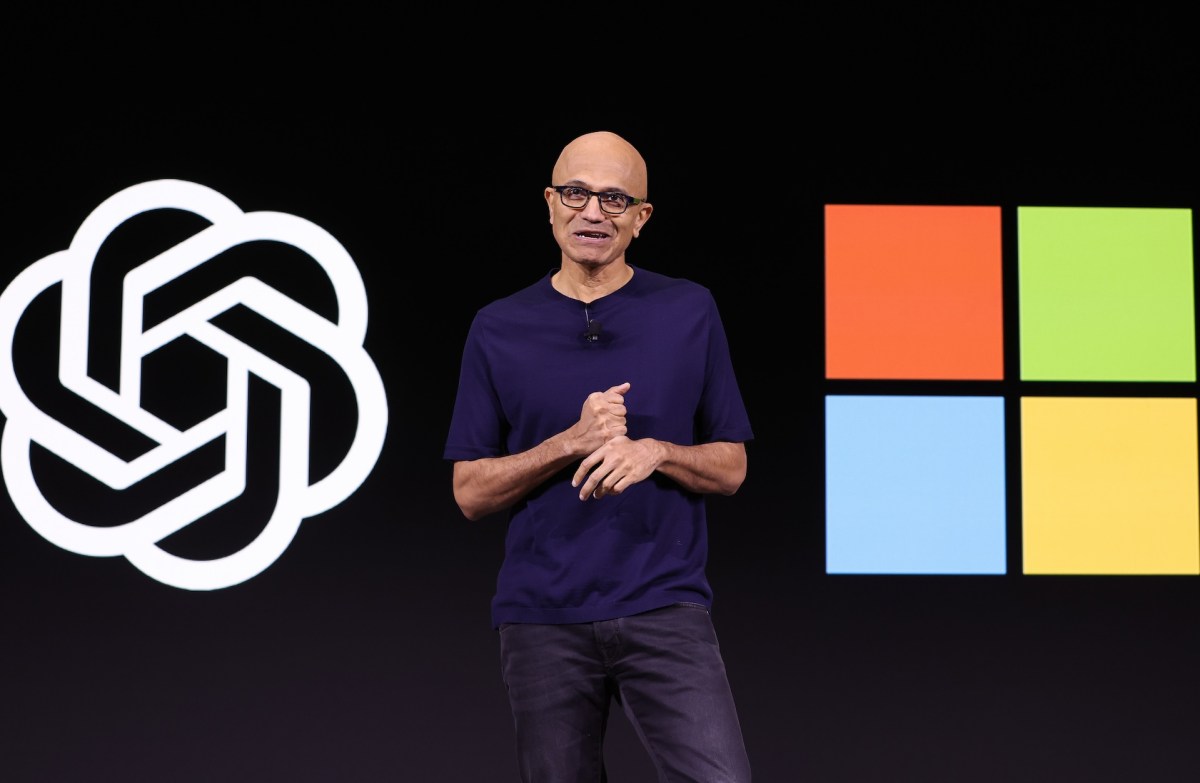
At Microsoft’s 2026 Build conference, Nadella made a statement that got politely applauded and then quietly ignored by most of the press. He said companies treating AI as a feature bolt-on will face the same fate as retailers who treated e-commerce as an add-on to their physical stores. You can guess how that ended for Sears and Toys R Us.
His warning wasn’t about AI being dangerous or taking jobs, at least not in the sci-fi sense. It was sharper than that. He said the real threat is competitive displacement. According to Microsoft’s 2026 Work Trend Index, 78% of enterprise companies have deployed some form of AI copilot or assistant. But according to McKinsey’s Q1 2026 AI adoption survey, only 17% of those companies have restructured workflows around those tools. The rest are using AI like a fancier search engine.
That gap between adoption and transformation is where Nadella is pointing. And he’s right.
Why This Is Actually a Wealth Transfer Warning
Here’s what I see when I read between the lines of what Nadella said. This isn’t a tech story. It’s a money story.
AI-native companies, the ones building their entire operating model around AI from day one, are compressing cost structures in ways that legacy operators can’t match. A two-person AI-native startup can now produce content, customer support, legal drafts, code, and marketing at a volume that used to require 30 employees. According to Stanford’s 2025 AI Index, AI-native firms are operating at roughly 40% lower overhead than their traditional counterparts in the same sectors.
That’s not a small efficiency edge. That’s a structural advantage that compounds every quarter.
The average Fortune 500 company responded to this by buying Copilot licenses and calling it a day. I’ve talked to operators at mid-size companies who are doing the same thing. They got the tools. They didn’t change how decisions get made, how teams are structured, or how outputs get measured. So the AI sits on top of broken processes and produces faster broken outputs.
Nadella’s warning is that this approach won’t just slow you down. It will make you a target. When your AI-native competitor can deliver faster, cheaper, and at higher quality, your customers will notice before you do.
Think about what this means if you’re in media, marketing, legal services, financial analysis, or software. These are the sectors where AI-native competition is moving fastest. And the operators who are still thinking about AI as a tool rather than an operating system are going to wake up in 18 months wondering where their margins went.
If you’re creating content as part of your business model, this is the moment to actually audit your production stack. Tools like InVideo AI let you produce professional video content at a fraction of the traditional cost. That’s the kind of structural shift Nadella is talking about. Not using AI to do the same thing slightly faster. Using it to eliminate entire cost categories.
According to Gartner’s 2026 CIO survey, companies that restructured at least two core workflows around AI in 2025 reported an average 31% reduction in operational costs year over year. Companies that only added AI tools without restructuring reported just 6%. The gap is not subtle.
What I Would Do With This Information
If you run a business or manage a team, here’s how I’m thinking about Nadella’s warning.
Stop measuring AI success by how many tools you’ve subscribed to. Start measuring it by which roles, processes, or cost centers have been fundamentally changed. If you can’t point to a specific workflow that looks completely different than it did 12 months ago, you haven’t actually adopted AI. You’ve just paid for it.
Pick one department and go deep. Don’t spread AI thin across the whole company and wonder why nothing changed. Pick your highest-cost, most repetitive function and rebuild it entirely around AI outputs. Measure output per person before and after. That number will tell you everything.
Watch your AI-native competitors obsessively. Not for what products they’re launching. For what their cost structure lets them charge. If they’re undercutting you by 30% and still profitable, that’s the signal. You need to understand how they’re doing it and whether your current operations can ever match it.
For software and tools specifically, I always recommend checking AppSumo for lifetime deals on emerging AI platforms before committing to annual subscriptions. The market is moving fast and locking into big contracts before the category stabilizes is a way to overpay.
And don’t wait for a committee to approve your AI restructuring plan. The companies moving fast aren’t doing it through six-month strategy reviews. They’re running pilots, measuring results in 30 days, and scaling what works. Speed is now a competitive advantage in ways it wasn’t two years ago.
The Bottom Line
Nadella isn’t warning you about robots taking over. He’s warning you that the competitor down the street who built their whole operation around AI is about to eat your lunch, and they won’t feel bad about it. The window to restructure is open right now. It won’t stay open. Companies that treat AI as a department initiative will lose to companies that treat it as a business model. You don’t get to adopt your way out of a structural cost disadvantage. You have to rebuild.
Frequently Asked Questions
What exactly did Satya Nadella warn companies about regarding AI?
Nadella warned that companies deploying AI tools without restructuring their core workflows will face displacement from AI-native competitors. His core point is that adding AI on top of existing broken processes just produces faster broken outputs. Real transformation means rebuilding how decisions get made and how work gets measured.
How many companies are actually getting ROI from their AI investments?
According to McKinsey’s Q1 2026 AI adoption survey, only 17% of companies that have deployed AI tools have restructured their workflows around them. According to Gartner, companies that actually restructured workflows saw 31% cost reductions on average, compared to just 6% for those who only added tools without restructuring.
What is an AI-native company and why does it matter?
An AI-native company builds its operating model around AI from the start rather than adding it onto legacy processes. According to Stanford’s 2025 AI Index, these firms operate at roughly 40% lower overhead than traditional competitors in the same sectors. That cost advantage is what makes them a structural threat to incumbents.
What should a business owner do first after hearing Nadella’s warning?
Pick your highest-cost, most repetitive function and rebuild it entirely around AI tools. Don’t spread AI thin across the whole company at once. Measure output per person before and after the rebuild. That single number will tell you whether you’re actually transforming or just paying for AI theater.
Is Nadella’s warning specific to large enterprises or does it apply to small businesses too?
It applies more to small businesses than most owners realize. Small operators face AI-native startups as direct competitors, not just large tech firms. A two-person team with the right AI stack can now compete with a 20-person team running on traditional tools. Small businesses that don’t restructure will feel this pressure first, not last.
“`
Get stories like this in your inbox. Daily.
Free. No spam. The AI, tech, and finance stories that move money.