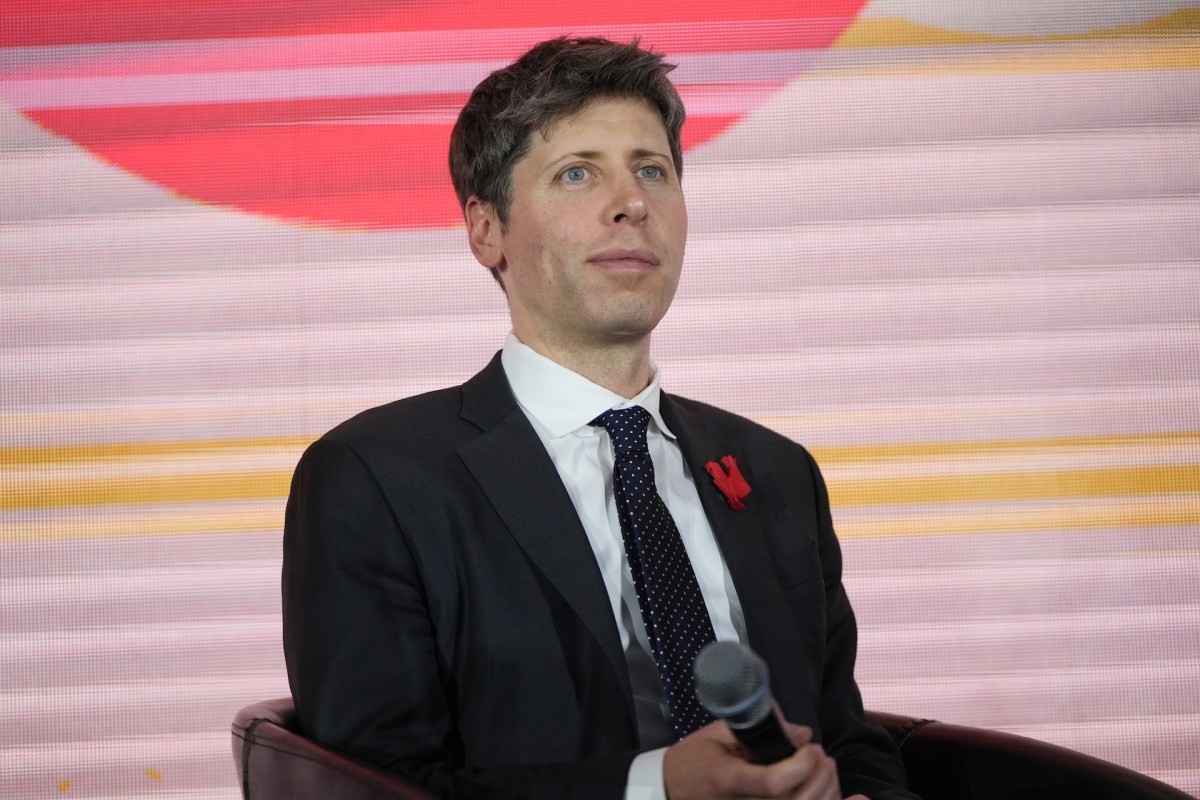
OpenAI is worth over $300 billion. Sam Altman just called a 2026 IPO “ill-advised.” Most investors heard bad news. I heard a wealth transfer in progress, and the retail crowd is on the wrong side of it again.
What Is Going On
Altman addressed IPO questions publicly and pushed back hard on a 2026 listing. He pointed to OpenAI’s ongoing transition from a nonprofit into a company that can distribute profits to investors as the reason. That structural change is real and complicated. It involves regulatory filings, board restructuring, and a legal framework that does not map neatly onto a standard public company offering.
But the structural story is only half of it. According to The Wall Street Journal, SoftBank led a $40 billion funding round for OpenAI in early 2026, pushing the company’s valuation past $300 billion. Microsoft has invested roughly $13 billion in OpenAI to date, according to Bloomberg. These are not the moves of a company that needs public market capital. These are the moves of a company that has all the money it needs and none of the public market obligations it does not want.
According to Reuters, OpenAI was generating approximately $3.4 billion in annualized revenue as of late 2024, with projections showing sharp growth into 2025 and 2026. The company is not struggling. It is choosing its moment carefully.
The Contrarian Read Nobody Wants to Say Out Loud
The financial press is framing this as a delay. I see it as a feature, not a bug. And it tells you exactly where you stand as a retail investor.
When a company goes public, the insiders are usually cashing out. The IPO is their liquidity event. You are not getting in early. You are getting in after the people who took the real risk already locked in their gains. You are buying their exit.
OpenAI’s earliest backers, including Y Combinator and the original founding investors, got in when the company was worth ly nothing. Microsoft got in at a valuation in the billions. SoftBank got in at $157 billion, then again at over $300 billion. By the time OpenAI rings the NYSE bell, the retail price will reflect all of that institutional conviction already baked in.
This is the pattern. Amazon went public in 1997 at a $438 million market cap, according to SEC filings. Google went public in 2004 at a $23 billion valuation. Both companies created enormous wealth after their IPOs, yes. But the percentage gains for investors who got in before the public offering dwarfed what retail buyers saw. According to IPO researcher Jay Ritter at the University of Florida, the average IPO underperforms the broader market by about 3.8% in the three years after going public. You are not getting a deal on IPO day. You are buying hype at peak price.
The rich versus poor mindset split on this story is sharp. The average person hears “no IPO” and thinks they are locked out. The operator mindset asks a different question: what does a $300 billion private valuation tell me about where AI infrastructure is heading? Then they go find the public companies supplying that infrastructure and buy those instead.
If you want to free up capital to act on opportunities like this, comparing your borrowing options through SuperMoney can help you find rates better than what your current bank offers. Cheaper capital means more flexibility to move when the right play shows up.
What This Means for You
Stop waiting for the OpenAI IPO to get in on AI. That ship left a long time ago. Here’s what I would actually do instead.
First, look at the companies OpenAI spends money with. Nvidia supplies the compute. Microsoft hosts the infrastructure. Amazon Web Services is a major cloud partner. These are all public. You can buy them today. The AI spending wave is real and documented. According to Goldman Sachs, global AI infrastructure spending is projected to exceed $200 billion annually by 2026. That money flows through public companies you can access right now.
Second, think about your financial position before you make any major moves. Your credit health affects what rates you can borrow at and how fast you can act when a real opportunity appears. I use IdentityIQ credit monitoring to keep tabs on my score and catch anything suspicious before it costs me. If your score is not where it needs to be, that is the first fix, not the last one.
Third, when OpenAI does eventually IPO, do not chase the open. IPO day is almost always overpriced. The lock up period ends six months later and early employees sell. That is historically when you get a better entry. Patience wins.
Fourth, watch how the nonprofit conversion plays out. A nonprofit becoming a profit-distributing company creates legal and tax complexity that can take years to resolve. If you buy in on IPO day and something in that conversion process causes legal friction, you are holding that risk. Altman knows this. That is part of why he is waiting.
The Bottom Line
Sam Altman is not protecting you by delaying the IPO. He is protecting the people already inside the deal. The moment OpenAI goes public, institutional investors get their liquidity. You get to participate in whatever growth comes after a $300 billion starting line. That is not necessarily a bad investment. But do not call it getting in early. It is not. Figure out who the real beneficiaries are and position yourself closer to them before the bell rings.
Frequently Asked Questions
Why did Sam Altman say an OpenAI IPO would be “ill-advised” in 2026?
Altman cited OpenAI’s ongoing transition from a nonprofit structure into a company that can distribute profits to investors. This restructuring involves complex legal and regulatory steps that make a clean public listing difficult right now. Until that process is complete, a public offering creates complications that would hurt the company’s valuation and governance.
What is OpenAI’s current valuation in 2026?
According to The Wall Street Journal, OpenAI’s most recent funding round valued the company at over $300 billion. SoftBank led a $40 billion investment in early 2026 and Microsoft has invested approximately $13 billion in total, according to Bloomberg.
Can retail investors buy OpenAI stock in 2026?
No. OpenAI remains a private company. You cannot buy its stock on any public exchange. Accredited investors may have access through secondary markets or private funds, but typical retail investors have no direct path until an IPO is announced and completed.
When will the OpenAI IPO actually happen?
There is no confirmed timeline. Altman has signaled that 2026 is too soon. Most analysts expect a public offering after the nonprofit to for profit conversion is fully resolved, which could take another one to two years depending on regulatory progress and market conditions.
What AI investments can I make without waiting for the OpenAI IPO?
Public companies that supply the infrastructure OpenAI and its competitors depend on are accessible today. Nvidia, Microsoft, and major cloud providers are direct beneficiaries of the AI spending wave, according to Goldman Sachs research. These let you participate in the sector without waiting on a private company’s timeline.