OpenAI's $230 Keyboard Bet Comes With Legal Baggage
“`html
OpenAI’s $230 Keyboard Bet Comes With Legal Baggage
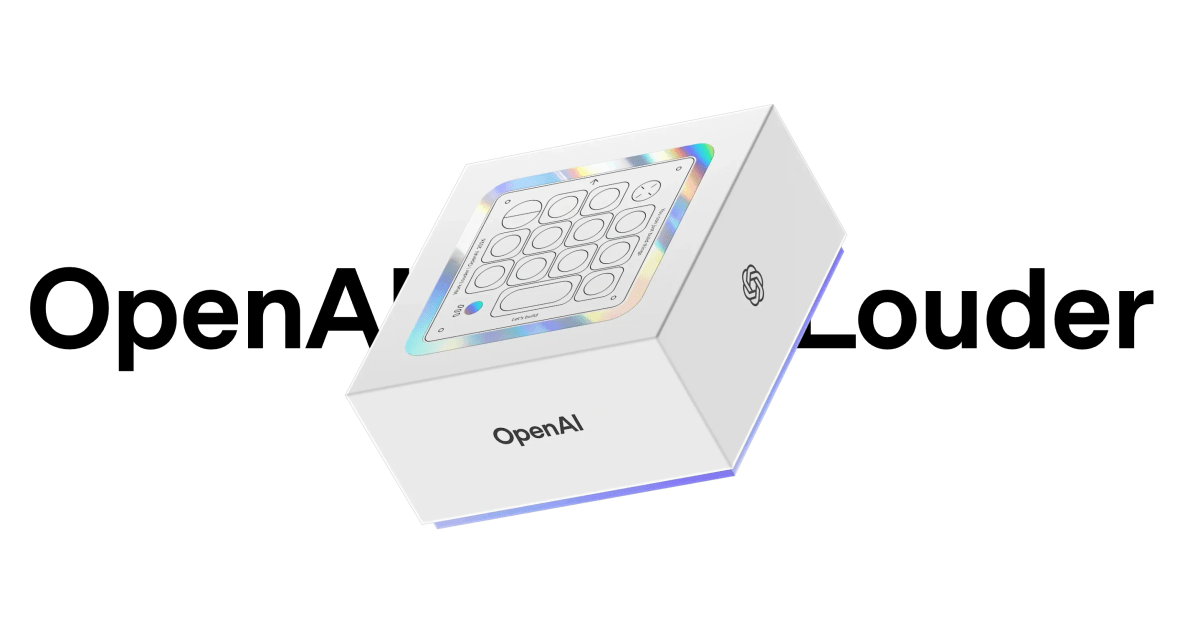
OpenAI just released a $230 physical keyboard built for its Codex AI coding agent. That’s a bold hardware move for a company still navigating active litigation over its last major hardware deal. This isn’t just a product launch. It’s a test of whether a software company can win the hardware game while fighting legal fires at the same time.
What Is Actually Happening
OpenAI’s Codex is an AI agent that writes, edits, and runs code in parallel workflows without waiting for the developer to prompt each step manually. The new keyboard is designed to make human interaction with Codex faster and more deliberate. Think of it as purpose built hardware for AI-assisted development, priced at $230 per unit.
But this launch is happening while OpenAI is still managing the fallout from its acquisition of io, Jony Ive’s hardware startup, for a reported $6.5 billion according to The Wall Street Journal. That deal brought Ive and his team in-house to design what many expect to be a family of consumer AI devices. Legal questions around exclusivity agreements and prior designer commitments tied to that deal are still unresolved as of mid-2026.
According to Bloomberg, OpenAI is simultaneously pursuing at least three separate hardware product lines while managing the io integration. That is a lot of plates spinning for a company that built its name entirely on software.
Why a $230 Keyboard Is a Smarter Move Than It Looks
Here’s what most tech reporters are missing. This keyboard isn’t really about keyboards.
OpenAI is testing whether developers will pay a premium for purpose built AI hardware. If they will, that answers a much bigger question: can OpenAI build a physical product line where software and hardware reinforce each other the same way Apple did?
Think about the original iPod. It was a $399 bet that people would pay a premium for a better music experience. The device wasn’t just about music. It was proof of concept for a vertical that included hardware, software, and a store. OpenAI is running the same play at a smaller scale first.
The numbers back this up. According to Statista, the global developer tools market was valued at over $6 billion in 2024 and has been growing at a steady clip year over year. Even capturing a small slice with premium hardware generates real revenue. More importantly, it generates data about what professional users actually want from physical AI interfaces.
The rich versus poor mindset applies here. Most people will see $230 and think “overpriced keyboard.” Smart operators ask a different question: what problem does it solve, and does the time savings justify the cost? If Codex saves a developer two hours per week on repetitive coding tasks and that developer bills at $150 per hour, that keyboard pays for itself in under one week.
I’ve been watching how the highest-earning developers integrate AI tools into their day. The ones printing real money aren’t the ones who resist AI. They’re the ones who build systems around it and then document those systems publicly. If you’re creating content around your AI coding workflow or want to turn screen recordings into polished tutorials, InVideo AI makes that fast and simple without needing a video production background.
What This Means for You
If you’re a developer or manage a development team, here is what I would do right now.
First, get into Codex before the hardware ships. The keyboard is optional. The software is where the real value lives. OpenAI has made Codex available through the API and through ChatGPT for developers. Get comfortable with the agent workflows before everyone else catches up, because this adoption curve moves fast.
Second, watch the legal situation around io. This matters more than most people realize. If the dispute drags into late 2026, expect delays on the larger AI consumer devices reportedly in the pipeline. The keyboard may be the only physical OpenAI hardware you see for a while.
Third, think about where AI hardware is actually going. We’re in the early innings of purpose built AI peripherals. The $230 keyboard is version one. What comes next could be displays optimized for AI output, audio hardware for AI voice agents, or form factors nobody has thought of yet. According to JetBrains, 76% of professional developers were already using AI tools in their workflows as of 2025. That number is higher now. Hardware that makes those tools faster isn’t a gimmick. It’s where the next productivity edge gets built.
If you want to stay ahead on AI and developer tools without paying full price on every subscription, AppSumo runs lifetime deals on exactly this category of software. Worth checking before you pay recurring fees on tools you can own outright.
The Bottom Line
OpenAI is building a hardware business while fighting legal battles over its last hardware deal. Most companies would slow down and regroup. OpenAI is accelerating. The $230 Codex keyboard is a small product sitting on top of a very large thesis: the AI era needs new hardware, and OpenAI intends to supply it. Whether the courts agree with how they got there is a separate question. The product is shipping either way. The developers who figure out how to use it well will be far ahead of the ones still debating whether it was worth $230.
Frequently Asked Questions
What is the OpenAI Codex keyboard and how much does it cost?
The OpenAI Codex keyboard is a $230 physical keyboard built specifically for use with OpenAI’s Codex AI coding agent. It is designed to speed up developer interaction with AI-assisted coding workflows. It is aimed at professional developers who use Codex regularly.
What is the hardware legal battle OpenAI is dealing with?
OpenAI acquired io, the hardware startup co-founded by designer Jony Ive, for a reported $6.5 billion according to The Wall Street Journal. Legal questions around exclusivity agreements and commitments from designers involved in the deal have emerged and remain unresolved as of mid-2026.
Is the OpenAI Codex keyboard worth $230?
For a developer who actively uses Codex and bills at professional rates, the math is straightforward. If the keyboard saves even two hours of work per week at $150 per hour, the payback period is under one week. The question isn’t whether it’s expensive. The question is whether it’s faster.
How does this keyboard fit into OpenAI’s broader hardware strategy?
According to Bloomberg, OpenAI is pursuing multiple hardware product lines simultaneously, with the io acquisition pointing toward larger AI consumer devices in the pipeline. The Codex keyboard appears to be a lower-risk entry point that lets OpenAI test developer appetite for purpose built AI hardware before making bigger bets.
Will other AI companies release their own hardware peripherals?
Almost certainly. Google, Anthropic, and Microsoft all have the resources and the developer relationships to move into physical AI hardware. If the Codex keyboard finds a real audience, expect competitors to follow quickly. First movers in developer hardware have historically built loyalty that’s very hard to displace later.
“`
Get stories like this in your inbox. Daily.
Free. No spam. The AI, tech, and finance stories that move money.