OpenAI Drops $230 Codex Keyboard While Suing Over Hardware
OpenAI Drops $230 Codex Keyboard While Suing Over Hardware
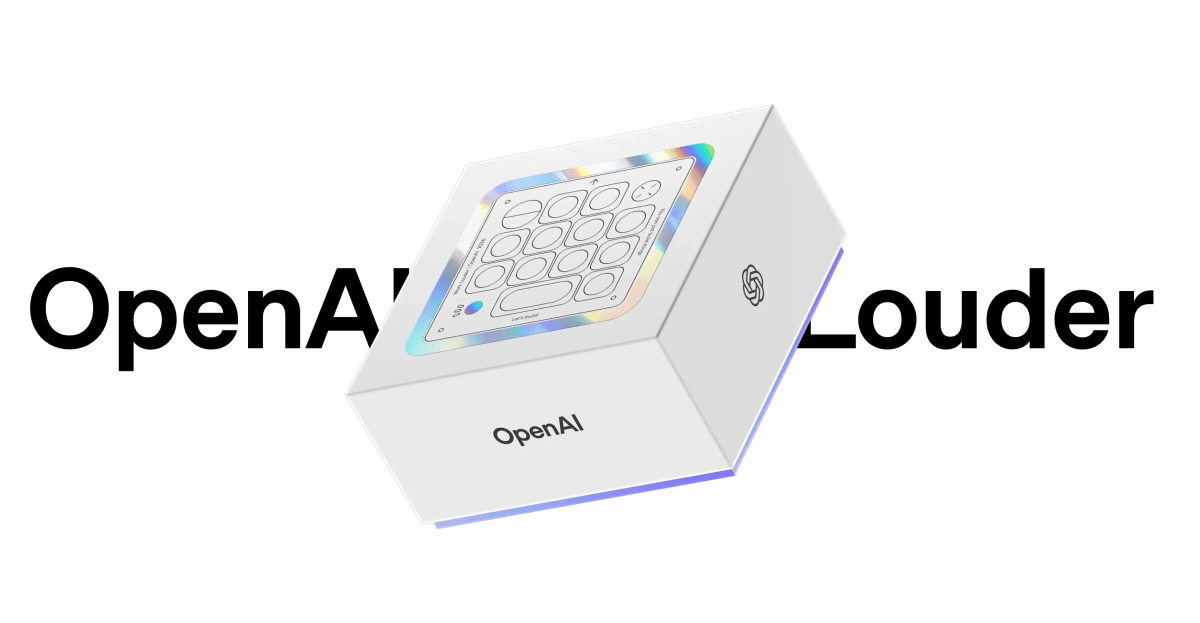
OpenAI is selling a $230 keyboard built for Codex, its AI coding agent, while simultaneously fighting a legal battle over its hardware ambitions. Most people will call it a gimmick. I call it a preview of the biggest money move in tech right now.
What Is Actually Going On
OpenAI released a physical keyboard designed to pair with Codex, the company’s AI agent that writes code, runs tests, and debugs autonomously in the cloud. The keyboard ships with dedicated keys mapped to Codex commands. According to OpenAI, it is built to reduce the friction between a developer’s intent and Codex’s execution. It costs $230.
The backdrop is messy. OpenAI is currently navigating a legal dispute tied directly to its hardware push. The company has spent the past 18 months aggressively pursuing physical device development as part of a strategy to own the full stack from model to machine. According to reporting from Bloomberg, the legal challenge centers on intellectual property and partnership agreements connected to those hardware ambitions.
So why release a $230 keyboard right now, in the middle of all that? Because OpenAI does not need the legal mess to be over. It needs developers to form a habit.
The Business Logic Most People Will Miss
Here is the real story. The AI coding tools market is not slowing down. According to Grand View Research, the global developer tools market is projected to hit $14.7 billion by 2030. AI agents like Codex are taking a larger share of that every quarter. GitHub Copilot crossed 1.8 million paid subscribers in 2024, according to Microsoft’s earnings disclosure, and OpenAI wants that revenue category for itself.
A $230 keyboard is not about keyboards. It is about stickiness. Every time a developer reaches for that keyboard, they are reaching for Codex. That is behavioral lock in that no software subscription alone can create. Apple figured this out years ago. The hardware is the chain that keeps you on the platform.
The legal fight is actually making OpenAI bolder, not more cautious. Companies under legal pressure tend to do one of two things. They stall, or they accelerate. OpenAI is clearly accelerating. The $230 keyboard is a statement that says the hardware strategy is not going away regardless of what happens in court.
Here is the rich versus poor split I see playing out. The average developer will roll their eyes at a $230 keyboard and keep using whatever free tier they have. The builder who understands where money flows will recognize that OpenAI is betting on a future where AI tools are inseparable from the physical layer. That is the same bet that made Apple a $3 trillion company. According to Statista, Apple’s services revenue crossed $100 billion annually in 2024, all built on top of hardware that locked users in first.
Your financial position matters here too. If you want to move on opportunities in sectors like this, you need clean credit to do it. I use IdentityIQ credit monitoring to keep tabs on my score so I am never caught off guard when it counts.
What This Means for You
If you are a developer, the $230 keyboard is a personal call. I would not rush to buy it. Wait and see if dedicated hardware actually speeds up your Codex workflow in a measurable way. But I would absolutely watch what OpenAI does next with hardware. This keyboard is version one of something much bigger.
If you are an investor, watch how the legal battle resolves. Companies fighting over hardware rights in the AI space are fighting over the next decade of margin. The dispute signals that someone thinks this territory is worth going to court for. That is usually a reliable sign the market is real.
If you run a business and you fund tech development with borrowed capital, this is a good moment to make sure your financing is working for you. According to McKinsey, companies using AI coding assistants reported up to 45% faster software delivery in 2024. That gap will widen. Using a SuperMoney loan comparison can help you find better rates so more of your money goes toward tools and talent instead of interest payments.
The hardware angle matters for business owners beyond just financing. If OpenAI succeeds in making Codex the default coding environment through physical devices, switching costs will rise sharply. Get your team familiar with these tools now, before the lock in takes hold.
The Bottom Line
OpenAI is not selling you a keyboard. It is selling you a dependency. A $230 dependency that ties you to Codex and everything that comes after it. The legal battle is noise. The hardware strategy is the signal. The companies that see the difference will be on the right side of the next shift in how software gets built and who profits from building it.
Frequently Asked Questions
What is the OpenAI Codex keyboard?
The OpenAI Codex keyboard is a $230 physical keyboard built to work with Codex, OpenAI’s AI coding agent. It includes dedicated keys mapped to Codex commands to help developers move faster through common coding tasks. OpenAI released it in 2026 as part of its push into hardware.
What is the hardware legal battle OpenAI is involved in?
OpenAI is currently fighting a legal dispute connected to its hardware strategy and related intellectual property agreements. The case centers on OpenAI’s push to build physical AI devices alongside its software products. The company has continued its hardware plans despite the legal challenge.
Is the OpenAI Codex keyboard worth $230?
For heavy Codex users who run dozens of tasks daily, dedicated physical keys could save meaningful time over weeks and months. For casual users, the price is hard to justify against free software alternatives. Try Codex through software first, then decide if the hardware upgrade makes sense for your workflow.
How does Codex compare to other AI coding tools?
Codex competes with GitHub Copilot, Cursor, and similar AI coding assistants. According to Microsoft, GitHub Copilot had over 1.8 million paid subscribers as of 2024. Codex differentiates itself by running as an autonomous cloud agent rather than just an inline suggestion tool, which changes how much of the work it can handle independently.
What does OpenAI’s hardware push mean for developers long term?
OpenAI’s move into hardware signals a future where AI tools are tied to specific physical devices, raising switching costs for users who go deep into the Codex workflow. For developers, getting familiar with Codex now puts you ahead of that curve before the platform lock in becomes difficult to exit.
Get stories like this in your inbox. Daily.
Free. No spam. The AI, tech, and finance stories that move money.