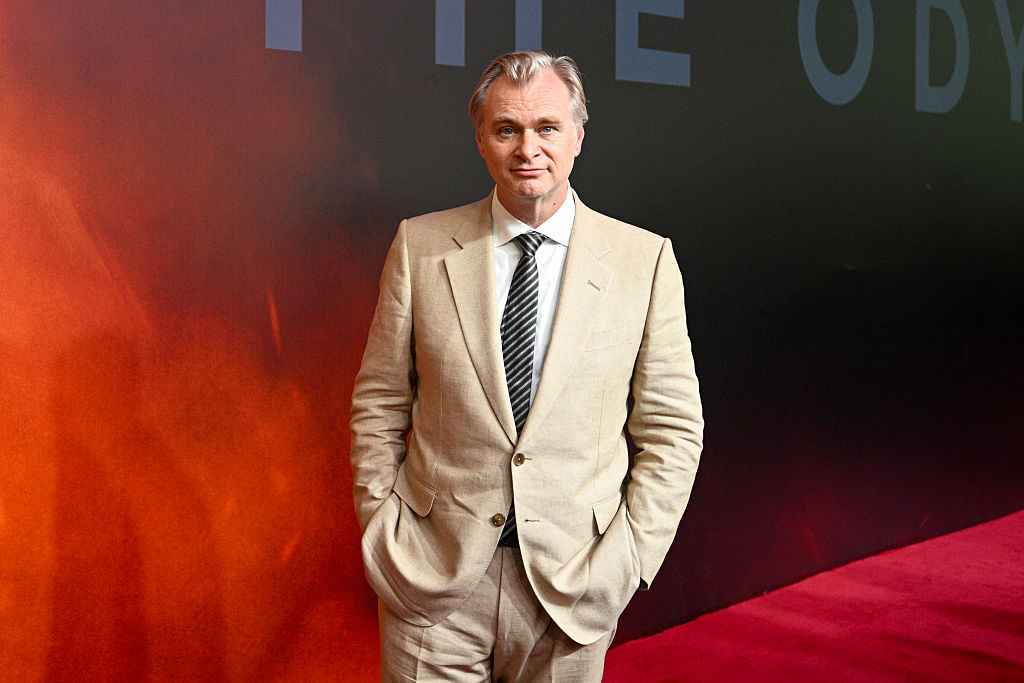
Christopher Nolan just said what Hollywood’s biggest players don’t want admitted. The Odyssey director called AI an obvious Trojan horse, and he’s right. The global entertainment industry is worth over $2.8 trillion according to PwC, and the biggest tech companies are positioning AI as a gift to creators while quietly building tools to replace them. If you’re a creator or startup founder, you need to understand what’s actually happening here.
What Nolan Actually Said
Nolan didn’t mince words. Speaking around the Odyssey press cycle, he described AI as an obvious Trojan horse, meaning it looks like a gift but carries something dangerous inside. This isn’t the complaint of a filmmaker who fears technology. Nolan is the director who shoots on real film stock, insists on practical effects, and builds his storytelling around hard physics. He understands technology well enough to critique it precisely.
The timing of this statement matters. In 2026, AI tools have moved from novelty to infrastructure inside major studios. According to the Motion Picture Association, Hollywood studios spent over $14 billion on technology and digital production tools in 2025, with a growing share allocated to AI content generation. Some studios are already using AI to produce initial screenplay drafts, generate synthetic crowd scenes, and compose temp music scores at a fraction of the previous cost.
According to the Writers Guild of America, studios proposed contract language during recent negotiations that would classify AI as a writing “aid” rather than a replacement. That framing is exactly what Nolan is warning about. The language sounds reasonable. The consequences aren’t.
The Trojan Horse Is Already Inside the Gates
Here’s what most people miss. The Trojan horse isn’t an AI writing your script. It’s the contract you sign that gives a studio or tech platform the right to feed your work into a model. It’s the terms of service you clicked through without reading. It’s the “collaboration tool” your employer rolled out last quarter and everyone adopted because it saved time.
The wealthy understand this. They’re building the AI tools and owning the models. Everyone else is using the tools and feeding the models for free.
I’ve watched this pattern repeat. Social media platforms told creators their content would reach millions. Then the algorithm changed, the reach collapsed, and the platform owned the data. AI is the same play with bigger stakes.
According to Goldman Sachs, AI could automate up to 26% of tasks in the arts and entertainment sector. That’s not automation that creates new, better-paid jobs above it. It’s automation that compresses wages for the humans who remain. The same Goldman analysis found that affected workers in partially automated roles typically see a 15% to 30% wage reduction over five years as their tasks get absorbed by AI tools.
For startups and independent creators, the threat is more immediate. If you’re building a content business, a film production company, a creative agency, or any IP-driven enterprise, you’re operating in a window where your human-made work has maximum value. That window is closing.
The smart operators I know are doing three things right now. First, they’re aggressively copyrighting and documenting their creative work. Second, they’re reading every platform agreement before they sign. Third, they’re building entities that legally own their IP rather than letting it float in a personal name that’s hard to defend in court.
If you’re a creator or filmmaker building your own production house, use Inc Authority to set up your LLC for free. The point isn’t just the legal structure. It’s that your IP needs a legal home you control. Platforms and studios change terms. A properly structured entity gives you a foundation they can’t simply override.
According to the U.S. Copyright Office, purely AI-generated works cannot be copyrighted in the United States as of 2026. But human-created works that incorporate AI assistance exist in a legal gray area that courts are still defining. That gray area is exactly where studios want your work to live. The more ambiguous your authorship, the easier it is for them to claim partial rights.
What I Would Do Right Now
Nolan is warning you to look inside the gift before you take it through your gates. Here’s how I’d act on that warning.
First, document everything you create. Timestamps, drafts, notes, revisions. The creative process is your proof of authorship. If you ever need to defend your IP in a contract dispute or in court, that paper trail is worth more than any single finished piece.
Second, stop signing contracts you haven’t read in full. This sounds obvious. Almost nobody does it. If you’re signing licensing agreements, platform deals, studio contracts, or partnership agreements, every page matters. Use signNow to manage your signature workflow so nothing slips through unreviewed. The friction of chaotic paper contracts is what studios and platforms count on to get you to click agree without thinking.
Third, diversify where your audience lives. If your whole creative business depends on one platform’s algorithm, you’re already inside the Trojan horse. Build a direct list. Own your distribution. Nolan does this by negotiating theatrical release windows into his studio deals. You need the equivalent for your business.
Fourth, treat AI as a tool you direct, not a partner you create with. The moment you start feeding your best ideas into an AI system without understanding who owns the output, you’ve handed away your negotiating position. Use AI for research, for first drafts of administrative work, for quick prototyping. Don’t use it as a creative equal on your core product without a contract that spells out ownership clearly.
The Bottom Line
Nolan is one of the few people with real power in this industry who’s saying what needs to be said. The Trojan horse is already inside Hollywood. It’s inside your startup. It’s inside your content platform. The people who get rich from this moment won’t be the ones who use AI the most. They’ll be the ones who own the AI, own the IP, and read the terms before they signed. Everyone else will wonder what happened.
Frequently Asked Questions
What did Christopher Nolan say about AI?
Nolan called AI an obvious Trojan horse during public statements around his film Odyssey. He warned that AI is being presented as a helpful tool for creators while actually serving the financial interests of the companies that own the technology and the models.
Why does Christopher Nolan’s opinion on AI carry weight?
Nolan is one of the most technically precise directors working today. He chooses film stock over digital and practical effects over CGI deliberately, based on deep technical reasoning. His critique of AI comes from understanding, not fear, which is why it deserves more attention than most Hollywood commentary on this topic.
How does the AI Trojan horse affect startup founders and creators?
According to Goldman Sachs, AI could automate up to 26% of tasks in arts and entertainment, compressing wages for affected workers by 15% to 30% over five years. For startups, the bigger risk is contract language that lets platforms claim partial ownership of AI-assisted work. It’s less about job replacement and more about IP capture.
What can creators do to protect their intellectual property from AI contracts?
Read every agreement before you sign it. Document your creative process to establish proof of authorship. Form an LLC to give your IP a legal entity you control rather than leaving it attached only to your personal name. According to the U.S. Copyright Office, human authorship is still the key factor in copyright claims, so your process documentation matters.
Can AI-generated content be protected by copyright?
According to the U.S. Copyright Office, purely AI-generated content cannot be copyrighted in the United States as of 2026. Human-created work that used AI assistance sits in a legal gray area that courts are still defining. Studios know this, which is why they’re pushing contract language that blurs the line between human and AI authorship on creative projects.