Here’s the Benderson Media article: —
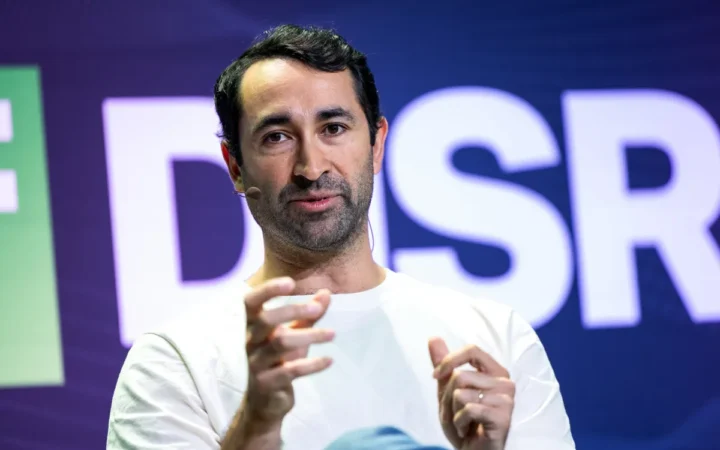
Neil Rimer Says AI Payoff Season Has Begun
The VC crowd has been pouring money into AI for three years. Now Neil Rimer, founding partner at Index Ventures, is signaling something different. The cycle is turning. The money that went in is starting to come back out. And most people aren’t ready for what that means.
What Rimer Is Seeing
Neil Rimer co-founded Index Ventures in 1996. The firm has backed companies like Dropbox, Figma, and King. They know how to read a market cycle. When someone like Rimer says the AI returns are starting to materialize, that’s not noise. That’s a signal worth paying attention to.
According to PitchBook, global AI investment hit $131 billion in 2024, up from $91 billion the year before. The money was flowing in fast. But a flood of capital without exits is just a bigger pile of bets. The question was always when the exits would come. Rimer is now saying that time is here.
The AI IPO pipeline has been building throughout 2025 and into 2026. According to Renaissance Capital, AI and adjacent AI companies represent more than 40 percent of the anticipated IPO queue this year. That is not a coincidence. The big funds need liquidity events. And they’re engineering them.
The Rich Mindset vs the Poor Mindset on AI Returns
Here is where most people miss the point. When headlines say “AI returns are coming,” average investors hear “buy AI stocks.” That’s the employee mindset. You see an opportunity and you try to grab the tail end of someone else’s trade.
What Rimer is actually describing is a structural shift. The first phase of any major tech cycle is the build phase. You put money in and wait. The second phase is the harvest phase. You extract value. The smart money knows which phase they’re in. The average investor usually figures it out two years late.
According to CB Insights, fewer than 1 in 10 AI startups from the 2021 to 2023 cohort has reached profitability. That means the exits coming now are not from broad success. They’re from concentration. A small number of AI companies are generating almost all the real value. Rimer’s firm happens to be in several of them.
This is the same pattern we saw after the dot-com collapse and again after the 2008 financial crisis. A wave of capital flows in, most of it is wasted, and then the companies with real margins surface and generate outsized returns for the few who got in early. Rimer is telling you we’re at that surfacing moment.
If you’re building something in the AI space right now, this matters more than most people realize. The platforms that let you create real content at scale are becoming foundational infrastructure for the next phase. I’ve been recommending InVideo AI to anyone trying to build an AI content operation because it cuts production time dramatically. That kind of operational advantage is what separates builders from spectators during a harvest cycle.
What I Would Do Right Now
If Rimer is right, and I think he is, the next 18 months are not about finding the next AI startup to back. They’re about positioning in the companies that already have revenue and margins.
Here is what I would do.
First, stop chasing early stage AI deals unless you have a real information edge. The window for cheap entry on foundational AI plays has closed. According to Crunchbase, median pre-money valuations for Series A AI companies hit $42 million in early 2026, up from $18 million in 2022. You’re not getting a bargain at those prices.
Second, look at the tools already generating cash. The picks and shovels of the AI boom are real businesses. Companies selling AI software to small and mid-sized businesses are seeing adoption curves that remind me of SaaS in 2012. AppSumo is a good place to spot these early because it surfaces software tools gaining traction with real buyers before they hit the mainstream press. The lifetime deals on that platform often go to companies that end up raising serious rounds later.
Third, pay attention to which companies Rimer’s portfolio is moving toward an exit on. Index Ventures is not known for holding forever. When they start preparing a company for IPO or acquisition, they move deliberately. Watch their portfolio. Watch the regulatory filings. The early signals are usually public if you know where to look.
Fourth, if you’re an operator or founder, Rimer’s signal means the acquisition market is opening up again. Large tech companies and private equity firms need to deploy capital into AI that already works. If you’ve built something with a real user base and defensible revenue, now is the time to be visible. Not next year. Now.
The Bottom Line
Most people will read “AI returns are coming” and feel relieved their tech ETF might go up. That’s not the play. Rimer is telling you the extraction phase has started. The money is moving from patient capital to active capital. The people who understand that shift will capture the value. Everyone else will watch it happen on CNBC and wonder why their portfolio didn’t move.
Frequently Asked Questions
Who is Neil Rimer and why does his view on AI matter?
Neil Rimer is a founding partner at Index Ventures, one of the most influential VC firms operating across Europe and the US. The firm manages over $25 billion and has backed more than 30 companies that reached billion-dollar valuations. When he signals a shift in how AI capital is moving, it reflects what major institutional investors are actually doing with their money, not just saying in interviews.
What does it mean when AI money “comes back out”?
It means the investment cycle is shifting from the build phase to the harvest phase. Capital that went into AI companies is now starting to return through IPOs, acquisitions, and secondary sales. This is a normal and expected stage in any major technology cycle and signals that the first wave of AI companies with real revenue are becoming mature enough for exit events.
Should regular investors buy AI stocks now based on this signal?
Not blindly. The companies generating real returns are concentrated, not spread evenly across the sector. Buying a broad AI index now means you’re paying for the perception of AI’s success, not necessarily the actual earnings. Focus on companies with clear revenue and profitability rather than pure narrative plays.
How does this AI investment cycle compare to previous tech cycles?
It rhymes strongly with the post-dot-com period from 2002 to 2005. A massive wave of capital flooded in, most startups failed, and then a small number of survivors generated enormous returns. According to McKinsey, AI adoption in enterprise software is now following the same adoption curve that cloud computing followed in 2009 to 2013, which suggests we’re entering the steep part of real commercial adoption right now.
What is the best way to spot which AI companies will generate real returns?
Follow the revenue, not the narrative. Companies with paying customers, low churn, and gross margins above 60 percent are the ones worth watching. Rimer’s own portfolio choices are a useful proxy since Index Ventures has historically backed companies at the revenue traction stage rather than the pure idea stage. If a company can’t explain its path to profit in two sentences, move on.