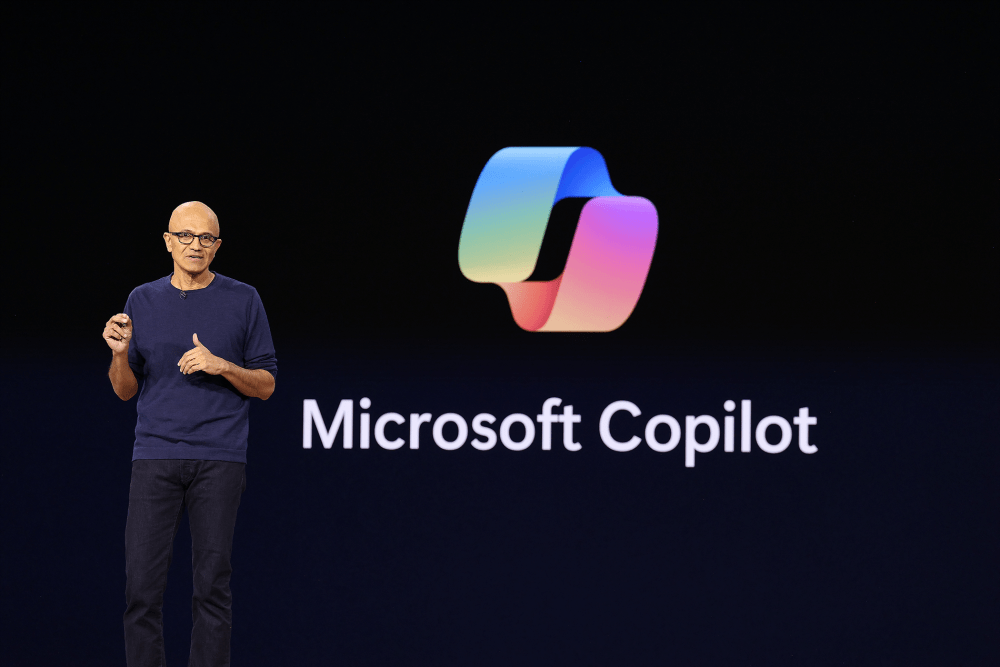
Microsoft’s CEO just said out loud what most tech insiders have been whispering for months. Satya Nadella told a packed audience that AI models need an “emergency brake” built in before they scale further. That single statement from the head of a $3 trillion company is not a safety lecture. It is a signal about where the next wave of money is going.
Why This Is Bigger Than a Safety Soundbite
Nadella did not say this at a fringe AI ethics conference. He said it while Microsoft is actively embedding Copilot into every product it sells. When the guy pressing the gas pedal asks for a brake, you pay attention.
The context matters. According to the International Monetary Fund, AI could affect up to 40% of all jobs globally, with advanced economies seeing 60% of roles exposed to automation pressures. That is not a distant forecast anymore. That is happening now, in 2026.
According to Goldman Sachs research, enterprise AI spending hit $200 billion globally in 2025 and is tracking higher this year. Companies are deploying AI faster than their legal teams, HR departments, or boards can process. Nadella’s “emergency brake” comment is a direct response to that gap.
According to the AI Incident Database, reported AI failures in production systems more than doubled between 2023 and 2025. Chatbots giving dangerous medical advice. Hiring tools filtering out qualified candidates. Autonomous trading systems triggering flash volatility. The problems are real and they are getting louder.
Nadella is not going soft on AI. He is playing defense before regulation forces his hand.
The Contrarian Read Nobody Is Talking About
Here is where most people get this wrong. They hear “emergency brake” and think slowdown. I hear it and think opportunity.
When a dominant player in a market calls for guardrails, they are not trying to slow the market. They are trying to shape the rules before a regulator does it for them. Microsoft has the resources to comply with almost any AI framework governments throw at them. Smaller competitors do not. That asymmetry is the play.
Think about what happened in fintech. When PayPal and Visa started supporting stricter KYC rules around 2018, small payment processors got crushed by compliance costs. The big players survived. The small players either sold or died. Nadella is setting up the same dynamic here.
The winners in the next 24 months will be the companies and individual builders who treat AI governance as a feature, not a burden. Your competitors are ignoring this conversation entirely. That is a mistake.
If you create content, run a business, or build products using AI tools, you need to get ahead of this now. Tools like InVideo AI already build watermarking and disclosure features into their video creation workflow. That is not just compliance. It is brand protection. Clients and platforms are going to start demanding proof that AI content is labeled and traceable. The builders who have that infrastructure in place will win contracts. The ones who don’t will scramble.
Rich mindset: build the brake into your workflow now and charge a premium for it. Poor mindset: wait until someone forces you and pay the penalty.
What This Means For You
I want to be direct about what I would do with this information right now.
First, I would document every AI tool I use in my business. Which models, which versions, what data they touch. You do not need a lawyer for this. A simple spreadsheet works. When clients start asking (and they will), you want an answer ready.
Second, I would start building content and products that are clearly human-in-the-loop, not fully automated. This is not about slowing down. It is about positioning. “Human-reviewed AI content” is already a differentiator in 2026. In 2027 it will be a requirement in certain industries.
Third, I would look hard at the tools I am paying for. The SaaS space is getting messy. Vendors are adding AI features nobody asked for and jacking up prices. Smart operators are hunting for better deals. AppSumo regularly surfaces lifetime software deals from developers who build leaner tools with clear AI disclosure practices. I have found several solid workflow tools there that cost me nothing monthly, which matters when you are tightening up margins ahead of a potential slowdown.
Fourth, I would watch what Microsoft does in the next 90 days, not what Nadella says. If they ship an actual governance layer in Azure OpenAI or Copilot, that sets the enterprise standard. Every other vendor will copy it within six months.
The operators who understand this shift early get to set their prices. The ones who ignore it race to the bottom.
The Bottom Line
Nadella’s emergency brake comment is the loudest AI safety signal from a sitting Big Tech CEO in years. Most people will file it under “corporate PR” and move on. That is exactly the wrong read. This is Microsoft telling the world it sees regulation coming and it is getting in front of it. The builders and operators who treat AI governance as infrastructure right now will have a real advantage when the rules arrive. The window to build that edge quietly is closing fast.
Frequently Asked Questions
What did Satya Nadella mean by an AI emergency brake?
Nadella argued that AI systems need built-in controls that can stop or slow deployment when outputs become unpredictable or harmful. He is pushing for technical and policy safeguards to be standard in AI infrastructure before further scaling happens. It reflects a broader concern inside Microsoft about liability and regulatory exposure.
Does this mean Microsoft is slowing down its AI investment?
No. Microsoft committed over $80 billion to AI infrastructure in 2025 alone, according to company earnings reports. The emergency brake comment is about managing risk on the deployment side, not pulling back on development. Nadella wants to move fast and have a safety net.
How does AI governance affect small business owners and creators?
Increasingly, enterprise clients and major platforms are requiring vendors and creators to disclose how they use AI. Businesses that have documented AI workflows and can show human oversight will win more contracts as these requirements spread. Getting ahead of it now costs almost nothing. Getting caught flat-footed later costs a lot.
What is the “rich vs poor” angle on AI safety rules?
Large companies have legal teams and compliance budgets that turn governance requirements into competitive moats. Smaller operators who treat AI rules as a burden will struggle with compliance costs. The ones who treat them as a differentiator and build transparent processes now will charge more and attract better clients.
Is AI regulation actually coming in 2026?
Yes. The EU AI Act started its phased rollout in 2024 and binding obligations for high-risk AI systems are now active. The US is moving slower but several states passed AI disclosure laws in 2025, according to the National Conference of State Legislatures. Businesses operating across markets are already dealing with these requirements.