Google Imagines the Declaration Written With AI Help
“`html
Google Imagines the Declaration Written With AI Help
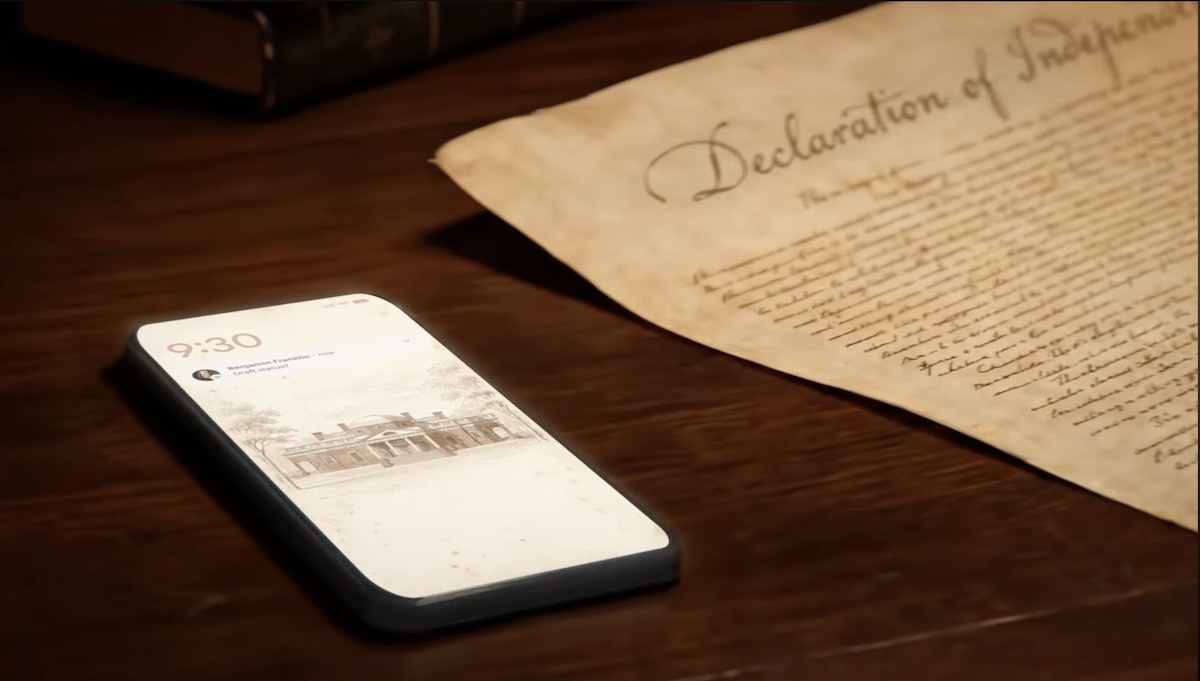
Google just dropped a commercial imagining the founding fathers using AI to draft the Declaration of Independence. The internet is furious. I think that reaction tells you everything about why 72% of businesses are already ahead of most people on this technology. The argument is about a 60 second ad. The real story is about who builds the next decade of wealth.
What Google Just Did
According to The Verge, Google released a commercial that imagines America’s founding fathers embracing AI as a writing tool for the Declaration of Independence. The Verge called it “infuriating.” Social media agreed almost immediately. The backlash spread fast.
This is not the first time a major tech company used historical figures to sell a product. But something about putting AI assistance into the most famous document in American history hit a nerve that a phone commercial or a search ad never could.
I get the instinct to be annoyed. I do not think it matters. Google is not trying to rewrite history. Google is trying to normalize AI in creative work. Every person who shared that commercial out of anger gave Google free reach worth millions in ad spend. That is not an accident. That is strategy.
The Outrage Is a Distraction
When I look at this commercial I do not see a history lesson. I see a sales pitch aimed at the billions of people who still treat AI as something coming someday instead of something running right now.
According to McKinsey’s 2025 State of AI report, 72% of companies reported using AI in at least one business function, up from 55% the prior year. That number is not slowing down. Google knows it. The commercial is not ahead of the curve. It is behind it.
The people most furious about seeing a founding father at a keyboard are often the same people who thought TikTok was a passing fad in 2019. They were wrong then.
According to Alphabet’s 2025 annual report, the company spent over $75 billion on capital expenditures, most of it on AI infrastructure. That is not a stunt. That is a company putting its entire balance sheet behind one bet: that AI becomes the default creative layer for how the world builds and communicates. The commercial is just the storefront for that bet.
This is where the rich versus poor mindset shows up clearly. The average viewer sees a commercial and debates whether it disrespects the founding fathers. The sharp operator asks one question: what can I build faster and cheaper because of these tools?
Content creators are already answering that question every day. Tools like InVideo AI let you turn a written concept into a produced video in minutes. Not hours. Minutes. If Jefferson had been trying to reach 300 million people instead of 2.5 million colonists, he would have had 10 tabs open.
What This Means for You
The reaction to this commercial tells you exactly where the opportunity is right now. Most people will keep debating AI authenticity. A smaller group will quietly learn to produce 10 times the output at a fraction of the cost. That gap compounds every month.
Here is what I would do starting today. Stop watching the debate. Pick one part of your content creation process that eats the most time. Find an AI tool built specifically for that task. Test it for 30 days. Measure what you get out versus what you put in. Keep what works and cut what does not.
According to a 2025 HubSpot survey on AI adoption in marketing, marketers using AI tools saved an average of more than three hours per week on content tasks. That is over 150 hours a year. That is nearly four full work weeks handed back to you. The founders literally wrote a document about what to do with freedom. I think they would approve.
If you want to cut your software overhead at the same time, AppSumo regularly lists lifetime deals on AI writing and content tools so you buy once instead of paying a subscription every month. That one habit alone, owning your tools instead of renting them, is how operators protect margin when everyone else is bleeding recurring fees.
The larger point is this. Google did not make this commercial for historians or political scientists. They made it for business owners, creators, and operators who are still on the fence. The message is simple and direct: this is normal now. Get in or get lapped.
The Bottom Line
Google’s ad about the Declaration of Independence is not about history. It is about who controls the creative future. The debate over whether Jefferson would have used Gemini is completely beside the point. The only question worth asking is whether you will use what is available right now. The operators and creators who say yes are building the next 50 years of advantage. Everyone else is posting opinions about a commercial.
Frequently Asked Questions
What is Google’s Declaration of Independence AI commercial about?
Google released a commercial imagining the founding fathers using AI assistance to draft the Declaration of Independence. According to The Verge, the ad generated widespread criticism online from viewers who found the premise offensive or tone deaf to American history.
Why did Google’s AI ad spark so much backlash?
Many viewers felt that using one of the most important documents in American history to market an AI product was disrespectful. The backlash reflects a deeper public discomfort with how fast AI is being inserted into creative and cultural spaces that people feel should be protected from commercial influence.
Is Google’s Declaration of Independence ad actually effective marketing?
In terms of reach, almost certainly yes. The commercial generated enormous organic sharing through outrage, giving Google millions of dollars in free media attention. Whether it converted skeptics into AI tool users is harder to track, but brand saturation at that scale is rarely a loss for a company of Google’s size.
How can I start using AI for content creation in 2026?
Start with one repetitive task that eats your time, whether that is writing drafts, editing video, or building social posts. Pick one AI tool built for that specific job and run it for 30 days before judging. Most people who abandon AI tools quit before they hit the learning curve payoff.
What does this Google AI ad tell us about where content creation is heading?
It tells us that AI in creative work is now mainstream enough for one of the world’s largest companies to build a mass market commercial around it. For content creators, that is a signal that AI tools are table stakes now, not a competitive edge. Learning them today puts you ahead of the crowd still arguing about whether using them is legitimate.
“`
Get stories like this in your inbox. Daily.
Free. No spam. The AI, tech, and finance stories that move money.