Google's AI Declaration Ad Signals a $1 Trillion Content War
“`html
Google’s AI Declaration Ad Signals a $1 Trillion Content War
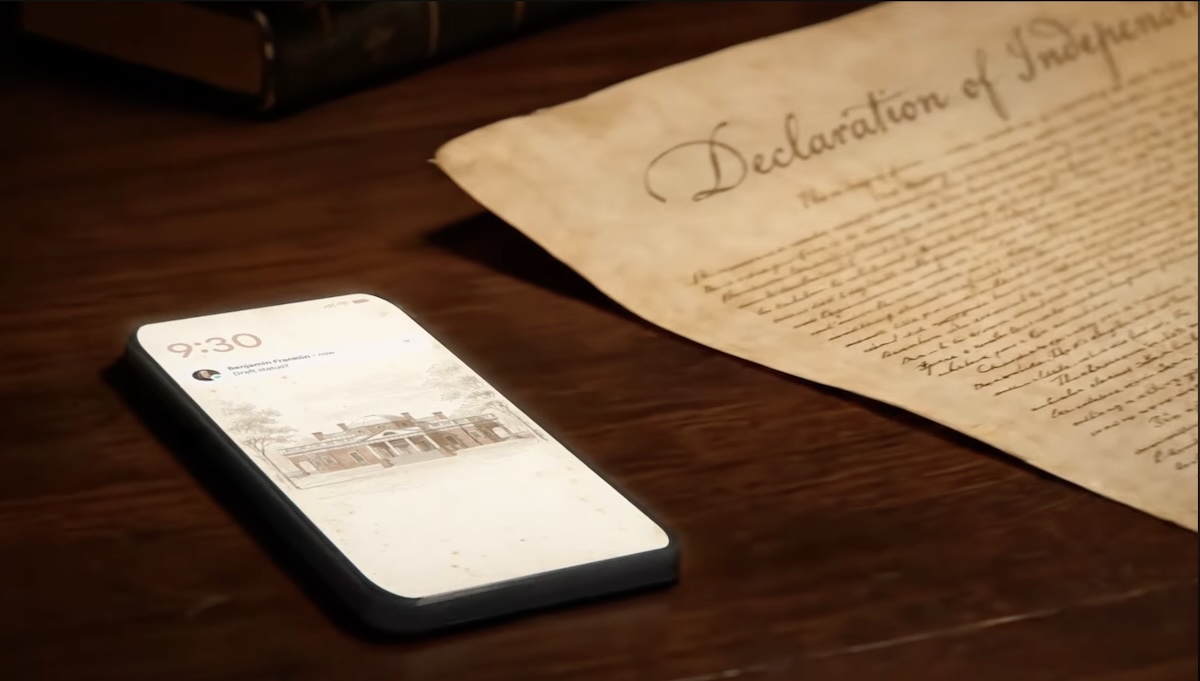
Google just rewrote American history. Literally. Their new commercial imagines Gemini sitting beside the Founding Fathers, helping draft the Declaration of Independence. Most people saw a heartwarming ad. I saw a $1 trillion industry getting its eviction notice served with a smile.
What Google Actually Did Here
The commercial is clever. It shows a historical figure using AI as a writing partner to shape one of the most important documents ever written. Google positioned Gemini not as a replacement for human thought but as a collaborator. A co-author. A tool that makes the human sharper.
That framing is intentional. And it is worth understanding why Google spent millions on it right now.
According to Statista, the global AI market is projected to reach $1.85 trillion by 2030. Content creation sits at the center of that number. Every business, every media outlet, every solo operator who creates words for a living is inside the blast radius of what Google just announced with that commercial.
Google is not just selling Gemini. They are selling a new mental model. AI as creative partner, not AI as threat. That is a calculated move. According to a 2025 Pew Research Center survey, 52 percent of Americans say they are more worried than excited about AI. Google needs to flip that number if they want Gemini in every workflow. A Declaration of Independence ad is the most American way possible to do it.
The timing matters too. According to Bloomberg Intelligence, Google’s ad revenue faces pressure from AI-powered search reducing click-through rates on traditional results. The company needs Gemini adoption to grow fast. A cultural moment like this ad is part of that push.
The Contrarian Take Most People Are Missing
Here is what I find fascinating about this commercial. The backlash it got was immediate and loud. Critics called it tone-deaf. Historians pushed back. Writers felt threatened. Social media lit up with takes about AI stealing human creativity.
That reaction tells you everything about who will win and who will lose in the next five years.
The people angry about the ad are thinking like employees. They are worried about being replaced. The people studying the ad are thinking like owners. They are asking what they can build with this tool before their competitors figure it out.
This is the same pattern I saw with the internet in 1995. With smartphones in 2007. With social media in 2010. Every time a new communication tool shows up, the majority of people argue about whether it is good or bad. A small group quietly builds wealth with it. By the time the argument is settled, the window has closed.
AI content tools are not a future possibility. They are a present reality with serious money attached. Creators who use AI to produce more content, faster, at higher quality, are already pulling ahead. I have seen solo operators running content operations that would have required a team of twelve people three years ago. They are not replacing their creativity. They are multiplying it.
If you are serious about building a content presence in 2026, look at what tools like InVideo AI make possible for video creation specifically. Video content gets roughly three times the engagement of text across most platforms, according to Cisco’s Visual Networking Index. The creators who combine strong writing with fast video production are building audiences at a pace that was not achievable before these tools existed.
Google’s commercial was not about Thomas Jefferson. It was about you. It was about whether you are going to pick up the tool or spend the next decade writing angry posts about people who did.
What This Means for You
Here is what I would do right now with this information.
First, stop treating AI as a gimmick. Google does not spend Super Bowl-level ad money on gimmicks. When the largest advertising company in the world tells you that AI belongs beside the greatest minds in history, they are signaling where the market is going. Take that seriously.
Second, the opportunity in AI-assisted content is not writing faster. It is thinking better. The Founding Fathers in that commercial were not outsourcing their convictions to a machine. They were using a tool to sharpen their arguments and speed up their process. That is the correct mental model.
Third, the tools available right now are genuinely good and still underpriced. If you have not gone through what AppSumo offers in lifetime software deals for AI and content tools, you are paying monthly subscription rates for things you could own outright. That is a cash flow decision, not a technology decision.
Fourth, your competitors are not asleep. If you run any kind of content-driven business, your competition is already experimenting with AI. The gap between operators who adopt early and those who wait is growing every month. According to McKinsey’s 2025 AI adoption report, companies using generative AI in their content and marketing workflows reported a 40 percent reduction in production time on average. That is a real competitive advantage that compounds over time.
The question is not whether AI belongs in your content process. Google just answered that with a $10 million production budget and a spot in primetime. The question is how fast you move.
The Bottom Line
Google used the birth of American freedom to sell you on the future of AI. Most people missed the message entirely. The commercial was not nostalgia. It was a roadmap. The companies, creators, and operators who treat AI as a thinking partner right now are going to own their niches by 2028. The ones still arguing about whether AI is ethical will be looking for work. History did not wait for consensus. Neither will this.
Frequently Asked Questions
What was Google’s AI Declaration of Independence commercial about?
Google’s commercial imagined the Founding Fathers using Gemini AI as a writing partner to help draft the Declaration of Independence. The ad was designed to position AI as a creative collaborator rather than a replacement for human thought. It ran as part of Google’s broader push to increase Gemini adoption across consumer and business users.
Is AI-assisted content creation actually effective in 2026?
According to McKinsey’s 2025 AI adoption research, companies using generative AI in content workflows cut production time by roughly 40 percent on average. The most effective operators are not using AI to replace their thinking. They are using it to produce more output without sacrificing quality or originality.
Does using AI for writing violate copyright or originality standards?
Current copyright law in the United States does not protect purely AI-generated content, but content with meaningful human creative input retains protection. The legal lines are still being drawn in courts and legislatures. The practical answer is that AI as a writing tool used by a human author does not strip that author of their creative ownership.
Why did Google’s AI ad get so much backlash?
Critics felt the commercial was tone-deaf because it placed a corporate AI product alongside one of history’s most sacred documents. The backlash reflected widespread anxiety about AI’s role in creative and intellectual work. Google’s response was ly silence, which suggests they anticipated the reaction and calculated that the cultural attention was worth the criticism.
How do I start using AI in my content process without losing my voice?
Start by using AI for research, outlining, and editing rather than full draft generation. Your voice comes from your opinions, your experiences, and your specific knowledge. AI can speed up the parts of writing that are mechanical. Treat it as a research assistant and editor, and keep the opinions and angles yours.
“`
Get stories like this in your inbox. Daily.
Free. No spam. The AI, tech, and finance stories that move money.