Google's AI Ad Just Changed How We Think About Documents
Google’s AI Ad Just Changed How We Think About Documents
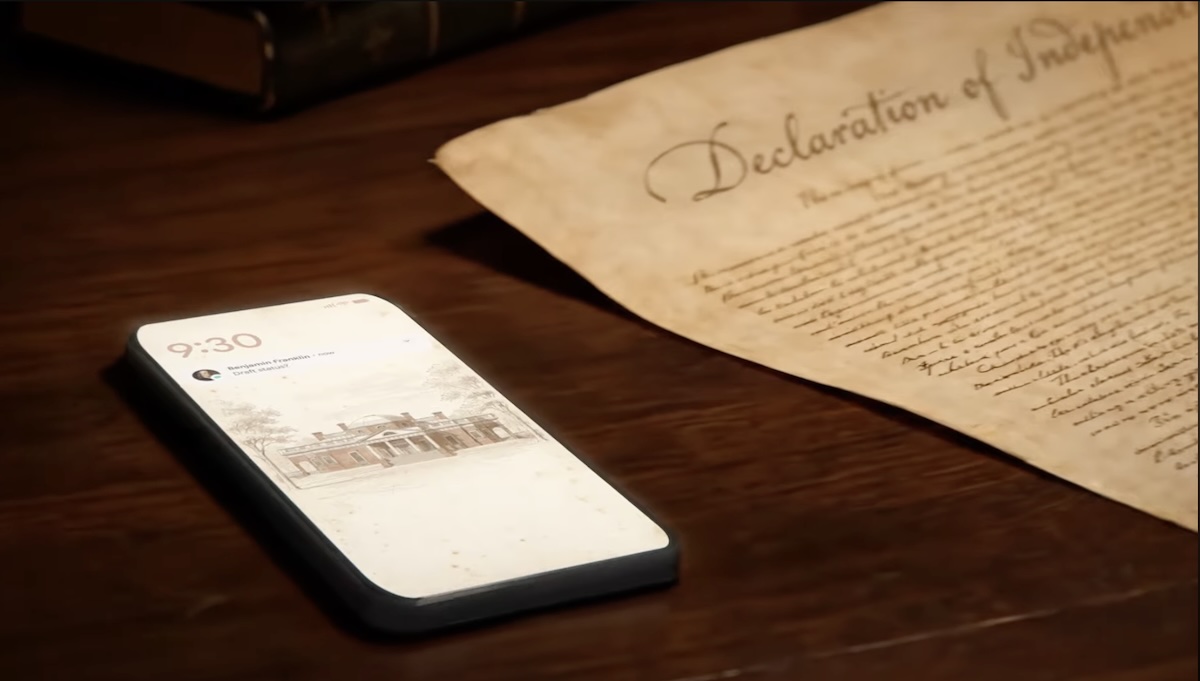
Google ran a commercial this week imagining AI helping draft the Declaration of Independence. Most people got mad about the history. I saw a $126 billion industry cementing its grip on your most important documents, and most business owners have no idea what to do about it.
What Google Actually Showed Us
The commercial features someone using Google’s Gemini AI to help craft language for what looks like a founding-era American document. Critics called it tone-deaf. Supporters called it inspiring. Both camps focused on the wrong thing entirely.
Google wasn’t trying to rewrite American history. Google was planting a flag. The message was simple: Gemini belongs in your most serious written work. Legal docs. Business agreements. Founding documents. Not just your emails.
According to Statista, the global AI software market is projected to generate more than $126 billion in revenue in 2025. Google wants a significant slice of that, and it’s using cultural moments to make Gemini feel indispensable. This commercial was a market positioning move, not a history lesson. Treat it like one.
The founders used every tool available to them. Printing presses. Couriers. Back-channel tavern meetings. They weren’t romantic about their methods. They were effective. If Gemini had existed in 1776, Benjamin Franklin would’ve been the first one to open the app.
Why Most People Are Reacting to the Wrong Thing
Here’s the pattern I keep watching. Someone powerful makes a bold move. Everyone piles on the surface-level controversy. Meanwhile the actual wealth transfer happens quietly underneath.
While people argued on social media about AI and the founding fathers, Google was normalizing the idea that AI belongs in your contracts, your business filings, and your legal language. That normalization is worth far more than any single ad campaign.
According to McKinsey, about 40% of workers already use AI tools for written communication at work. That number is tracking toward 70% by the end of 2026 based on current adoption curves. The people who build effective AI-assisted workflows now will produce better work faster. The people who refuse to engage because of a controversial commercial will produce the same work slower.
For business owners thinking about legal documents and agreements, the workflow Google was gesturing at is already available. You use AI to generate a strong first draft. You review and edit it. You send it for signatures through a tool like signNow, which handles the back-and-forth electronically so nothing sits unsigned in someone’s inbox for a week. That’s the practical version of what the commercial was selling.
According to Grand View Research, the global e-signature market hit $4.2 billion in 2024 and is growing fast. The reason is simple: paper-based signing is slow and costly, and businesses that move documents faster close deals faster. AI and e-signatures are two parts of the same shift.
What This Means for Your Business
If you run a business, or you’re about to start one, this moment is worth paying real attention to.
AI won’t write perfect legal documents for you. That’s not the point. The point is that AI compresses the time from idea to draft. A founder who used to spend three hours on a partnership agreement now spends twenty minutes editing one. According to Harvard Business Review, workers using AI assistants complete writing tasks up to 40% faster than those who don’t. If your time is worth $100 an hour, cutting three hours of drafting down to twenty minutes of editing saves you roughly $230 per document. Multiply that across a year of contracts, proposals, and client agreements.
Here’s what I’d do right now. First, get your legal structure in place before you start signing anything. If you haven’t formed your LLC yet, Inc Authority offers free LLC filing and gets you set up without paying attorney rates for basic formation. An AI-drafted contract signed by a sole proprietor without legal protection is still an unprotected document. Fix the foundation first.
Second, use AI for drafting and humans for deciding. Let the AI write the first version. Then read every line. Fix what’s wrong. Have an attorney review anything with real legal consequence. AI is a starting point, not a final answer.
Third, stop letting cultural debates determine which tools you use. Google made a provocative commercial. That doesn’t mean Gemini isn’t useful. Separate the marketing from the product. Rich people use the tools that give them an edge. They don’t wait for unanimous public approval before adopting them.
The Bottom Line
Google’s AI commercial wasn’t about the Declaration of Independence. It was a statement of intent. AI is coming for your most important documents, and the companies building these tools are spending serious money to make that feel normal. The founders used the best tools of their era to build something that lasted 250 years. The question for 2026 is whether you’ll use the best tools of your era, or spend your energy debating what counts as authentic while someone else moves faster.
Frequently Asked Questions
What was the Google AI commercial about?
Google aired a commercial showing someone using its Gemini AI tool to help draft language for what appeared to be a founding-era American document. The ad was designed to show that AI can assist with serious, meaningful writing tasks, not just casual emails. It sparked public debate about AI’s role in important written work.
Can AI actually help write legal documents?
AI can generate solid first drafts of many common business documents. You should always have a licensed attorney review anything with real legal consequences before signing it. Think of AI as a drafting assistant, not a legal advisor.
Is using AI to write documents disrespectful to history?
That’s a values question, not a business question. The commercial used history as a metaphor for capability. Whether you find it respectful depends on your own view. The business point the ad was making stands regardless of how you feel about the framing.
What AI writing tools should business owners use in 2026?
Google Gemini, Claude, and ChatGPT are all capable for business writing tasks. The best one is whichever fits your existing workflow. Start with what you already have access to, use it consistently for first drafts, and evaluate from there rather than chasing the newest option.
How does the Google AI commercial connect to how businesses handle documents today?
The commercial signals where the industry is heading: AI-assisted drafting paired with digital signing workflows. Businesses that build this into their process now will close agreements faster and spend less time on administrative writing. That’s the practical takeaway behind the historical imagery.
Get stories like this in your inbox. Daily.
Free. No spam. The AI, tech, and finance stories that move money.