Google AI Ad Rewrites History to Sell You a Future
“`html
Google AI Ad Rewrites History to Sell You a Future
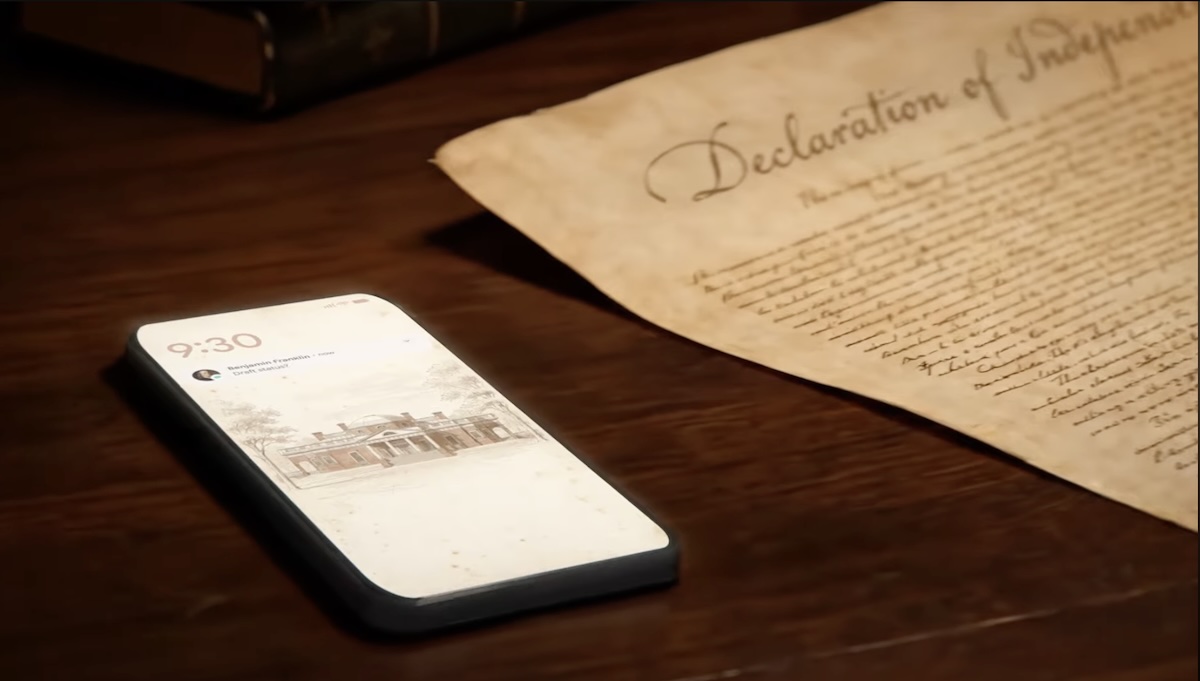
Google just aired a commercial imagining Thomas Jefferson writing the Declaration of Independence with AI assistance. According to The Verge, many viewers found the ad “infuriating.” I found it instructive. Google controls roughly 28% of all global digital ad spending, according to eMarketer. When a company that size spends money making AI look as American as independence itself, it’s not being sentimental. It’s conditioning a market. The question isn’t whether you’re offended. The question is whether you’re positioned.
What Google Actually Did
The timing is intentional. July 4th weekend, 2026. The founding fathers gather, debating language for the Declaration. An AI tool suggests a phrase. Jefferson nods. The message is unmistakable: this technology is as natural as democracy.
According to The Verge, the ad sparked fast and fierce backlash. Critics called it revisionist. Some said Google was hijacking American history to make its product feel inevitable. Those critics aren’t wrong. That’s exactly what Google is doing. And the reason it works is simple. It always has.
Alphabet, Google’s parent company, posted over $350 billion in annual revenue in 2024, according to Alphabet’s earnings reports. Much of that comes from advertising. The company has spent decades learning how to move minds. When it chooses the Declaration of Independence as its canvas, that’s not a creative risk. That’s precision targeting at national scale.
The Real Play Nobody’s Talking About
Most people will react to this ad in one of two ways. They’ll either cheer for progress or rage about manipulation. Both reactions miss the point entirely.
The owner’s mindset doesn’t ask whether AI should appear in a commercial about the founding fathers. It asks who profits when hundreds of millions of people start treating AI as a normal part of life. The answer is straightforward. The people already building with AI profit. The people debating a commercial do not.
Google isn’t selling you Gemini. It’s selling you inevitability. There is a meaningful difference. When something feels inevitable, people stop resisting and start buying. That’s basic consumer behavior, and Google just ran a masterclass in it during peak American patriotism season.
I’ve watched this exact pattern before. When smartphones started to feel inevitable, the people who built for mobile first made fortunes. When cloud computing felt inevitable, companies that moved early saved enormous money and gained speed advantages they still hold today. The people who waited, debated, and argued about whether it was the “right time” lost ground they never recovered.
If you run a business, this commercial is a signal. Not about AI being good or bad. About where consumer comfort with AI is headed and how fast. The mainstream is no longer skeptical. It’s curious. Curious customers buy things.
Managing your team well becomes more important when you’re moving fast. Gusto handles payroll, benefits, and HR compliance so you can focus on decisions that actually build your business, like whether you’re integrating AI before your competitors do.
What This Means for You
Here is what I would do if I were watching this ad and thinking like an owner rather than a consumer.
First, I’d stop treating AI adoption as a philosophical debate. Google just made it a cultural statement. Once something gets attached to American founding mythology, even in a commercial, the mainstream stops asking “should I?” and starts asking “how do I?” That window is open right now. It won’t stay open at this price.
Second, I’d audit every repetitive task in my business. Writing, research, customer support, data analysis. Each one is a candidate for AI assistance. Not because it’s fashionable. Because your overhead doesn’t care about fashion, and any tool that cuts costs while maintaining quality is worth serious attention.
Third, I’d think about how clients perceive your business. In 2026, the businesses that can credibly say “we use AI to serve you faster” will take clients from businesses still explaining why they haven’t changed anything. That gap is going to compound quarter over quarter.
On the financial side, as you add AI tools and subscriptions to your stack, keeping your business expenses clean matters more. Wallester’s business card platform lets you set up dedicated cards for different expense categories, so you always know exactly where your money is going as your tool costs grow.
The Bottom Line
Google’s commercial isn’t about Thomas Jefferson. It’s about getting you comfortable enough with AI that resistance feels absurd. Whether that serves you depends entirely on which side of the transaction you end up on. The people building with AI now are on the profitable side. The people writing outrage posts about a commercial are not.
The Declaration of Independence was written by people who decided the cost of waiting was higher than the cost of acting. That calculation hasn’t changed.
Frequently Asked Questions
What did Google’s AI commercial actually show?
According to The Verge, the Google ad imagined the founding fathers using AI assistance while drafting the Declaration of Independence. The commercial ran around July 4th, 2026, and drew immediate backlash for what many called revisionist framing of American history.
Why is Google connecting AI to American history in its ads?
Google is associating its AI products with deeply trusted cultural symbols to speed up mainstream acceptance. When a product feels tied to tradition and history, consumers stop debating adoption and start asking how to use it. This is a well established marketing approach for companies pushing mass adoption of new technology.
Should my business be using AI tools right now?
The specific platform matters less than the decision to act. Companies actively using AI in their workflows today are already seeing speed and cost advantages over competitors who are still evaluating. Waiting for the perfect moment means falling further behind while the gap widens.
Is the Google AI commercial misleading?
The founding fathers obviously didn’t use AI. But the commercial’s point isn’t historical accuracy. It’s emotional positioning. Google wants AI to feel as natural and American as the Declaration itself. Whether that’s misleading depends on whether you treat advertising as history or as persuasion, and most advertising is persuasion.
What does the backlash to the Google AI ad tell us about adoption in 2026?
Strong emotional backlash to an AI commercial signals we’re still in the early friction phase of mainstream adoption. According to The Verge, the reaction was fast and widespread. For business owners, that friction is a signal, not a stop sign. It means there’s still a window to move before everyone else catches up and prices the advantage away.
“`
Get stories like this in your inbox. Daily.
Free. No spam. The AI, tech, and finance stories that move money.