Google AI Ad Rewrites History and Here Is the Money Play
“`html
Google AI Ad Rewrites History and Here Is the Money Play
Google ran a commercial showing AI help write the Declaration of Independence. Most people felt inspired. I thought about who collects the $150 billion when the writing tool becomes default infrastructure. That gap is why most people stay broke and a few build wealth.
What Google Just Did
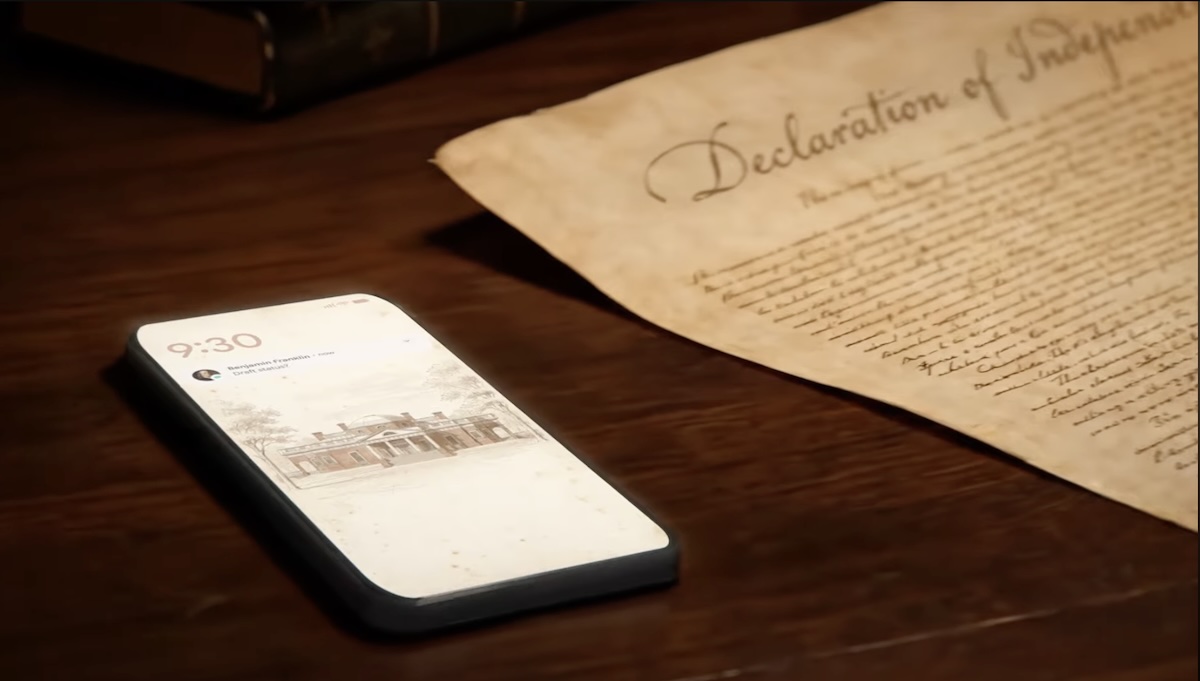
The commercial shows someone using Google’s AI to imagine how the Founders might have drafted the Declaration of Independence with AI assistance. It’s emotional. It’s well produced. It sparked a national conversation about AI’s role in creativity, writing, and American identity.
Strip away the patriotic music and what you have is a $200 billion company publicly normalizing AI as a writing partner for some of the most important documents in human history. According to Google, its AI products now reach over 1 billion users every month. That’s not a niche product anymore. That’s infrastructure.
The timing matters. In 2026, AI writing tools have moved from novelty to standard. According to McKinsey, over 65% of businesses are now using generative AI in some part of their operations, up from 33% just two years ago. Google knows this. The commercial isn’t about the Declaration of Independence. It’s about making sure you think of Google when you think of AI writing.
The Contrarian Read on This Ad
Here’s what most commentators got wrong about this commercial.
They framed it as a cultural debate. Should AI touch sacred documents? Is Google being disrespectful? Does AI have a place in creative or historical work?
That’s the wrong argument. That debate keeps people distracted while the real move happens underneath.
The real move is brand positioning. Google just told every school, every government office, every law firm, every business, and every writer on earth that AI belongs in serious work. Not just emails. Not just chatbots. Serious, consequential writing.
That matters because whoever controls the writing tools controls the output. Right now, Google, Microsoft, and Anthropic are in a three way race to become the default AI writing layer for the world. According to Bloomberg Intelligence, the AI productivity software market is projected to reach $150 billion by 2030. The winner of that race prints money for decades.
Most people will watch this ad and either feel good or feel annoyed. Smart operators will ask one question: how do I build on top of the winning platform before it costs ten times more?
This is the rich versus poor mindset in action. The poor man debates whether AI should write. The rich man figures out how to use AI to write ten times more, distribute ten times faster, and own the audience before competitors wake up.
I’ve been watching this play out in content and media for the past 18 months. Creators who embraced AI writing tools early are producing three to five times more content than their competitors. That volume advantage compounds. More content means more search presence. More search presence means more traffic. More traffic means more revenue.
If you want to turn that written content into video without hiring a production team, InVideo AI converts scripts and articles into ready to publish videos at a fraction of traditional production costs. That changes what it costs to produce each piece of content, and that matters when you’re trying to outpace competitors on volume.
What This Means for You
Here’s what I would do right now based on what Google just signaled.
First, stop treating AI writing as a toy. Google just ran a national scale commercial using the Declaration of Independence as the example for writing with AI support. That’s a signal that AI writing is entering mainstream conversation at the highest level. If you’re still debating whether to use it, you’re already behind.
Second, pick your platform and go deep. The brands that win in the next five years won’t be the ones who dabbled in every tool. They’ll be the ones who mastered one or two AI platforms and built workflows around them. Pick Google Gemini, Anthropic Claude, or Microsoft Copilot. Learn it deeply. Build your content engine on top of it.
Third, use this moment. Right now, most of your competitors are still debating the ethics of AI writing. That gives you a window. While they debate, you produce. While they hesitate, you publish. Speed compounds in content just like interest compounds in finance.
If you need AI tools at a lower upfront cost while you’re building out your workflow, AppSumo regularly features lifetime deals on AI writing and content tools that cost a fraction of monthly subscription pricing. Worth checking before committing to full price plans.
According to Semrush, websites publishing content with AI assistance are seeing search traffic grow 40% faster than those relying entirely on manual production. That gap will widen, not narrow, as AI tools improve.
The Bottom Line
Google didn’t make a commercial about the Declaration of Independence. It made a commercial about who owns the future of writing. Most people missed that. I didn’t. The companies and creators who treat AI as infrastructure rather than a gimmick will control the next era of media, content, and influence. The debate about whether AI should write is already over. The only question left is who builds on top of it first.
Frequently Asked Questions
What was the Google AI commercial about?
Google ran an ad imagining the Declaration of Independence being drafted with help from AI writing tools. The commercial positioned Google’s AI as a partner in serious, meaningful writing rather than just a productivity tool. The real message was brand positioning at a national scale.
Is Google AI being used to rewrite historical documents?
No. The commercial was a creative concept, not a real project. Google used the Declaration of Independence as a symbol to show AI’s potential in important writing tasks. The point was to normalize AI in high stakes writing contexts, not to revise history.
What does the Google AI ad mean for content creators?
It signals that AI writing tools are entering the mainstream at the highest level. Creators who build AI into their content workflows now will have a significant output advantage over those who wait. According to Semrush, that traffic gap is already measurable and growing.
Which AI writing tools should I use in 2026?
The top platforms right now are Google Gemini, Anthropic Claude, and Microsoft Copilot. Pick one and go deep rather than spreading thin across all three. If you want to convert written content into video quickly, pair your writing tool with InVideo AI for full content production without a production team.
Will AI writing replace human writers?
Not replace, but restructure. The writers who use AI to multiply their output will take market share from those who don’t. According to McKinsey, over 65% of businesses are already using generative AI in their operations. The shift isn’t coming. It’s already here.
“`
Get stories like this in your inbox. Daily.
Free. No spam. The AI, tech, and finance stories that move money.