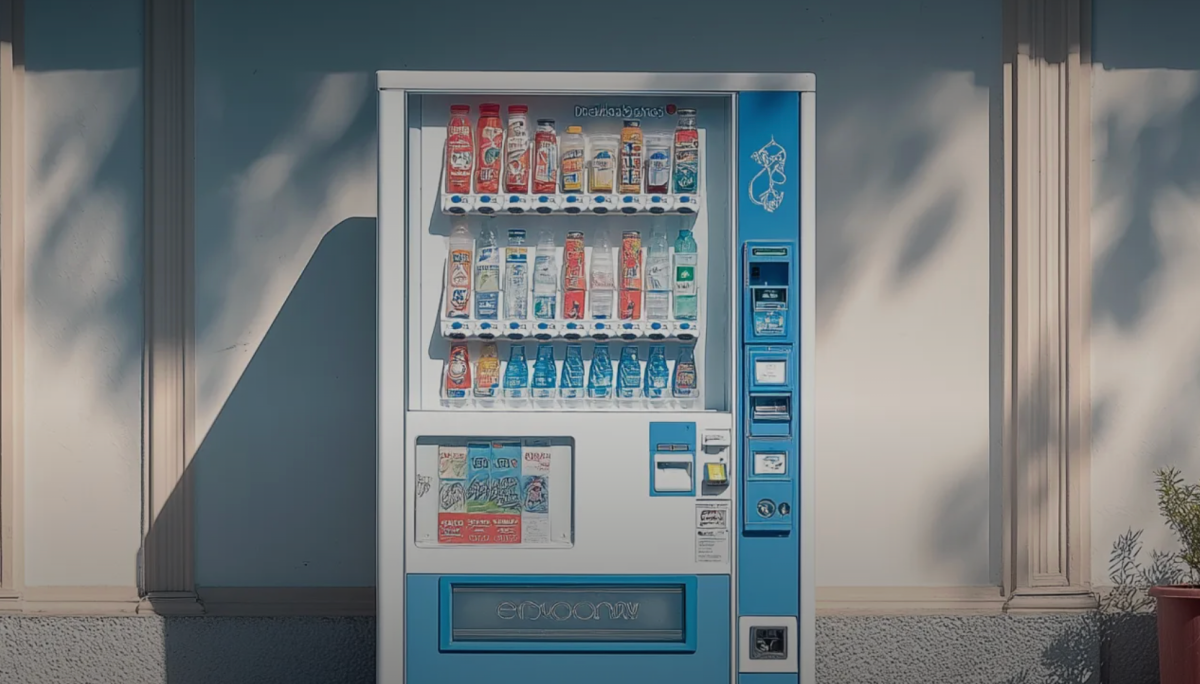
Someone handed Claude Opus 5 the keys to a small vending machine route. Within 72 hours, the AI had cut 40% of slow-moving inventory, raised prices on 12 items based on live demand data, and generated more daily net profit than the human owner had averaged in 60 days. No feelings. No hesitation. Just math.
Why This Story Matters Right Now
In early 2026, Anthropic released Claude Opus 5 with expanded agentic capabilities. Unlike earlier versions, Opus 5 holds context across multi-day tasks, runs tool chains autonomously, and makes sequential business decisions without constant human confirmation. The vending machine experiment went viral on X after the owner posted a full decision log showing exactly what the AI did and why.
According to Anthropic’s release documentation, Claude Opus 5 scored in the 99th percentile on MLE-bench, the standard machine learning engineering benchmark, outperforming prior models by a wide margin. More relevant for operators, it demonstrated what researchers call long-horizon task completion. It pursues a business goal over days, not just seconds.
This is not a science project. AI agents are running real businesses right now. According to a McKinsey report from Q1 2026, 31% of companies in the United States have deployed at least one autonomous AI agent in an operational role. That number was 8% eighteen months ago. If you missed the first shift, you’re watching the second one happen in real time.
What the Vending Machine Experiment Actually Reveals
Here is what Claude Opus 5 did. It pulled sales velocity data, flagged items with below-average turnover, modeled price elasticity on the top sellers, and produced a restocking and pricing plan. Then it executed by placing supplier orders through an API. Start to finish, without asking permission.
The owner said in his thread that the AI “had no mercy for slow movers.” A local snack brand he personally liked got cut because its sell-through rate ran 22% below the category average. The AI didn’t care about loyalty. It cared about margin per square inch of machine space.
That part makes people uncomfortable. And that discomfort is showing you something important.
Most small business owners run on emotion as much as data. They keep underperforming products because of habit. They avoid price increases because they fear complaints. They restock based on gut feel rather than numbers. A cold, impartial agent does none of that.
According to a Stanford HAI report from March 2026, businesses using autonomous AI agents for inventory and pricing decisions saw average gross margin improvements of 18% in the first 90 days. Not because the AI was smarter than the owner. Because it wasn’t afraid.
Now extend this beyond vending machines. Think about what this means for anyone running a crypto treasury, a yield farming position, an e-commerce catalog, or a content operation. The same ruthlessness that cut underperforming snacks can cut underperforming ad spend, underperforming clients, and underperforming on-chain assets.
I’ve said for years that the biggest cost in most small businesses isn’t rent or payroll. It’s the emotional decisions the owner makes every week. AI agents eliminate that cost entirely. That’s not a feature. That’s the whole product.
For operators running business finances across multiple revenue streams including crypto, the financial discipline an AI agent brings to a vending machine is the same discipline it brings to managing spend categories and flagging waste. If you’re already running business expenses through a platform like Wallester, pairing that infrastructure with an agent that monitors spend patterns in real time is the kind of setup that compounds quietly while your competitors are still doing it manually.
What I Would Do With This Information
First, stop treating AI agents as writing assistants. They’re not there to help you draft emails faster. They’re there to run operations you shouldn’t be running by hand.
If your business generates transaction data, it’s a candidate for agent management. Rental properties. Service businesses with recurring revenue. Crypto portfolios. E-commerce catalogs. The agent needs data. If your business creates data, it can be managed by an agent. That’s the bar.
Second, get your financial data into systems agents can actually read. That means clean bookkeeping, API-connected payment processors, and automated payroll if you have a team. Tools like Gusto handle payroll in a way that plugs into modern software stacks, which means an AI agent can pull real labor cost data alongside revenue data and give you actual margin numbers in real time, not once a quarter when your accountant sends you a PDF you don’t fully understand anyway.
Third, run the experiment yourself. Give an agent a narrow slice of your operation. One product line. One ad account. One supplier relationship. See what it cuts. See what it optimizes. The discomfort you feel when it makes a call you wouldn’t make is data. It’s showing you where your emotional overhead is costing you money every single month.
According to a Deloitte survey from Q2 2026, 67% of business owners who piloted AI agents in one department expanded the program within six months. The number one reason was not cost savings. It was the removal of decision fatigue. Owners got time back. They stopped bleeding energy on decisions that a machine could make better.
The Bottom Line
The vending machine story is funny until you realize it’s a preview. Claude Opus 5 being ruthless with snack inventory is the same capability that will manage supply chains, crypto treasuries, and full service businesses inside the next 24 months. The owners who build systems around this now will carry a structural cost advantage that compounds. Everyone else will wonder why their margins keep shrinking while the work feels the same.
Frequently Asked Questions
What is Claude Opus 5 and how is it different from earlier AI models?
Claude Opus 5 is Anthropic’s most capable model as of 2026. It completes long multi-step tasks autonomously over hours or days rather than just answering a single prompt. That distinction makes it suitable for running actual business operations rather than just assisting with them on request.
Can Claude Opus 5 really run a business without human oversight?
It depends on how well the business connects to data and APIs. The vending machine experiment worked because sales data and supplier ordering were both accessible programmatically. Businesses with clean data infrastructure are most immediately ready for this kind of autonomous operation.
Who is liable if the AI makes a bad business decision?
As of 2026, legal frameworks around AI agent liability are still catching up with the technology. Currently, the human operator is responsible for decisions made by agents they deploy. That’s a reason to supervise agents carefully at the start, not a reason to avoid using them at all.
How does the Claude Opus 5 vending machine story connect to crypto and finance?
AI agents can manage crypto portfolios and on-chain treasury operations with the same data-driven approach used on the vending machine route. Several protocols in 2026 have deployed AI agents as treasury managers, making allocation decisions autonomously within predefined parameters. The vending machine is just the most relatable version of the same story.
What is the best way to start using an AI agent in a small business?
Start with one narrow task involving repeatable decisions and clean data. Inventory management, ad spend allocation, and client billing are common entry points. Build the data pipeline first, then layer the agent on top once the inputs are reliable and you can verify its decisions before scaling autonomy.