$135M Chip Startup Says Memory Is AI's Real Ceiling
“`html
$135M Chip Startup Says Memory Is AI’s Real Ceiling
A chip startup just raised $135 million on a single bet: AI’s real bottleneck isn’t compute. It’s memory. While Nvidia’s stock climbs and GPU orders pile up, this company says the industry is solving the wrong problem. I think they’re right. And Wall Street is just now catching on.
The Problem Growing Behind the Headlines
The AI industry has spent five years obsessing over raw processing power. More GPUs. Bigger clusters. Faster chips. But there’s a different constraint building in the background, and it’s starting to cost real money.
When a large language model generates text, it doesn’t just run math once. For every single token it produces, the system has to pull the entire model’s weights out of memory and run them through the processor. A 70-billion-parameter model carries around 140 gigabytes of data that needs to move every single pass. According to Epoch AI, compute for frontier AI models has scaled roughly 4x per year since 2020, but memory bandwidth has improved less than 50 percent per year over the same period. The gap between how fast chips can calculate and how fast they can get data is widening every year.
That’s the thesis behind this $135 million raise. The startup, backed by a coalition of venture firms focused on AI infrastructure, closed its Series B in May 2026. The round drew attention because of who wrote the checks, not just the size of the number. According to PitchBook, AI chip startups collectively raised over $18 billion in 2025, but startups focused on memory architecture captured less than 10 percent of that total. This round is a signal that sentiment is shifting fast.
Why the Contrarian Bet Makes Sense Right Now
I’ve watched a lot of capital flow toward the obvious answer in tech. The obvious answer in AI hardware is Nvidia. And yes, Nvidia is a great business. I’m not arguing otherwise.
But there’s a problem hiding inside the GPU success story. According to Nvidia’s published specifications, the H100 delivers over 1,000 teraflops of FP8 compute but just 3.35 terabytes per second of memory bandwidth. For training workloads, that’s fine. You run a model once, update weights, move on. For inference, which is what every deployed AI product runs on 24 hours a day, the math changes completely. Hardware benchmarking data shows that LLM inference utilizes as little as 20 to 40 percent of available GPU compute because the chip sits idle waiting for data to arrive from memory.
You’re paying for 100 percent of the chip and using less than half of it. That’s not an engineering curiosity. That’s a direct tax on every company running AI at scale.
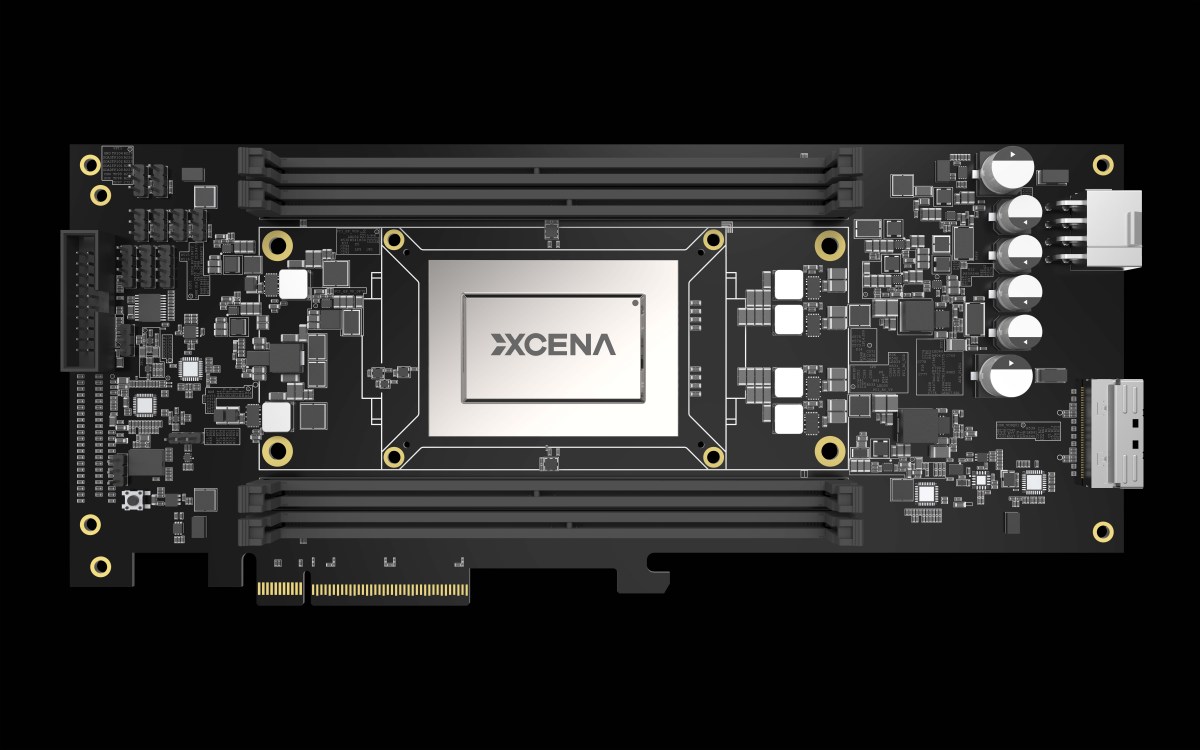
The startup’s approach places compute logic physically close to the memory itself, cutting the travel distance data has to cross. According to benchmarks cited in their funding announcement, the architecture delivers up to 4x throughput improvement on standard inference workloads compared to traditional GPU setups. Independent validation is still pending, but the investor list suggests serious technical due diligence happened before those checks cleared.
This is the rich mindset vs. the poor mindset playing out in silicon. The poor mindset chases what’s already popular. The rich mindset finds the next constraint before demand for the solution peaks. According to IDC, global AI infrastructure spending is projected to exceed $400 billion in 2026. Almost none of that budget line existed three years ago. The companies building picks and shovels for the next phase of that spending are not the ones getting the most press today.
If you’re covering this space or building a business that needs to explain technical concepts to non-technical audiences, tools like InVideo AI can turn a dense chip architecture brief into a short video that investors and customers will actually watch. The memory chip story is complicated. The pitch doesn’t have to be.
What This Means for You
Here’s what I would do if I were thinking seriously about this space right now.
Watch inference spending, not training. Training a model costs a lot once. Running it costs money every single day. According to Goldman Sachs, inference is projected to represent over 70 percent of total AI compute spending by 2027. That’s where recurring revenue lives. The companies solving inference efficiency are building businesses with compounding demand, not one-time contracts.
Pay attention to who the startup’s first customers are. Memory architecture plays live or die on customer adoption. Cloud providers and hyperscalers are the target buyers here. If a company like this announces a pilot or contract with a major cloud provider within the next 12 months, that’s the signal worth marking on your calendar.
Keep your own AI software costs lean while the infrastructure wars play out. Rates for AI-powered tools have been volatile. Browsing AppSumo lifetime software deals for AI applications built on this maturing infrastructure can get you production-ready tools without ongoing monthly fees, which matters when your core AI spend is still going up.
Watch the IPO calendar for 2027 and 2028. Startups closing Series B rounds of this size in 2026 with strong technical differentiation typically target public markets within 18 to 24 months. The private market window is closed for most of us. The public market window is coming.
The Bottom Line
The GPU isn’t going away. But the companies that dominate the next five years of AI infrastructure won’t just be the ones with the most raw processing power. They’ll be the ones who figured out how to feed that power fast enough to matter. A $135 million bet on memory architecture isn’t a niche play. It’s a bet on where the entire industry hits its wall. I’d rather own the solution to tomorrow’s constraint than yesterday’s solution to last year’s problem.
Frequently Asked Questions
What is the memory bottleneck in AI?
The memory bottleneck is the gap between how fast AI chips can compute and how fast they can access data from memory. For inference workloads, chips often sit idle waiting for data, which means real-world performance falls far below the theoretical maximum. This gap grows as models get larger and inference volumes increase.
Why did this chip startup raise $135 million for memory architecture?
Investors are betting that as AI deployments multiply, the cost of inference limited by memory bandwidth becomes a hard ceiling on performance and profit margins. A startup that solves this problem has a large and growing market of cloud providers and enterprises as potential customers.
Does this chip startup threaten Nvidia?
Not directly in the short term. Nvidia still dominates AI training, and that market isn’t shrinking. But the memory-focused approach targets inference efficiency, which is where spending is growing fastest. Over time, superior inference economics can shift buying decisions away from traditional GPU setups.
What is near memory computing?
Near memory computing places standard compute logic physically close to memory chips to cut data travel time and increase effective bandwidth. It’s a design philosophy that prioritizes how fast data moves over how fast a chip can process it. Several startups are now competing in this space with different technical approaches.
How can I track progress in the AI chip memory space?
Follow publications like SemiAnalysis and Epoch AI for technical analysis, and watch startup funding rounds tracked by PitchBook and Crunchbase. When a memory-focused chip startup announces a major cloud provider partnership, that’s usually the inflection point worth marking.
“`
Get stories like this in your inbox. Daily.
Free. No spam. The AI, tech, and finance stories that move money.