Blue Origin Reused New Glenn and It Changes Everything
“`html
Blue Origin Reused New Glenn and It Changes Everything
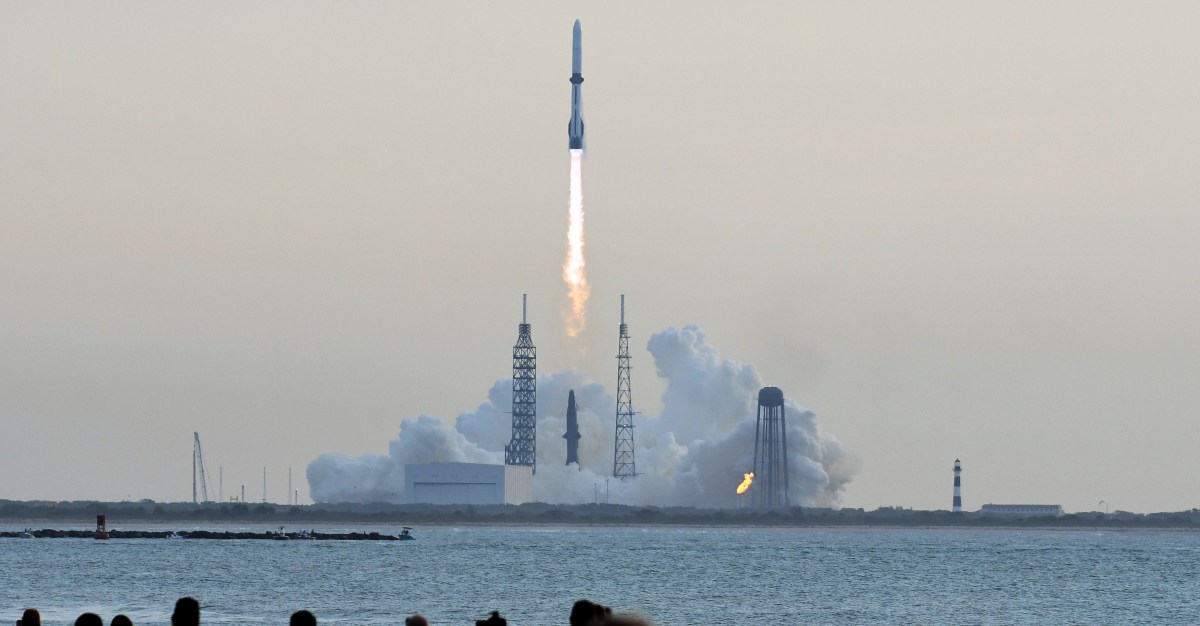
On April 19, 2026, Blue Origin flew its New Glenn rocket for the third time and landed the booster again. That booster, nicknamed “Never Tell Me the Odds,” had already flown once before. This is the moment reusable rocketry stops being SpaceX’s solo act.
What Just Happened
The NG-3 mission launched AST SpaceMobile’s BlueBird 7 satellite into orbit. The first stage booster landed cleanly on Landing Platform Vessel 1, according to Blue Origin’s mission coverage. That booster had already made its first flight debut on November 13, 2025, just five months ago. Blue Origin turned it around in under 160 days and flew it again.
This was a partial success, though. The upper stage ran into anomaly risks during the mission, according to reporting from SpaceNews and NASASpaceFlight. The satellite’s deployment status was uncertain at first. So yes, the booster reuse worked perfectly. The upper stage did not perform flawlessly. I want to be direct about that because some coverage glossed right over it.
Still, what happened with that first stage matters enormously. New Glenn is designed for a minimum of 25 reuses per booster, according to Blue Origin’s technical documentation, down from an earlier goal of 100 flights. The booster also carried all seven new BE-4 engines, producing 3.85 million pounds of thrust at liftoff, and included thermal protection upgrades on one nozzle, according to Blue Origin.
Why Most People Are Missing the Real Story
Everyone is focused on the partial failure angle. I think that’s the wrong lens.
The real story is economics. Rocket reuse is not about cool landings on a barge. It’s about collapsing the cost per kilogram to orbit. SpaceX proved that with Falcon 9. Now Blue Origin is proving it with New Glenn.
New Glenn can carry 45 metric tons to low Earth orbit and more than 13 metric tons to geostationary transfer orbit, according to Blue Origin’s published payload specs. That puts it in the same weight class as Falcon 9 and closer to Falcon Heavy territory. But here’s what separates it from older rockets: it burns methane and liquid oxygen. That’s a cleaner propellant mix and it means no more dependence on Russian RD-180 engines. Blue Origin now produces BE-4 engines at full rate in Washington and Alabama, according to company statements.
Blue Origin CEO Dave Limp said after NG-3 that he expects a 30-day or less reuse cadence going forward, according to Space.com. Think about what that means. A rocket that costs hundreds of millions of dollars to build gets flown once a month. If you get 25 flights out of one booster, you’re spreading that capital cost across 25 missions. That’s the same math that made Southwest Airlines profitable when legacy carriers were going broke.
Rich people think in assets. Poor people think in expenses. A reusable rocket is an asset that generates revenue 25 times. A single-use rocket is a pure expense. This is not complicated. It’s just not how governments and old aerospace companies think.
Blue Origin has 12 additional contracted launches in its manifest, according to Blue Origin mission documentation. AST SpaceMobile alone has signed a heavy-launch integration deal targeting production of BlueBird satellites 8 through 29, with a goal of six satellites per month in testing, assembly, and integration during the first half of 2026, according to AST SpaceMobile investor filings. AST’s payload backlog sits above $3 billion and also includes Intelsat, SCS, and Utilat One Webb, according to industry tracking by NASASpaceFlight.
That backlog is not an accident. It’s a signal. The direct-to-cell satellite market is accelerating faster than Wall Street has priced in. If you’re creating content or reporting on this space, tools like InVideo AI let you turn raw mission data and press releases into video stories in minutes, which matters when the news cycle moves this fast.
What This Means for You
I’ll tell you exactly how I see this playing out and what I’d actually do with this information.
First, watch AST SpaceMobile closely. Their BlueBird constellation is being built to provide direct-to-cell broadband to standard smartphones with no special hardware required. If they hit six satellites per month in assembly and keep launching on New Glenn, they’ll have a serious constellation by late 2026. The company with a $3 billion payload backlog is not a speculative startup anymore. It’s a logistics operation.
Second, pay attention to Blue Origin’s launch cadence over the next 90 days. If Limp delivers on that 30-day reuse target, New Glenn becomes a credible competitor to Falcon 9 for commercial payloads. That changes pricing power across the entire launch market. SpaceX loses its monopoly premium. Everyone who uses satellites, from banks to telecoms to agriculture companies, benefits from lower costs.
Third, if you’re a founder, an investor, or a content creator covering this space, now is the time to build an audience around it. The satellite economy is not niche anymore. It’s infrastructure. Start documenting your analysis now. If you want an easy entry point, AppSumo has lifetime deals on tools that make research and publishing faster without the enterprise software price tag.
Fourth, watch Project Jarvis. Blue Origin started developing a reusable upper stage in 2021. If they crack full reusability on both stages, the economics improve by another order of magnitude. That’s the real threat to SpaceX Starship’s long-term pricing story.
The Bottom Line
Blue Origin just proved it can reuse a rocket. The upper stage still needs work. But the booster landed perfectly, the backlog is over $3 billion, and the CEO is promising monthly reuse cycles. This isn’t a science experiment anymore. It’s a business. The companies that understand reusable launch as infrastructure, not spectacle, will own the next decade of the space economy. Everyone else will just be watching from the ground.
Frequently Asked Questions
What is the New Glenn rocket?
New Glenn is Blue Origin’s heavy lift rocket designed to carry 45 metric tons to low Earth orbit, according to Blue Origin. It uses methane and liquid oxygen propellant and features a reusable first stage booster built for a minimum of 25 flights.
What happened during the New Glenn NG-3 mission on April 19, 2026?
The NG-3 mission successfully reused its first stage booster for the first time and landed it on a drone ship, according to Blue Origin. The mission was considered a partial success because the upper stage experienced anomaly risks during flight, according to NASASpaceFlight reporting.
Who is AST SpaceMobile and why are they using New Glenn?
AST SpaceMobile is building a direct-to-cell satellite broadband network using their BlueBird satellites. They have a payload backlog above $3 billion and a deal to launch BlueBird satellites 8 through 29 on New Glenn, targeting six satellites per month in production during the first half of 2026, according to AST SpaceMobile filings.
How does New Glenn compare to SpaceX’s Falcon 9?
New Glenn can carry more payload to orbit than Falcon 9 and uses a cleaner methane fuel source. Both rockets feature reusable first stages. SpaceX still holds a large lead in total launches flown, but Blue Origin’s growing manifest and 12 contracted launches signal real competition is forming.
What is Blue Origin’s Project Jarvis?
Project Jarvis is Blue Origin’s internal program to develop a reusable upper stage for New Glenn, started in 2021. If successful, it would make both stages of the rocket reusable, which could sharply reduce the cost per kilogram to orbit across all New Glenn missions.
“`
Get stories like this in your inbox. Daily.
Free. No spam. The AI, tech, and finance stories that move money.