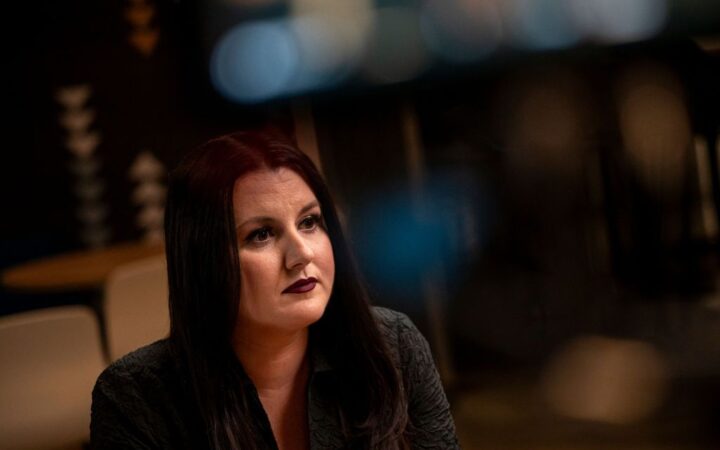
Dario Amodei just drew a line in the sand. The Anthropic CEO says his company will lead AI development while keeping humans in control of what comes next. That sounds responsible. But there is $61.5 billion in company valuation riding on this strategy, and every fintech founder, operator, and investor needs to understand what it means for their bottom line.
Why This Is Bigger Than One CEO’s Speech
Anthropic is not a scrappy startup anymore. According to Bloomberg, the company hit a $61.5 billion valuation after its March 2025 funding round. Amazon committed $4 billion. Google wrote a check too. This is serious institutional capital behind a very specific philosophy: build the most powerful AI in the world, but do it carefully.
Amodei calls this “pacing the frontier.” The idea is straightforward. If Anthropic doesn’t build the most advanced models, someone less careful will. So Anthropic stays at the front, sets the pace, and makes sure safety research keeps up with capability research.
That argument made sense in 2024. In 2026, with AI agents running financial workflows, drafting contracts, and advising on investments, the stakes are much higher. According to McKinsey, AI adoption in financial services grew 340% between 2022 and 2025. What Anthropic decides to build next will land directly on your balance sheet.
The Real Money Question Nobody Is Asking
Most people hear “AI safety” and think ethics class. I hear it and think about who controls the infrastructure your business runs on.
Here is the contrarian read. Amodei’s “pace the frontier” strategy isn’t just a safety play. It’s a market control play. If Anthropic can stay the most capable and the most trusted AI company, they set the price of intelligence. Every bank, insurance platform, and fintech company that depends on Claude will pay that price.
According to Statista, global spending on AI software is projected to hit $297 billion in 2027. The company that paces the frontier decides how that money flows. Operators who understand this will build systems that aren’t locked into one provider. Operators who don’t will be at the mercy of whatever pricing Anthropic sets when they get there.
I’ll be clear: I think Claude is one of the best AI models available right now. I use it in my own workflows. But trusting a company and depending entirely on a company are two different decisions with very different financial outcomes.
The rich mindset says: use the best tools, but own your flexibility. Build with multiple AI providers. Understand what each one can and cannot do. Treat AI infrastructure like you treat banking relationships. You don’t keep all your operating cash in one account. Don’t run all your intelligence through one provider either.
The poor mindset says: just pick the one that works and stop thinking about it. That’s fine until pricing changes, until API limits tighten, or until a competitor builds something your chosen provider can’t match.
If you’re scaling a team that depends on AI tools daily, get your operational foundation right first. Gusto handles payroll and contractor payments cleanly so your finance team isn’t doing manual reconciliation while also trying to figure out which AI model to route which task through.
What This Means for Your Business Right Now
Amodei’s plan has three practical implications for anyone running a business in 2026.
First, Anthropic will keep releasing more powerful models. Claude’s capabilities will grow. That means AI tools built on Claude get better without you doing anything extra. That’s the upside. But it also means the gap between businesses that use AI and those that don’t keeps widening. According to Deloitte research, early AI adopters in financial services showed up to a 22% improvement in operational margins compared to late adopters. That gap compounds every year you wait.
Second, “pacing” means Anthropic won’t move recklessly. Some competitors will. That means more chaos in the AI market before it settles. Some tools your competitors are using will break, get shut down, or produce bad outputs at the worst possible moment. Staying with a provider that moves carefully has real financial value, even if it feels boring.
Third, and this is the one most people miss: the frontier Anthropic is pacing is moving toward autonomous AI agents. Agents that can book meetings, execute transactions, write and send communications, and make decisions with real dollar consequences. If your business isn’t building policies for how you’ll use those agents, you’re already behind.
Here is what I would do right now. Audit every AI tool in your stack. Know which foundation models power each one. Know what happens to your workflow if any single provider changes pricing or goes offline. Set a monthly spend cap and track it. If you’re managing a team with multiple people expensing AI tools, use Wallester to issue business cards with individual spending limits so you’re not untangling a billing mess at month end.
The Bottom Line
Dario Amodei is playing a long game, and he’s probably right that someone needs to pace the frontier of AI development. But don’t mistake his caution for your safety net. Every business decision you make about AI infrastructure is a financial decision. The operators who treat it that way will come out ahead. The ones who treat AI as just a productivity tool will get repriced out of the market before they see it coming.
Frequently Asked Questions
What does “pace the frontier” mean in Anthropic’s strategy?
It means Anthropic deliberately stays at the front of AI capability research rather than letting less careful companies lead the way. Amodei argues that if someone is going to build the most powerful AI, it should be a company that takes the risks seriously. He has outlined this position in public interviews and in Anthropic’s published research direction throughout 2025 and 2026.
How does the Anthropic CEO’s plan affect fintech companies?
Fintech companies building on Claude or using Anthropic’s API are tied to Anthropic’s roadmap. When Claude improves, their products improve. When Anthropic shifts pricing or access policies, products built on top feel it immediately. Diversifying your AI provider stack reduces that concentration risk before it becomes a financial problem.
Is Anthropic a good investment given this strategy?
I’m not a financial advisor and this isn’t financial advice. What I can say is that Anthropic’s $61.5 billion valuation, according to Bloomberg, reflects serious institutional confidence. Amazon and Google don’t write billion dollar checks carelessly. Whether it fits your portfolio depends on your time horizon and how much risk you can absorb.
What is the “rich vs poor mindset” when it comes to AI tools?
The rich mindset treats AI infrastructure like a financial portfolio. You use the best tools available but you don’t concentrate all your risk in one place. You understand pricing structures, usage limits, and what your backup plan looks like. The poor mindset picks a tool that works today and assumes nothing will change.
What should businesses do now in response to Anthropic’s direction?
Audit your AI tool stack and know which foundation models power each tool you use. Set spend limits. Build workflows that don’t assume any single AI provider will stay the same forever. And start writing internal policies for AI agents before your competitors do, because autonomous agents with financial access are arriving faster than most businesses are prepared for.