American Robot Soldiers Are Fighting in Ukraine Right Now
American Robot Soldiers Are Fighting in Ukraine Right Now
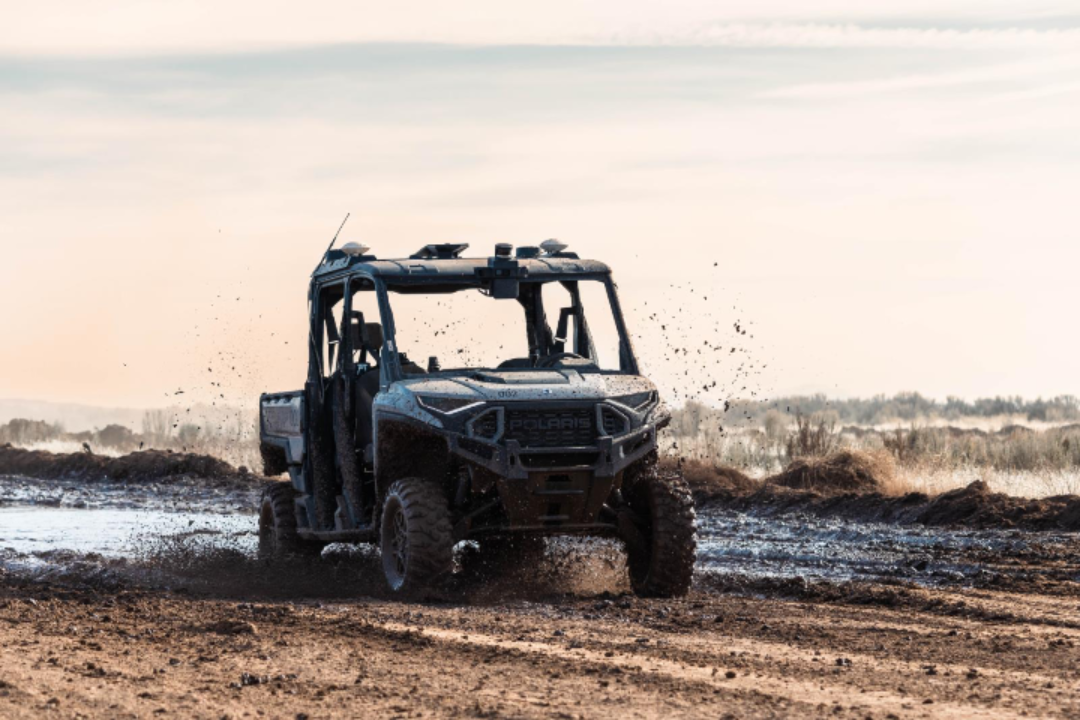
The first American-built autonomous ground vehicles are in active combat in Ukraine. This is not a test. According to Defense One, at least three US-manufactured unmanned ground vehicles completed live combat missions in early 2026. The age of robot soldiers is not coming. It is here.
Why This Is Bigger Than the Headlines Say
Most people saw this story and moved on. That is a mistake.
Ukraine has become the world’s most advanced proving ground for autonomous weapons. Every major defense tech company is watching. The data coming out of that conflict is worth billions to the next generation of military contracts.
According to Breaking Defense, the US Department of Defense allocated $4.1 billion toward autonomous ground vehicle programs in its fiscal year 2026 budget request. That money does not sit in a lab. It goes to companies building machines that operate in real war zones.
The vehicles involved are not science fiction robots. They are ruggedized platforms built by American defense contractors, carrying sensors, cameras, and weapons systems. They operate with varying levels of human oversight. Some are remotely piloted. Some make targeting decisions within pre-approved parameters without a human pressing a button for each action.
According to the Congressional Research Service, over 60 countries now have active unmanned ground vehicle programs. The US is the largest investor. Ukraine is the accelerator. What gets proven on that battlefield ships to the next conflict faster than any peacetime procurement cycle ever could.
The Money Picture Nobody Is Talking About
Here is the framing most financial media misses entirely.
An average soldier costs the US government roughly $100,000 per year to recruit, train, equip, and support. A combat-capable autonomous ground vehicle costs between $250,000 and $1.2 million to produce, according to figures from the Defense Advanced Research Projects Agency. But that vehicle does not need pay, benefits, healthcare, or a pension. It does not get PTSD. It does not vote.
The ROI math on autonomous military hardware is brutal and obvious to defense contractors. It is completely invisible to the average investor watching the evening news.
Companies like Anduril, Palantir, and Textron Systems are not building toys. They are building the infrastructure for a multi-decade shift in how militaries operate. Anduril alone raised $1.5 billion in its Series F, according to PitchBook, at a valuation exceeding $14 billion.
While the average person sees a news story about robots in Ukraine and thinks “wild,” the smart operator thinks about the supply chain. Who makes the sensors? Who writes the targeting software? Who manufactures the chassis? Each of those is a position. Each of those is a cash flow.
The employee mindset says this is a military story. The owner mindset says this is a technology monetization story with a government client who never stops paying. Those are two completely different ways of looking at the same headline.
If you want to build an audience around stories like this, InVideo AI is worth your time. I use it to turn dense defense and tech reporting into short video content that actually holds attention. One article becomes five pieces of content without hiring an editor.
What This Means for You
You do not have to invest in defense stocks to benefit from this shift. But you do have to pay attention.
Here is what I would do.
First, understand that autonomous weapons are now a proven asset class. Every government on earth is watching Ukraine. The contracts coming out of this conflict will fund a decade of R&D for whoever wins the technology race. The US is ahead. The question is which companies capture the revenue.
Second, the civilian applications are closer than you think. The same autonomous navigation systems used to clear buildings in eastern Ukraine are being adapted for warehouse logistics, construction site monitoring, and emergency response. The technology does not care what job it is doing. It just executes instructions. That means the defense contract pays for the R&D and the civilian sale is nearly pure margin.
Third, there is a content business sitting inside this space. Most defense reporting is dry and jargon-heavy. There is a massive audience of retail investors, tech founders, and policy watchers who want this translated into plain English. That is a real business. If you want the software stack to build that kind of content or research operation without paying enterprise prices, AppSumo regularly lists lifetime deals on AI research, writing, and publishing tools that make the whole operation cheaper than one month at a SaaS subscription.
According to the Stockholm International Peace Research Institute, global military spending hit $2.46 trillion in 2025. Autonomous systems are the fastest growing category inside that number. You can watch that from the sidelines or figure out how to position yourself inside it.
The Bottom Line
American robot soldiers fought in a real war in 2026. They will fight in the next one too, and the one after that. The question is not whether autonomous ground combat is the future. It already happened. The people who noticed early, thought about where the money flows, and built something around that information are the ones who will come out ahead. The people who scrolled past will be surprised when the contracts get announced.
Frequently Asked Questions
What are autonomous ground vehicles and how are they used in Ukraine?
Autonomous ground vehicles (UGVs) are robotic platforms that can operate without a human physically present. In Ukraine they are being used for reconnaissance, supply delivery, and direct combat support. The level of human control varies by mission and by platform, from fully remote piloting to semi-autonomous target engagement.
Which US companies make autonomous ground vehicles for combat?
Key manufacturers include Textron Systems, Anduril Industries, Teledyne FLIR, and Ghost Robotics. Palantir provides targeting and decision software that runs on many of these platforms. This is a concentrated sector with a small number of players capturing most of the contract value, which matters if you are looking for investment exposure.
Are autonomous ground vehicles legal under international law?
This is actively debated. Most current systems operate under “human on the loop” rules, meaning a human can override or stop the system. Fully autonomous lethal decision-making without any human oversight remains legally contested. The US maintains that its currently deployed systems comply with the Law of Armed Conflict.
How does combat use in Ukraine affect civilian autonomous technology?
Defense contracts fund the core technology. The navigation systems, computer vision, and edge AI processing developed for combat UGVs feed directly into civilian robotics, autonomous vehicles, and industrial automation. Ukraine is compressing a civilian technology timeline by several years because real-world combat conditions accelerate development faster than any test environment can.
What should retail investors know about autonomous weapons companies?
Most of the leading autonomous defense companies are private as of 2026. Anduril, Ghost Robotics, and Shield AI are not publicly traded. Exposure comes through publicly traded primes like Textron and L3Harris, or through defense-focused ETFs. The emerging players are where the growth is concentrated, but access requires accredited investor status or waiting for IPOs that may still be years away.
Get stories like this in your inbox. Daily.
Free. No spam. The AI, tech, and finance stories that move money.