Amazon Mechanical Turk Closes to New Customers
Here’s the full article: —
Amazon Mechanical Turk Closes to New Customers
Amazon just shut the door on new Mechanical Turk customers. The platform that quietly fed training data to the AI industry for 20 years is being wound down. If you think this is just a tech housekeeping story, you are missing the real money angle. AI just ate the hand that fed it.
What Mechanical Turk Was and Why It Mattered
Amazon launched Mechanical Turk in 2005. The idea was simple. Some tasks were too complex for computers but too tedious for expensive employees. So Amazon built a marketplace where companies could pay real people a few cents per task to label images, transcribe audio, moderate content, and tag training data.
Those workers were called Turkers. At its peak, the platform had over 500,000 registered workers worldwide, according to the Oxford Internet Institute. The average Turker earned around $2 per hour, according to a study published in Nature. Many were in India and the Philippines. Some were parents or students in the U.S. picking up side income.
The part most people never talked about: nearly every major AI company used MTurk to build their training datasets. OpenAI used it. Google used it. Academic researchers depended on it constantly. The AI boom of the 2010s and early 2020s was built in large part on workers earning pennies per task, doing the repetitive labor that made the models smart enough to eventually replace them.
Amazon stopped accepting new requesters, meaning businesses that want to post tasks, in late 2023. Now the platform is closing to new workers entirely. The wind down is ly complete.
Why This Is Bigger Than It Looks
Here is what I think most people are getting wrong about this story. They are framing it as Amazon sunsetting an old product. That misses the point.
MTurk died because AI got good enough to do the work that MTurk workers were doing. Image labeling, transcription, content classification. Tools like GPT-4o, Gemini, and Claude can now handle these tasks at a fraction of the cost and at a speed no human marketplace can match. According to Scale AI, automated AI annotation now costs roughly 10 to 20 times less than human annotation for standard tasks. The economics collapsed overnight.
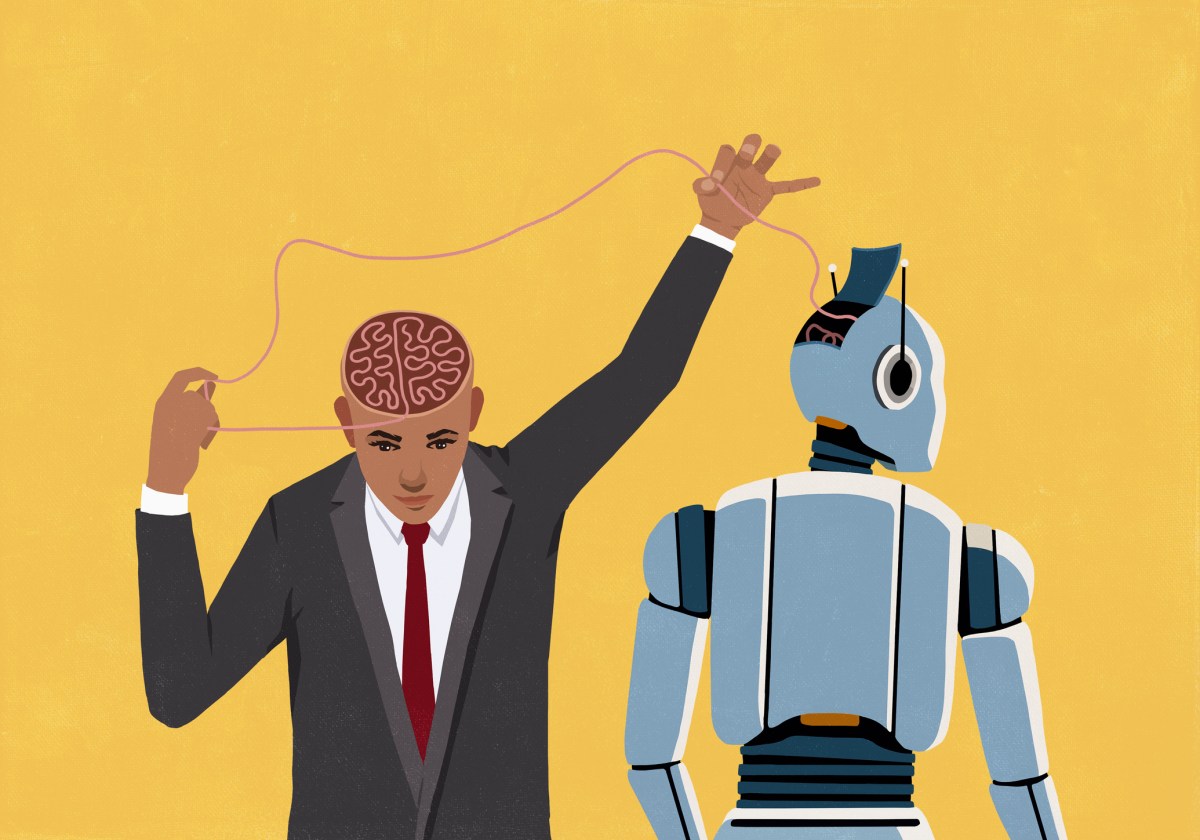
This is the first major platform to be fully displaced by the very AI it helped train. That is not a footnote. That is a case study in what happens when you build a business on being the bridge between dumb computers and smart humans. Eventually the computers catch up, and the bridge disappears.
The workers who depended on MTurk income are now competing with the AI models they spent years training. According to a Brookings Institution analysis, tasks that were common on crowdwork platforms like MTurk overlap heavily with jobs now being automated by generative AI. That overlap sits at around 30 percent of all digital gig work tasks.
I want to be direct here. The people losing income from this shift are not Silicon Valley engineers. They are workers in developing economies who were already at the bottom of the pay scale. AI did not just replace their jobs. It replaced the entire category of work they occupied.
The rich versus poor dynamic is stark. The companies that used MTurk to train their models are now worth hundreds of billions. The workers who did the labeling are scrambling. That asymmetry tells you everything about who captures value in an AI economy and who gets left behind.
For builders and creators watching this, the lesson is not to feel bad. The lesson is to get on the right side of the transition fast. If you are creating video content or building a media brand, tools like InVideo AI can cut your production time by 80 percent. That is the kind of productivity shift that puts you in the owner seat rather than the worker seat.
What This Means for You
If you were using MTurk to build training datasets or run research studies, you need a new plan now. Here is what I would do.
First, stop looking for a direct replacement. There is not one at the same price point. The era of cheap human annotation through large crowdwork platforms is over. Accept that and move forward.
Second, evaluate whether you actually need human annotation at all. For most standard tasks like image classification, sentiment tagging, and basic transcription, frontier AI models are now accurate enough to replace human labelers. Run a quick accuracy test on your specific task before assuming you need humans.
Third, if you do need human judgment, go smaller and more specialized. Platforms like Prolific focus on high-quality research participants rather than volume. You pay more per task but get better data. For niche topics, smaller specialist communities will outperform a general crowdwork pool anyway.
Fourth, if MTurk income was part of your side hustle, I would shift toward building something you own. Creating content, building small software tools, selling digital products. The gig platforms will keep contracting as AI improves. Ownership is the only hedge.
If you want to find discounted tools to help you build that ownership faster, AppSumo consistently has lifetime software deals on AI tools that would cost thousands per year through normal subscriptions. It is worth checking before you commit to any recurring software cost.
The Bottom Line
Amazon Mechanical Turk trained a generation of AI models and then got replaced by them. That is not irony. That is the clearest possible warning about what happens when you build value for a platform instead of building something you own. The AI economy will keep compressing the middle. You either own a piece of what is being built, or you get automated out of the picture. There is no comfortable third option anymore.
Frequently Asked Questions
What is Amazon Mechanical Turk and why is it shutting down?
Amazon Mechanical Turk was a crowdwork marketplace launched in 2005 where businesses paid workers small amounts to complete digital tasks like image labeling and transcription. It is closing to new customers because AI has become capable enough to perform most of those tasks at lower cost and higher speed, removing the economic reason for the platform to exist.
Will existing Mechanical Turk workers lose access immediately?
Amazon has indicated that the shutdown is being handled gradually rather than all at once. Existing workers and requesters are being given time to transition, but no new accounts are being approved. The platform is effectively in end-of-life mode.
What does the Mechanical Turk shutdown mean for AI development?
It signals that AI has crossed a threshold where human crowdwork is no longer the primary method for generating training data at scale. Companies are shifting toward synthetic data generation, AI-assisted annotation, and smaller pools of expert human reviewers rather than large crowdwork platforms.
What are the best alternatives to Mechanical Turk for researchers and businesses?
Prolific is the leading alternative for research studies that need genuine human responses. For data annotation specifically, several specialized services now combine AI pre-labeling with human review to keep costs manageable. For many standard tasks, testing a frontier AI model directly is now faster and cheaper than any crowdwork platform.
How does the Mechanical Turk closure affect gig workers who relied on it for income?
Workers who depended on MTurk income need to find alternative platforms or pivot entirely. According to the Brookings Institution, roughly 30 percent of common crowdwork tasks are now being automated by generative AI, which means the category of work is shrinking broadly, not just on one platform.
Get stories like this in your inbox. Daily.
Free. No spam. The AI, tech, and finance stories that move money.