Most companies have no clue what their AI spending is actually buying. According to Gartner, nearly 70% of enterprise AI projects fail to deliver measurable business value in the first year. Anthropic just launched spending visibility tools that put hard data in front of the people writing the checks. That changes everything about how businesses justify the cost.
Why This Moment Is Different
We are two or three years into the enterprise AI spending wave and the receipts are starting to come due. Companies poured more than $200 billion into AI products and services in 2025, according to IDC. Budgets got approved on vibes and vendor promises. Now CFOs want proof.
The timing of Anthropic’s move is not accidental. According to McKinsey’s 2025 global AI survey, only 16% of companies reported that their AI investments had met their financial expectations. The rest were sitting on expensive API contracts, half-built internal tools, and no clear way to tie a single dollar to a single output.
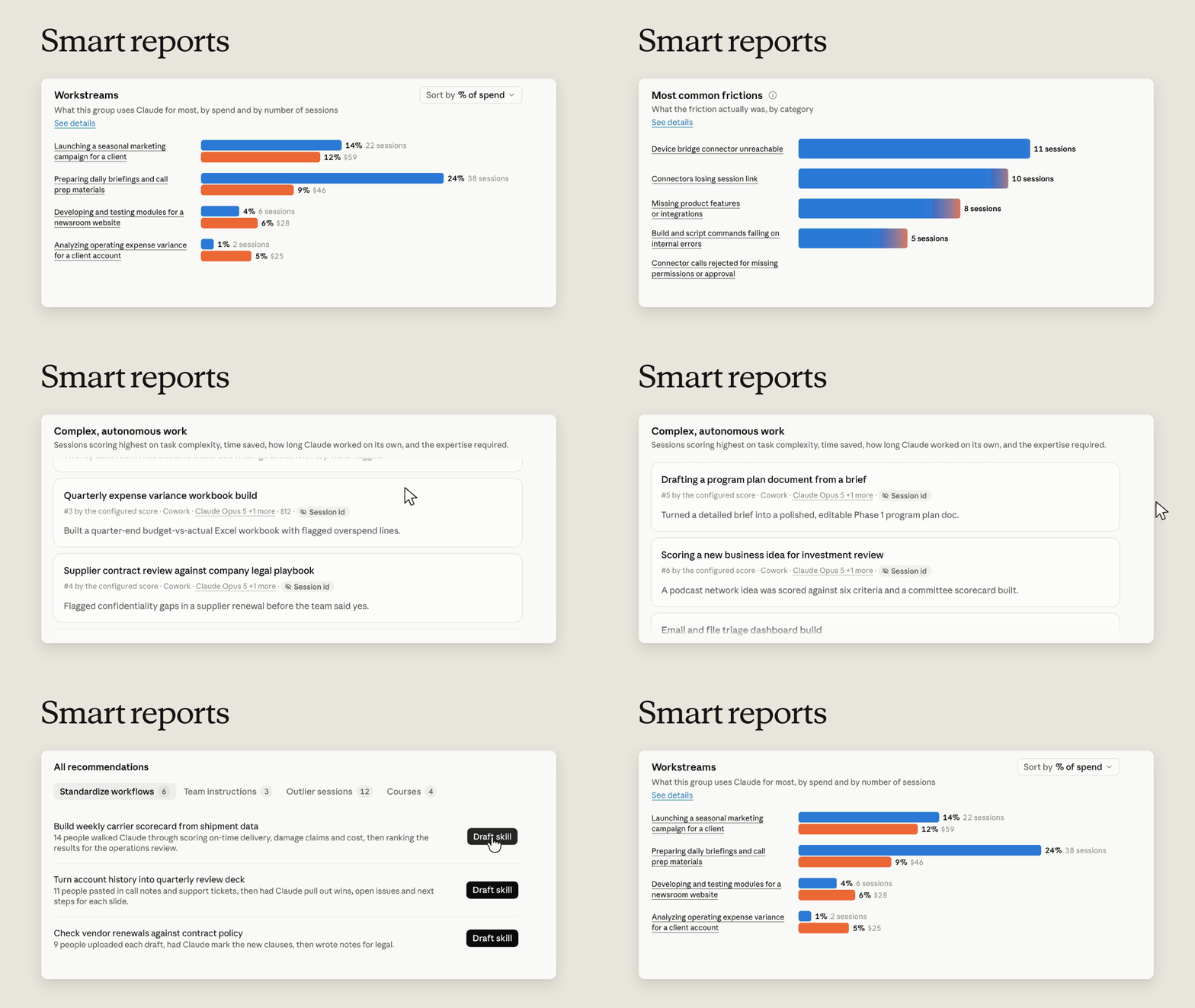
Anthropic’s new tools give enterprise customers granular visibility into exactly how their API credits are being consumed. Which teams are driving costs. Which use cases are generating outputs worth paying for. Which integrations are burning through budget without producing anything useful. It is the accountability layer the market has been screaming for since 2023 and nobody built it until now.
What Anthropic Actually Built and Why You Should Care
The feature set includes usage dashboards broken down by team, project, and API call type. Cost attribution tools that tie spending to specific business workflows. Rate controls that let finance teams put guardrails on runaway experimentation. And output tracking that helps companies connect API activity to real business results.
I want to be direct about what this really is. This is not a product announcement for developers. This is a boardroom play. Anthropic is selling to the people who sign checks, not just the people who write code. That is a smarter distribution strategy than any of their competitors have executed so far.
Think about it from the CFO’s perspective. Before these tools, buying Claude Enterprise looked like buying electricity with no meter. You knew the bill. You had no idea which lights were on. Now there is a meter on every outlet. That kind of visibility does not just help with budgets. It builds political cover for the people inside companies who pushed for AI adoption in the first place.
For the people who got it right early, this is validation. For the people who approved AI spending blindly, this is accountability they did not ask for but cannot avoid now that the tools exist.
According to Deloitte’s 2025 AI adoption report, the number one barrier to expanded enterprise AI investment is not cost. It is the inability to measure return. Anthropic just removed that barrier for every company running on Claude. That should accelerate contract renewals and expansion deals significantly in the back half of 2026.
There is also a competitive angle here. OpenAI’s enterprise offering has had basic usage reporting for a while. But Anthropic’s version is more granular and more directly tied to business outcome tracking. If you are a company choosing between providers right now, spending accountability is suddenly a real differentiator, not a footnote.
Businesses that create a lot of AI-generated content, like video production teams or marketing departments, should be thinking about how to document their own output alongside these cost dashboards. Tools like InVideo AI let teams produce and track video content at scale, which makes it easier to connect what you spent on AI to what you actually shipped.
What I Would Do With This Information
If you are running a company that uses Claude, pull the usage reports this week before your next budget cycle. I am serious. Most teams have no idea they are the ones burning 60% of the AI credits on low-value tasks. The data will surprise you and it will force conversations that should have happened a year ago.
If you are evaluating AI vendors right now, spending transparency should be a hard requirement, not a nice-to-have. Ask every vendor to show you a sample dashboard. If they cannot show you who spent what on what, they are not ready for serious enterprise deployment. Full stop.
For smaller operators and solo builders, this shift matters too. The fact that Anthropic is putting cost visibility front and center means pricing pressure across the industry is coming. Competitors will respond. That is good for everyone who is not a major AI vendor.
If you want to build internal tools that demonstrate ROI without needing a developer team, platforms like AppSumo offer lifetime deals on software tools that can help you connect AI outputs to business metrics without paying enterprise software prices. The goal is the same whether your company runs Claude or not: prove the spend, or lose the budget.
The operators who win in this environment are the ones who can show a clean line from AI investment to business result. That is the skill to build right now. Not just using AI, but accounting for it.
The Bottom Line
The free ride is over. Companies that approved AI spending on faith now have to account for it. Anthropic giving enterprises a meter on their Claude usage is not a feature. It is a forcing function. The operators who already know their numbers will extend their budgets. The ones who have been guessing will get cut. I know which side I want to be on.
Frequently Asked Questions
What did Anthropic launch to help companies track AI spending?
Anthropic launched usage dashboards, cost attribution tools, and rate controls for enterprise customers. These features let companies see exactly which teams and projects are driving API costs and connect that spending to specific business outputs.
Why is AI spending accountability such a big issue in 2026?
According to McKinsey, only 16% of companies say their AI investments met their financial expectations. After years of approving AI budgets on optimism rather than data, CFOs and boards are now demanding proof of return. The market shifted from “just try it” to “show me the numbers.”
How does Anthropic’s spending visibility compare to OpenAI?
OpenAI has offered basic usage reporting in its enterprise tier for some time. Anthropic’s version focuses more on business outcome tracking and granular attribution by team and workflow. For companies making a platform choice today, that level of detail is becoming a real deciding factor.
Does this affect individual developers or just enterprise customers?
The new tools are aimed at enterprise accounts, but the broader trend affects everyone. As spending accountability becomes a standard expectation, pricing and tooling across the industry will adjust. Solo builders and small teams benefit from the competitive pressure even if they do not use the enterprise dashboards directly.
What is the first step a company should take after reading this?
Pull your current AI usage data before your next budget cycle. Most teams discover that a small number of workflows are consuming the majority of their credits. That data tells you where to double down and where to cut, which is exactly the conversation your finance team wants to have.