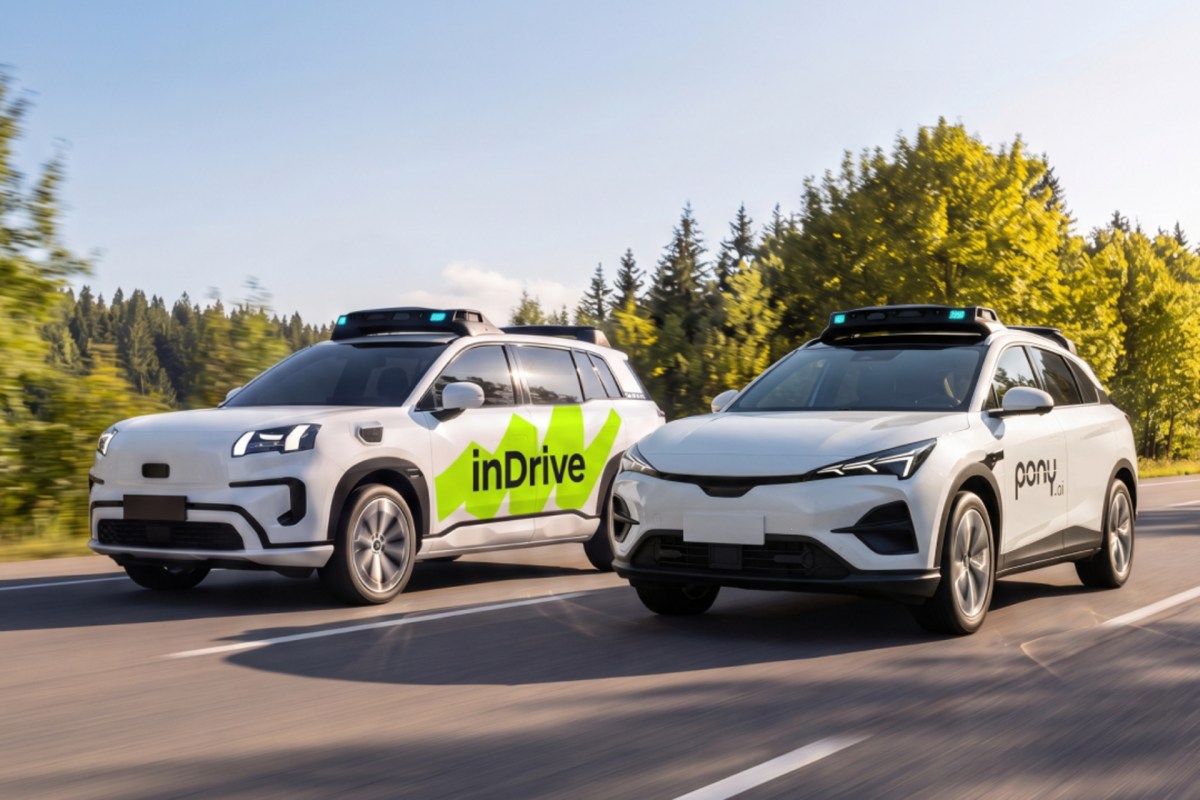
While Waymo burns cash fighting regulators in San Francisco, inDrive just made a quieter move that could print money for the next decade. The company is planning robotaxi tests in Central Asia by 2027, partnering with Pony AI for the autonomous stack and Nvidia for the hardware. First mover status in a market with 100 million potential riders and almost zero AV competition is the kind of setup most investors won’t see until it’s too late.
Why This Is Happening Right Now
inDrive isn’t a household name in the US. But according to the company’s own disclosures, it operates in over 700 cities across more than 47 countries. It built that footprint by going where Uber prices itself out and ignores. Central Asia, Latin America, Africa. Markets that are too small individually for a company like Uber to care about, but enormous when you add them together.
Kazakhstan, Uzbekistan, and Kyrgyzstan are exactly the kind of markets where this bet makes sense. Smartphone adoption is climbing fast. Urban populations are growing. Labor costs are still low. And the regulatory environment for new transport technology is far less restrictive than anything in Western Europe or North America.
Pony AI went public on Nasdaq in late 2024 and has been running commercial robotaxi services in Guangzhou and Beijing. This isn’t a startup with a pitch deck. It’s a company with paying passengers in autonomous vehicles on public roads right now. According to Pony AI’s public filings, it has logged over 40 million autonomous miles across its test programs. Pairing that operational track record with inDrive’s market access in emerging economies is a serious play, not a press release.
The Money Move Everyone Is Missing
Most people think the robotaxi story is about technology. It isn’t. It’s about who owns the asset and who pays the labor bill.
Right now, inDrive pays drivers a cut on every trip. When robotaxis replace drivers, that cut disappears from the cost side and goes straight to the platform. In Central Asia, where driver earnings are already low by global standards, the economics of removing human labor are even sharper than in New York or Los Angeles.
Run the numbers. A robotaxi doing 10 trips a day at $5 each generates $50 in gross revenue per vehicle. A human driver captures 70 to 75 percent of that. A robotaxi has no wage cost. Maintenance, charging, and vehicle amortization still apply, but the margin profile changes entirely.
According to Allied Market Research, the global robotaxi market was valued at roughly $3.4 billion in 2022 and is projected to reach $45.7 billion by 2030. That is a 13x increase in under a decade. The companies that own fleet infrastructure in new markets before competition arrives will capture the majority of that value.
inDrive isn’t trying to beat Waymo in San Francisco. That race is expensive, crowded, and regulated to death. It’s running a different play entirely. Getting to markets where it can set the rules, own the customer relationship, and build brand loyalty before anyone else shows up.
Pony AI brings real credibility. Nvidia’s Drive platform powers the computing stack for the vehicle’s sensor fusion and decision processing. According to Nvidia’s fiscal 2025 annual report, its automotive segment revenue hit approximately $1.7 billion, up nearly 55 percent from the prior year, as more serious AV programs moved from testing to commercial deployment. That growth curve doesn’t stop.
For business owners watching this play out, the question isn’t whether autonomous vehicles are coming. It’s whether you’re positioned to benefit or just going to watch. If you run any company with significant transportation labor costs, now is the time to model what your cost structure looks like when driver wages trend toward zero over the next decade. Tools like Gusto make it straightforward to break down your current payroll by role, so you can see clearly where automation reshapes your numbers before the shift catches you off guard.
What This Means for You
If you’re an investor, the direct play is Pony AI on Nasdaq. But I wouldn’t chase it without factoring in regulatory risk. Central Asia has less predictable legal frameworks than the US or EU. That’s part of why inDrive chose these markets. Fewer barriers. But that same uncertainty runs in both directions. A single government decision can freeze a program that looked certain.
The safer trade is looking at what this signals about the AV supply chain. Nvidia’s Drive platform is in nearly every serious autonomous vehicle program worldwide. When multiple robotaxi companies scale in parallel across different continents, Nvidia collects on all of them. That’s a better risk profile than betting on which specific fleet operator wins a single market.
For entrepreneurs, there’s a different opportunity here. When robotaxis scale in a new market, the constraint shifts from transportation to experience. Someone still needs to build the B2B integrations, the fleet management tools, the business account infrastructure, and the financial layer around those vehicles. If you operate across borders or in emerging markets, having clean financial infrastructure already in place matters. A platform like Wallester lets you issue business cards across teams in multiple countries without the headaches of traditional business banking, which is exactly the kind of operational backbone you need when you’re moving into markets like Kazakhstan or Uzbekistan ahead of the curve.
Here’s what I would do right now. Watch how inDrive’s partnership structure with Pony AI develops over the next 12 months. Pay close attention to what regulatory moves Kazakhstan and Uzbekistan make in response. Those policy signals will tell you whether Central Asia becomes the proving ground for the next wave of global robotaxi rollout, or a cautionary case study in moving too fast in an unregulated market.
The Bottom Line
inDrive isn’t just testing robotaxis. It’s claiming territory in markets that will add hundreds of millions of new middle class riders over the next 20 years. Pony AI brings the technology. Nvidia brings the hardware. Central Asia brings the space to operate without the regulatory walls slowing everyone down in Western markets. The companies that own the fleet, the data, and the routes when scale arrives will be worth far more than anyone is pricing today. This isn’t a future story. The test programs start in 2027. That’s 14 months from now.
Frequently Asked Questions
What is inDrive and how does it compete with Uber?
inDrive is a ride-hailing company operating in over 700 cities across 47 plus countries, with a strong presence in Central Asia, Latin America, and Africa. Unlike Uber, inDrive lets riders and drivers negotiate fares directly, which has driven fast growth in price-sensitive markets where Uber’s model faces resistance.
Who is Pony AI and why does the partnership matter for robotaxis?
Pony AI is a Chinese autonomous driving company that went public on Nasdaq in late 2024 and already operates commercial robotaxi services in Guangzhou and Beijing. Pairing Pony AI’s operational experience with inDrive’s market access gives both companies something the other lacks: proven technology meets a ready market.
Why is Central Asia a target for robotaxi tests?
Central Asia offers rising smartphone adoption, growing urban populations, lower driver wages that sharpen the economic case for automation, and a regulatory environment with fewer barriers to new technology than Western markets. It’s a market where a first mover can establish infrastructure before competition arrives.
What role does Nvidia play in the inDrive robotaxi plan?
Nvidia’s Drive platform provides the onboard computing hardware that processes sensor data and runs the decision software in autonomous vehicles. According to Nvidia’s fiscal 2025 annual report, its automotive segment revenue grew nearly 55 percent year over year as more AV programs moved from testing toward commercial deployment.
Is the global robotaxi market actually as large as projections suggest?
According to Allied Market Research, the global robotaxi market was valued at approximately $3.4 billion in 2022 and is projected to reach $45.7 billion by 2030. Those projections depend on regulatory approvals and technology reliability improving on schedule, both of which carry real uncertainty. The direction is clear even if the exact number isn’t.