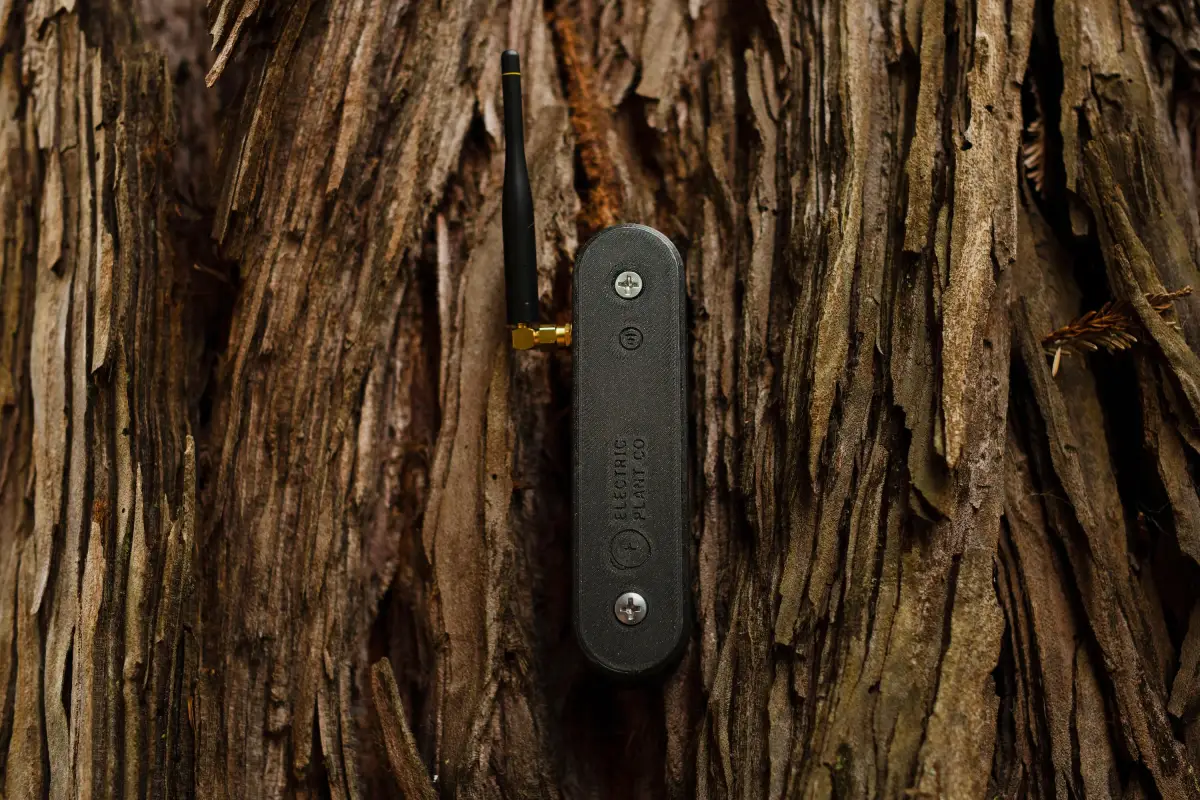
Here’s the full article: —
Plants Speak in Electricity. AI Can Now Listen
Most people look at a dying crop and see a farming problem. I see a $1.3 trillion opportunity that Wall Street hasn’t priced in yet. A startup has built an AI model to decode the bioelectric signals plants send when they’re stressed, diseased, or thirsty. This isn’t science fiction. Plants have been broadcasting data for millions of years. We just couldn’t read it until now.
Why This Is Happening Now
Plants communicate through electricity. When a leaf gets too dry or a pest attacks, the plant sends electrochemical pulses through its tissue. Scientists have known this since the 1870s. The problem was always the translation layer. The signals are faint, variable, and complex enough that no human could interpret them in real time.
That changed when machine learning got cheap and fast enough to process bioelectric noise at scale. Researchers at institutions including MIT and Switzerland’s Vivent have spent years mapping which electrical patterns correspond to which plant states: stress from drought, nutrient deficiency, early disease, or pest activity. Now a startup has taken that research and turned it into a commercial product.
The timing isn’t random. Global food demand is projected to increase 50% by 2050, according to the Food and Agriculture Organization of the United Nations. At the same time, climate stress is making crop yields less predictable. Farmers need better tools. Investors are noticing.
The global precision agriculture market was valued at $10.7 billion in 2023 and is expected to reach $43.4 billion by 2030, according to MarketsandMarkets. That’s a compound annual growth rate of about 22%. For context, that’s faster growth than cloud computing saw in its first decade.
What the Rich See That the Average Investor Misses
Here’s the framing most financial media gets wrong. They’ll cover this as an “AgriTech story.” A nice niche play, they’ll say. Good for farmers. Not a big market mover.
That’s the employee mindset talking.
Think about what plant bioelectric AI actually does at scale. It gives commodity traders real time crop health data before anyone else has it. If you know a major corn growing region is under drought stress three weeks before the USDA publishes its crop report, that’s edge. That’s the kind of information asymmetry that fund managers pay billions to get closer to.
Right now, about 30% of global food supply is lost to crop disease, pests, and water stress annually, according to the World Resources Institute. That’s roughly $1 trillion in destroyed agricultural value every single year. The companies that can cut that number even 10% will generate cash flows that most investors today can’t model accurately because there’s no comparable category.
The average reaction to this story is to scroll past it because you don’t farm. The owner reaction is to ask: who owns the data stream? Who licenses the sensor hardware? Who sits between the farmer’s field and the commodity exchange?
The startup model here isn’t just about selling sensors to farms. It’s about building a proprietary dataset of global crop health signals. That dataset becomes more valuable the longer they run it. That’s an asset class most fintech analysts aren’t thinking about yet.
If you run a business in agriculture, food distribution, or supply chain, the financial exposure to crop failure is real. Managing cash flow across seasonal production cycles is already complex. Having a tool like Gusto for payroll helps you keep your books tight when revenue is lumpy, but the bigger opportunity is on the information side: knowing when to hedge, when to buy, and when to hold based on biological signals your competitors can’t see.
What I Would Do With This Information
I’m not telling you to buy a sensor company today. I’m telling you to start watching this category like it matters, because in five years you’ll wish you had.
First, look at the commodity ETFs that track soft commodities: corn, wheat, soybeans, cotton. These markets move on weather, geopolitics, and crop health data. As bioelectric AI improves real time crop monitoring, early adopters will have a measurable edge in timing these markets.
Second, watch the sensor hardware suppliers and the semiconductor companies that make low power bioelectric measurement chips. The AI model gets the attention. The picks and shovels business in the supporting hardware is where the boring money often hides.
Third, if you run any food or agriculture adjacent business, get serious about understanding your commodity exposure now. The companies that know their input costs at a granular level will win when everyone else gets surprised by price swings. For operators managing teams across seasonal workflows, keeping financial operations tight matters. I’ve seen small agribusiness operations use Wallester for business expense management because the card controls let you track spend by category across seasonal staff. Simple tools matter when cash gets tight.
Fourth, track the regulatory angle. The EU’s Farm to Fork strategy mandates a 50% reduction in pesticide use by 2030. Bioelectric monitoring reduces the need for preventative spraying because you only treat what the plant’s signals say is actually sick. That’s a compliance driver, not just an ROI story.
The Bottom Line
Plants have been sending signals about the future of food for millions of years. Most investors are still waiting for the USDA press release. The startup that cracked this code isn’t selling a farming gadget. They’re building the Bloomberg terminal for biological data. The money that figures that out early will look very smart in about five years. The money that waits for the cover story will pay full price.
Frequently Asked Questions
How do plants communicate using electricity?
Plants produce electrochemical signals called action potentials and variation potentials when they experience environmental stress. These pulses travel through the plant’s vascular tissue and are measurable with small surface electrodes. The patterns shift depending on whether the plant is experiencing drought, disease, pest attack, or nutrient deficiency.
What startup is building AI to read plant electrical signals?
Several companies are active in plant bioelectrophysiology, including Vivent, a Swiss firm that pioneered commercial plant electrophysiology sensors. More recently, early stage startups are training machine learning models on large bioelectric datasets to move beyond single crop monitoring toward predictive agricultural intelligence at field scale.
Is plant electrical signal AI commercially available yet?
Early commercial versions exist primarily for greenhouse and controlled environment agriculture. Field scale deployment at commodity farm size is still in the validation phase as of 2026. The technology works; the challenge is cost per acre and sensor durability in outdoor conditions.
How does this affect commodity markets and food prices?
Real time crop health data from bioelectric monitoring could give traders and agricultural economists better leading indicators of yield outcomes than current satellite imagery or weather models alone. According to the World Resources Institute, roughly $1 trillion in annual food value is lost to preventable crop stress each year. Even partial reduction in that loss changes commodity supply assumptions.
What is the investment case for plant bioelectric AI?
The precision agriculture market is projected to reach $43.4 billion by 2030, according to MarketsandMarkets. Plant bioelectric AI is an early position within that category, with the added upside of proprietary data asset accumulation over time. The strongest investment case is in the companies that own the data, not just the hardware.