Here is the full article: — “`html
The Elizabeth Holmes Desk Website Exposes a 9 Billion Dollar Mindset Problem
Someone built a website where you can sit at Elizabeth Holmes’ Theranos desk. It spread across the internet in days. Theranos raised $945 million based on technology that never worked, according to federal prosecutors. And yet here we are, romanticizing her workspace. That gap is worth understanding.
Why This Is Happening Now
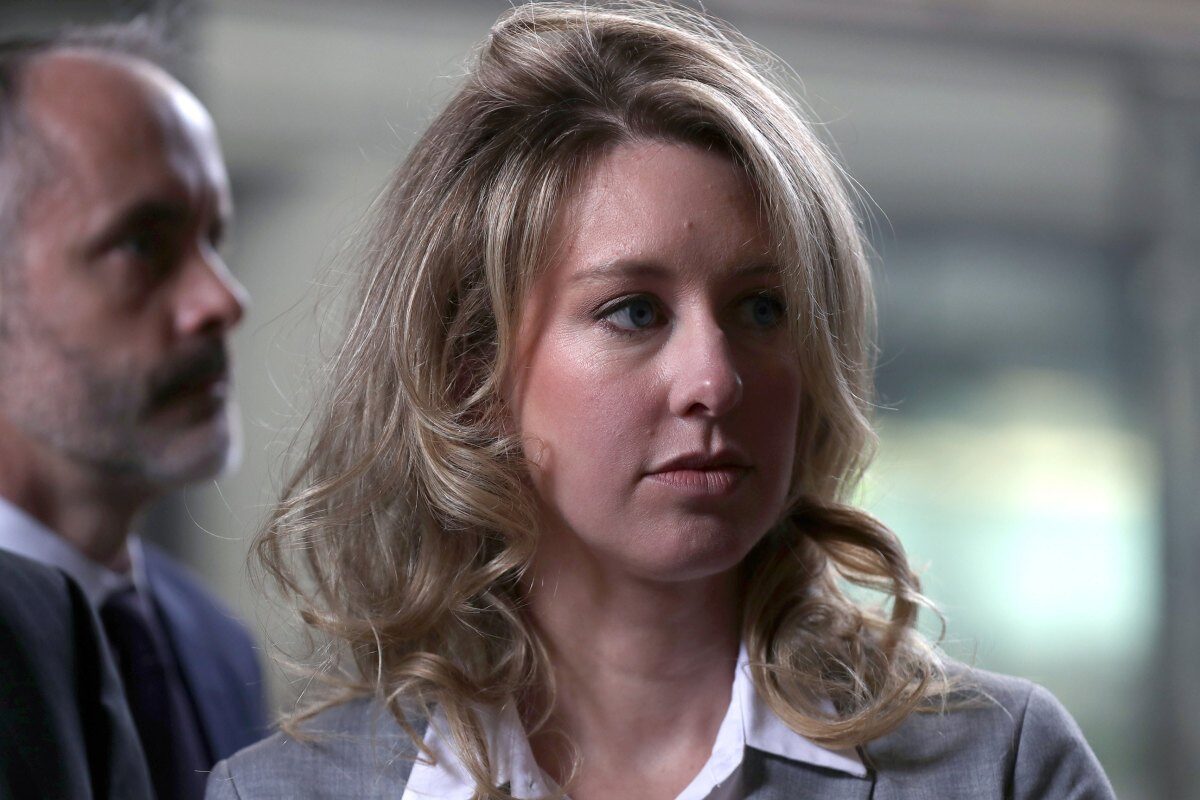
Theranos collapsed in 2018 after Wall Street Journal reporter John Carreyrou broke the story. Holmes was convicted of investor fraud in 2022 and began serving an 11.25 year federal prison sentence in May 2023, according to the U.S. Department of Justice. At its peak, Theranos carried a $9 billion valuation, making Holmes the youngest self-made female billionaire in American history. That valuation was built entirely on a technology that never functioned as advertised.
The website captures her workspace with unusual detail. The black turtleneck hanging on the chair. The Stanford dropout mythology baked into the aesthetic. The founder cosplay energy is real. It went viral because the internet cannot stop processing Holmes as a character. And in 2026, with AI tools making it easier than ever to build immersive interactive experiences, this is just the beginning of founder mythology going digital.
According to Google Trends data, searches for “Elizabeth Holmes” have stayed elevated for over three years since her trial began. She is one of the most searched business figures of the 2020s. That is not just true crime curiosity. That is a culture working something out.
The Mindset Problem Nobody Talks About
Here is my actual take. The website is not about Elizabeth Holmes. It is about how we relate to ambition and failure.
Most people experience that site and feel a mix of fascination and judgment. They want to understand how someone got that far on nothing. They want to sit in the chair and imagine the audacity. That is the employee mindset: absorb the story, feel the emotion, move on.
Operators and owners experience it differently. They want to find the 12 moments where the whole thing should have collapsed earlier and did not. They want to understand the investors who wrote nine figure checks without demanding independent scientific validation. According to court documents filed in U.S. v. Holmes, investors including Rupert Murdoch, Betsy DeVos, and members of the Walton family poured hundreds of millions in without basic due diligence on the core blood testing claims.
That is the actual lesson from the desk website. Not “wow, what a fraud.” The lesson is that people with nine figure net worths got fooled because they trusted credentials and charisma over evidence. The investors who did not lose money in Theranos were the ones who asked hard questions, got stonewalled, and then walked away.
Holmes built a secrecy machine. Employees signed brutal NDAs. People who raised concerns were fired. According to Carreyrou’s reporting in the Wall Street Journal, the lab director quit after being pressured to report false results to doctors. No legitimate company operates this way. But investors kept writing checks because the founder had the right look, the right voice, and the right board members.
I build content businesses. When I look at that desk I do not see ambition. I see what happens when a founder optimizes for the appearance of competence instead of actual product delivery. The market always corrects that eventually, usually at the worst possible time for everyone who trusted the story.
If you want to turn this kind of business failure research into a content series, InVideo AI makes it straightforward to build video case studies around stories like this. The demand for “what went wrong” business content is high right now. People are hungry for the real breakdown, not the press release version.
What I Would Actually Do With This
The Holmes story is not just interesting. It is a real-world test for evaluating any early-stage company or investment opportunity. Here is how I apply the lessons.
First, any founder who cannot explain how their core technology works in plain language is a red flag. Holmes famously deflected technical questions. Her investors famously let her. Never let that slide.
Second, look at the culture signals. Does the company fire people who ask hard questions? Do employees talk openly about problems? According to the Edelman Trust Barometer 2025, 71% of employees say they would raise concerns about a product or business practice if they felt safe to do so. If that openness is missing, something is being suppressed.
Third, study the cap table. Who else is invested and why? Holmes attracted generals, secretaries of state, and billionaires with no healthcare or science background. When a cap table is full of status investors and short on domain experts, the company is selling credibility, not a product.
Fourth, look at the NDA culture. Every startup uses NDAs. But companies that use NDAs to silence internal dissent rather than protect IP are signaling that the product cannot survive honest scrutiny.
If you want a fast path to tools for researching companies and building your own content around this kind of analysis, AppSumo regularly surfaces lifetime deals on research and content tools at a fraction of the enterprise price. I have found several tools there that I use weekly for competitive and company research.
The Holmes desk website is a cultural artifact. Use it as a mental model checkup, not entertainment.
The Bottom Line
Millions of people sat at Elizabeth Holmes’ virtual desk and felt fascinated. A smaller group sat there and wrote a checklist of things never to do. That second group builds companies that actually work. Founder worship is a losing strategy. Founder study is how you avoid the same traps. The desk is just a desk. The $9 billion in losses was a choice made by people who did not ask enough questions. Do not be those people.
Frequently Asked Questions
What is the Elizabeth Holmes desk website?
It is an interactive website that recreates Elizabeth Holmes’ office at Theranos in unusual detail. Users can explore the space virtually. It went viral in 2026 for capturing the aesthetic of one of Silicon Valley’s most infamous founders and sparked renewed debate about founder mythology in tech.
How much did Theranos raise before its collapse?
Theranos raised approximately $945 million from investors before the fraud was exposed, according to federal prosecutors. The company carried a $9 billion valuation at its peak in 2013 and 2014, all built on technology that never delivered accurate results.
What can founders learn from the Elizabeth Holmes case?
The core lesson is that cultures built on secrecy collapse faster than cultures built on honest internal feedback. Holmes built a company that optimized for the appearance of progress. That strategy works until it does not, and then it fails all at once with maximum damage to everyone involved.
Why do people keep talking about Elizabeth Holmes in 2026?
Because she is a live template for evaluating AI hype cycles right now. Dozens of AI companies in 2025 and 2026 are making product claims that are difficult for investors to independently verify. The Holmes story is a clear framework for spotting when that goes wrong before the losses hit.
How do I spot a Theranos-style problem in an AI company today?
Look for founders who cannot explain their technology in simple terms, investors who are status hires rather than domain experts, and internal cultures where employees are discouraged from raising concerns. Any two of these three together is a serious warning sign worth slowing down for.