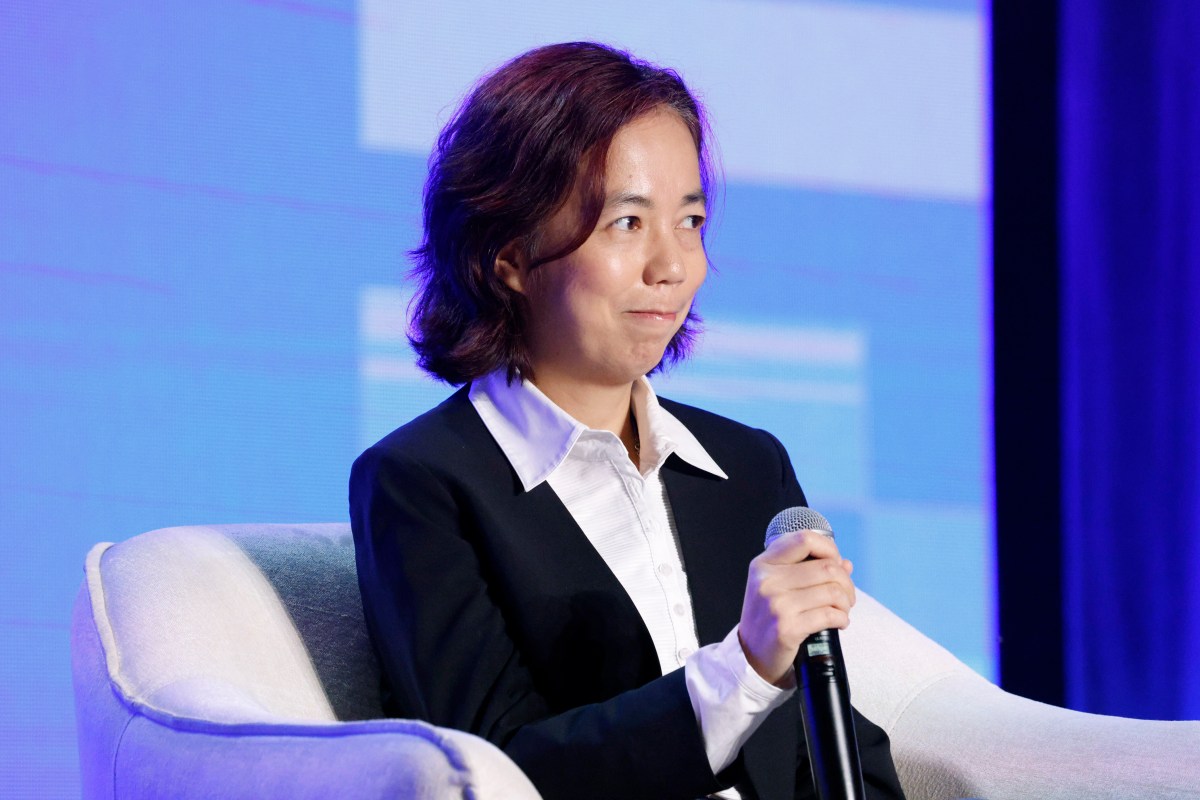
AMD just agreed to pay $8.2 billion for World Labs, the spatial intelligence company built by AI pioneer Fei-Fei Li. That makes it AMD’s largest acquisition ever. Most people are reading this as a headline about AI research. I read it as AMD’s clearest shot yet at cracking Nvidia’s grip on the hardware market.
Why This Deal Matters Right Now
World Labs spent two years building what most companies couldn’t. According to World Labs, their large world models simulate physical 3D environments well enough to train AI systems that understand real space, not just text or flat images. Think robotics. Think autonomous vehicles. Think AI agents that interact with the physical world.
Fei-Fei Li isn’t a random founder with a pitch deck. She built ImageNet, the dataset that sparked the deep learning era. According to Stanford HAI, her research directly influenced the computer vision breakthroughs behind modern AI. AMD didn’t buy a product. They bought a lineage and a magnet for serious researchers.
The timing is not random either. Nvidia reported $47.5 billion in data center revenue in fiscal year 2024, according to their annual earnings release. AMD’s data center segment hit roughly $12.6 billion the same year, according to AMD’s Q4 2024 earnings report. That gap is the entire story of why AMD needed to do something bold.
The Real Play Most People Are Missing
Everyone is covering this as an AI acquisition story. I see it as a hardware moat story.
Nvidia’s dominance isn’t only about chips. It’s about CUDA, the software layer that makes those chips useful for AI workloads. According to NVIDIA, over 4 million developers actively use CUDA. That installed base is the real moat, not the silicon itself. AMD has been building ROCm as an open source alternative for years. But ROCm needed a reason for developers to actually switch.
World Labs could be that reason. Spatial intelligence training looks nothing like training a large language model. The compute patterns are different. Memory bandwidth requirements are different. Parallelization strategies are different. If AMD can co-design their next generation hardware specifically around World Labs’ model architecture, they don’t need to beat Nvidia everywhere. They just need to own the corner Nvidia hasn’t claimed yet.
Most people will react to the price tag the wrong way. World Labs raised $230 million at roughly a $1 billion valuation in late 2024, according to TechCrunch. So $8.2 billion looks like a 35x premium. That’s the “poor” investor take. The owner’s take is different. AMD isn’t buying World Labs at today’s value. They’re buying the right to define what spatial intelligence hardware looks like in 2028 and beyond. If that market is worth $100 billion in three years, $8.2 billion looks cheap. Assets that seem expensive today are often the ones you wish you bought more of later.
Fei-Fei Li staying on to lead the research division is not a small detail. Her name attracts academic partnerships, federal research grants, and top PhD talent. AMD just bought a recruiting engine and a credibility stamp in one deal.
If you create content about AI or tech and want to show your audience what spatial intelligence actually produces, InVideo AI is worth a look. Their platform has moved well beyond simple text to video and now handles complex visual narratives that mirror the kind of scene understanding World Labs is pushing into hardware.
What This Means for You
If your business depends on AI infrastructure over the next three years, this deal changes your planning.
First, AMD just became a more serious option. Not just for chips but for AI research partnerships and model access. If you’ve been locked into Nvidia infrastructure for all your AI workloads, this is the moment to start testing AMD alternatives. Competition keeps compute costs down. You benefit whether AMD wins or not.
Second, spatial intelligence is no longer a research curiosity. The companies that figure out how to use AI that understands physical space will have a clear edge over competitors still working exclusively with text and image models. Manufacturing, construction, logistics, and robotics are the most obvious verticals. Start paying attention now, not when it’s obvious.
Third, Fei-Fei Li’s involvement signals something important about talent gravity. When the person who built the foundation of modern computer vision aligns with a chip company, other researchers follow. AMD’s research output will accelerate. Products built on that research will accelerate. You want to be positioned before that happens, not after.
Here’s what I would do right now. Stack tools and infrastructure while the market is still competitive. AppSumo has lifetime deals on software tools that let you build AI workflows without paying enterprise SaaS rates every month. The builders who lock in good tools at low prices today will have better margins when AI infrastructure gets more expensive later, and it will get more expensive later.
The Bottom Line
AMD just made the most strategically interesting acquisition in the AI hardware race since Google brought DeepMind in house. World Labs gives them Fei-Fei Li, a research moat in spatial intelligence, and a legitimate reason for developers to reconsider ROCm. Nvidia’s monopoly on AI compute now has a visible crack. The question isn’t whether AMD can close the gap. The question is how fast. Based on this move, faster than most people thought.
Frequently Asked Questions
What is AMD’s acquisition of World Labs about?
AMD agreed to pay $8.2 billion for World Labs, the spatial intelligence company founded by Fei-Fei Li. The deal gives AMD access to large world model technology that trains AI systems to understand physical 3D environments. It’s AMD’s largest acquisition to date and a direct move against Nvidia’s dominance in AI compute.
Who is Fei-Fei Li and why does she matter for this deal?
Fei-Fei Li is a Stanford AI professor who created ImageNet, the dataset that directly fueled the deep learning era. According to Stanford HAI, her research shaped the computer vision breakthroughs behind modern AI. Her decision to stay on at AMD post-acquisition gives them instant credibility with the research community and a powerful talent recruiting advantage.
How does the AMD World Labs acquisition challenge Nvidia?
Nvidia’s advantage over AMD comes largely from CUDA, a developer platform with over 4 million active users according to NVIDIA. AMD’s competing open source platform ROCm needed a flagship use case to pull developers away. World Labs’ spatial AI models optimized natively for AMD hardware give developers a concrete reason to build on ROCm for this specific workload category.
Was $8.2 billion too much to pay for World Labs?
World Labs raised at roughly a $1 billion valuation in late 2024, according to TechCrunch, making AMD’s offer an enormous premium on paper. Whether it was too much depends entirely on how large the spatial intelligence market grows. If AMD captures even a meaningful slice of AI infrastructure spend in this category, the price will look conservative in three years.
What industries will spatial AI technology affect most?
Robotics, autonomous vehicles, manufacturing, construction, and logistics are the most immediate targets. Any business where AI needs to understand and interact with physical space rather than just process text or flat images stands to benefit from what World Labs has built. The $8.2 billion AMD just committed is a reliable signal about where the next wave of AI investment is pointed.