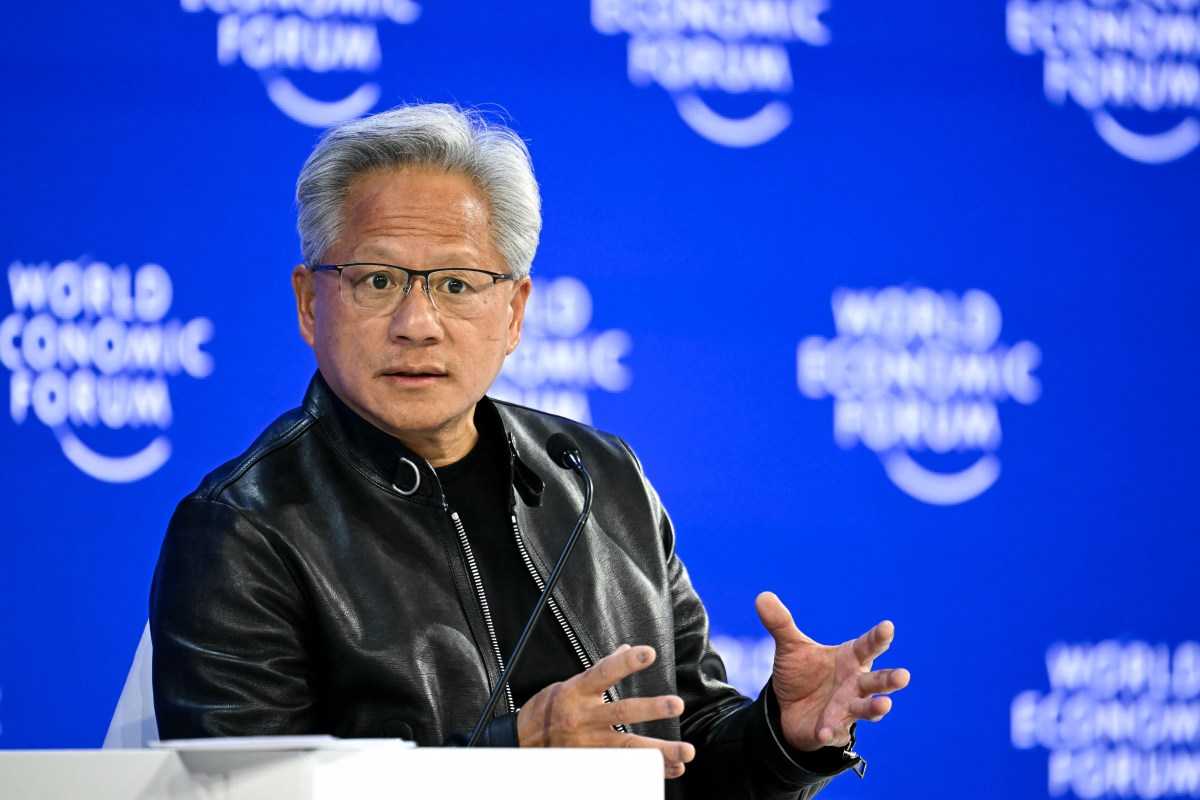
Nvidia CEO Jensen Huang walked into Washington and said what every serious investor already knew. America is not slowing down on AI, and the man supplying the hardware for this entire race just made that very clear to the president of the United States. Nvidia’s stock has climbed over 700% since 2023, and Huang is betting that number keeps moving.
What Just Happened
Jensen Huang met with President Trump and made one thing plain: the AI buildout is not stopping, not slowing, and not going backward. His exact words, according to reporting from Reuters, were a direct message that Nvidia would not allow an AI slowdown to occur under current policy conditions.
This was not a casual meeting. Huang has been one of the most aggressive voices pushing for US dominance in the global AI race. He has argued publicly that China is catching up faster than most people realize, and that the US needs to invest, manufacture, and deploy at a pace that most politicians are not yet comfortable with.
According to Bloomberg, US companies and government agencies are on track to spend over $200 billion on AI infrastructure in 2026 alone. That number includes data centers, chips, energy, and software. A large portion of that money flows directly through Nvidia’s order books. Huang knows this better than anyone in the room.
This meeting comes at a time when US export restrictions on advanced chips to China remain a major policy flashpoint. Huang has been walking a careful line between supporting national security goals and keeping Nvidia’s global revenue intact. According to Nvidia’s own filings, China represented roughly 17% of total revenue before the most recent export restrictions took effect.
The Real Money Story Nobody Is Talking About
Most people will read this headline and think it is a politics story. It is not. It is a capital allocation story.
When the CEO of the most important hardware company in the world goes directly to the president and says the buildout will not stop, he is signaling something to every institutional investor, every sovereign wealth fund, and every corporate board that is still sitting on the fence about AI spending. He is saying: the train has left the station and it is not coming back.
Here is how I think about this. Rich people and smart operators read a headline like this and immediately ask one question: where does the money flow next? Poor people read it and say “interesting” and go back to whatever they were doing.
According to McKinsey Global Institute, AI could add between $13 trillion and $17 trillion to global GDP by 2030. That is not a government projection. That is a private sector estimate from people who get paid to be accurate. The gap between people who position themselves ahead of this shift and people who ignore it is going to be enormous.
Nvidia’s gross margins have held above 70% for four consecutive quarters, according to the company’s financial reports. That is not normal for a hardware company. Normal hardware margins are 30% to 40%. What Nvidia has built is more like a software business wrapped in silicon. And Huang just told the White House he intends to keep it that way.
If you are running a business or managing your own finances and you have been waiting for a “better time” to think about how AI affects your income, your job, or your assets, that window is closing faster than you think. This is when I’d start using a tool like SuperMoney to look at business loan options if you’re trying to fund any kind of AI adoption in your own work. Rates are still manageable, and waiting another six months could cost you more in lost competitive ground than the interest ever would.
What This Means for You
Let me be direct about what Huang’s statement actually changes in practical terms.
First, US AI infrastructure spending is not going to slow down in 2026 or 2027. The political signal from this meeting is that both the White House and the private sector are aligned on this. That alignment matters. It removes a major source of uncertainty that was keeping some capital on the sidelines.
Second, if you work in any field that touches data, software, customer service, content, or finance, the pace of AI adoption in your industry just accelerated again. Companies that were planning 18-month timelines for AI rollouts are going to compress those. That means job roles will change faster than most HR departments are preparing for.
Third, the financial security angle here is real and underappreciated. As AI systems get more access to personal and financial data, the risk of identity theft and credit fraud increases. More data moving through more systems means more attack surface. This is exactly why I think tools like IdentityIQ credit monitoring are worth having right now. If your credit takes a hit because of a breach at some AI startup you never heard of, you want to know about it within hours, not months.
Fourth, watch what Nvidia does with its manufacturing footprint. The company announced plans to expand US-based chip production. According to TSMC’s statements earlier this year, their Arizona fab is now producing chips at commercial scale. Huang wants to be able to say to Washington that Nvidia is building in America. That gives him political cover and supply chain resilience at the same time.
Here is what I would do if I were starting from zero right now. I would get very clear on which skills and business models are going to increase in value as AI spreads, and which ones are going to get compressed. I would not panic, but I would move with urgency. The people who win the next decade are not going to be the ones who waited for certainty.
The Bottom Line
Jensen Huang did not go to Washington to ask for permission. He went to make a statement. The AI buildout is happening at full speed and the most powerful man in AI hardware just got the president of the United States to sit across from him and listen. That tells you everything you need to know about where the money and power in this economy are flowing. Position accordingly.
Frequently Asked Questions
What did Jensen Huang say to Trump about AI?
Jensen Huang told President Trump directly that he would not allow an AI slowdown to happen. The meeting was focused on US competitiveness in AI hardware and the ongoing buildout of AI infrastructure across government and private industry.
Why does Nvidia’s position matter for everyday investors?
Nvidia controls the majority of the AI training chip market, which means its business health reflects the pace of the entire AI industry. When Nvidia’s CEO signals that spending will accelerate, it affects valuations and capital flows across tech, finance, and adjacent sectors.
How does the US and China AI race affect my finances?
Geopolitical competition in AI is driving massive domestic investment, which creates opportunities in infrastructure, software, and adjacent industries. It also increases the urgency around data security and financial privacy as more systems come online quickly.
Is AI spending going to slow down in 2026?
According to Bloomberg, US AI infrastructure spending is projected to exceed $200 billion in 2026, up significantly from prior years. Huang’s public statements and his meeting with Trump both signal that the pace of investment is holding and may increase.
What should regular people do in response to the AI buildout?
Focus on understanding which skills and business models gain value as AI spreads, and take steps to protect your financial data as more systems handle personal information. Moving with urgency matters more right now than waiting for perfect clarity.