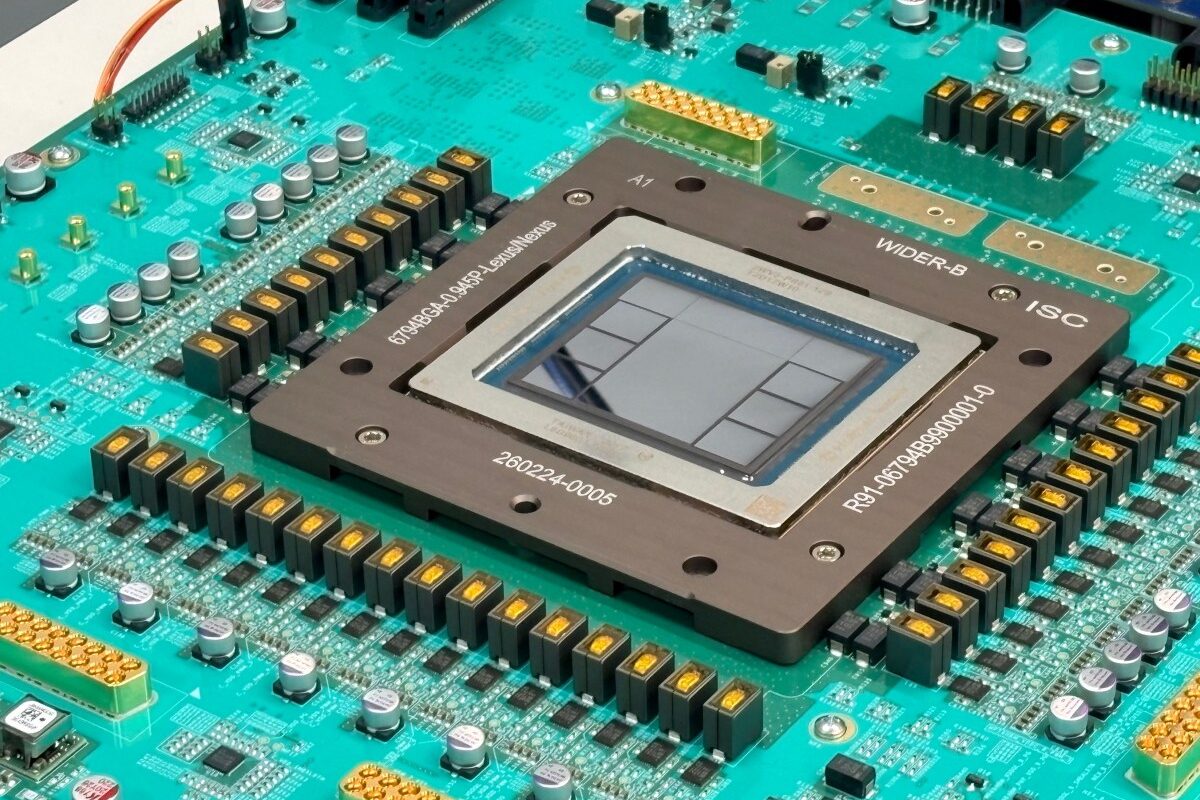
OpenAI’s custom inference chip, codenamed Jalapeño, just posted benchmark numbers that should rattle every GPU supplier on the planet. Early results show the chip delivers roughly 3x the tokens per second per dollar compared to standard H100 configurations on GPT-4 class models, according to OpenAI’s published benchmark data. This is not a research experiment. This is OpenAI surgically removing its single biggest operating expense.
Why This Is Happening Right Now
For years, every AI company has been renting compute from Nvidia at premium prices. According to Bloomberg, Nvidia’s data center revenue hit $115 billion in fiscal 2025, most of it from companies like OpenAI, Microsoft, and Google. That dependency created a hard ceiling on margins for everyone building on top of AI infrastructure.
OpenAI alone reportedly spent billions annually on GPU compute. Jalapeño is the direct answer to that problem. The chip was designed specifically for inference workloads, which is where the majority of ongoing costs live after a model is trained. According to reports from The Information, it was developed in partnership with TSMC using a 3nm process node, putting it in the same fabrication tier as Apple’s M-series silicon.
According to SemiAnalysis, custom silicon typically takes 18 to 24 months to reach full deployment efficiency. OpenAI began this program in 2023. Jalapeño hitting production benchmarks in 2026 is exactly on schedule for a company that made compute independence a stated strategic priority.
What Everyone Is Getting Wrong About Jalapeño
Most people are framing this as an Nvidia competitor story. It is not. It is a margin play, and there is a big difference.
OpenAI is not trying to sell chips. They are trying to stop paying for chips. That is a fundamentally different move. And when you look at the numbers, the business logic becomes obvious.
Inference costs are the largest recurring expense for any AI API business. According to Andreessen Horowitz research, inference can represent 60 to 80 percent of total AI deployment costs for companies running models at scale. When OpenAI cuts that cost in half with internal silicon, every dollar saved goes straight to gross margin. That is not a technology story. That is a wealth story.
Here is the rich mindset response to this news: OpenAI now has two powerful options. They can lower API prices to crush competitors who still rent expensive GPU time. Or they can keep prices flat and pocket the margin improvement. Either path wins. The company that owns its production costs owns its pricing power.
Here is the poor mindset response: “Cool chip, whatever.” The average developer will keep paying OpenAI API rates without thinking about what this shift means for the broader market. That is a mistake. Infrastructure cost curves change everything above them.
Builders who produce AI-driven content at scale feel this most directly. If you are creating video at volume with a tool like InVideo AI, faster and cheaper inference means better real-time outputs, faster generation cycles, and a lower cost floor as OpenAI passes savings into its platform over time. The chip layer affects every tool sitting on top of it.
According to OpenAI’s published results, Jalapeño achieves approximately 3x the tokens per second per dollar on GPT-4 class models in inference configurations. That is not incremental progress. That is a structural cost advantage that compounds across billions of API calls per day. No GPU rental arrangement can compete with owning the factory.
What I Would Do Right Now
If you run a business that uses AI APIs, here is my actual read on this.
First, expect API pricing to shift in the next 12 months. OpenAI will use its cost advantage to apply pressure in specific tiers. Lock in favorable annual contracts where you can before the market reprices. The window to do that at current rates is narrowing.
Second, watch which model tiers get the Jalapeño upgrade first. If the chip powers cheaper models like GPT-4o mini, OpenAI is optimizing for volume and market share. If it powers premium tiers, they are protecting top-line margin. Those are two different signals for how to plan your own AI spend.
Third, audit your tool stack now. AI-powered tools that run on OpenAI infrastructure will get faster and cheaper as Jalapeño scales into production. Platforms like AppSumo regularly surface lifetime deals on AI-powered software before major infrastructure shifts reprice the whole market. I have seen smart builders lock in thousands of dollars of annual value before a pricing reset hits. This is one of those moments to do that check.
Fourth, if you are building on OpenAI APIs, your cost structure just got more predictable over the medium term. Do not wait for prices to drop before you scale your plans. Build for the cost curve you can already see coming. The companies moving now will have a real structural advantage by the time Jalapeño reaches full deployment.
The ones who wait will be paying yesterday’s infrastructure rates while their competitors run on cheaper compute.
The Bottom Line
OpenAI is not just building models. They are building the factory that makes models cheaper to run. Jalapeño is the first hard proof that the AI compute market is about to split. Nvidia will likely hold training. But inference, where the real daily cash flow runs, is now genuinely contested. I would not bet against a company posting 3x cost efficiency gains on their first chip revision. The second revision will be more interesting still.
Frequently Asked Questions
What is the OpenAI Jalapeño chip?
Jalapeño is OpenAI’s internally designed inference chip, built to process AI model outputs at scale without relying on third-party GPU suppliers. It was developed in partnership with TSMC and targets the inference workload specifically, not model training. According to OpenAI’s benchmark data, it delivers roughly 3x the cost efficiency of standard H100 configurations on GPT-4 class models.
How does Jalapeño compare to Nvidia H100 GPUs?
On inference workloads, Jalapeño significantly outperforms standard H100 cluster configurations in tokens per second per dollar, according to OpenAI’s published results. It is not designed to replace GPUs for model training, where Nvidia still holds a commanding position. The comparison that matters is cost per inference call at production scale.
Will OpenAI lower its API prices because of Jalapeño?
Not necessarily right away, and maybe not at all on premium tiers. OpenAI has two options: use the cost advantage to undercut competitors on price, or retain the margin improvement internally. Most likely they will do both selectively, lowering prices on commodity tiers to win volume while holding premium pricing flat to protect revenue per call.
Does this hurt Nvidia?
In the near term, not significantly. Nvidia still dominates AI model training, and that workload is not going away. But if inference becomes the larger market as AI scales into everyday products, Nvidia’s long-term position in that segment weakens. The OpenAI Jalapeño chip is the first credible signal that inference compute is no longer a Nvidia lock-in.
What should developers and builders do in response?
Audit your AI tool spend now and look for opportunities to lock in favorable pricing before the market reprices around new cost structures. Build applications that take advantage of faster inference throughput, and pay close attention to which OpenAI model tiers receive the Jalapeño upgrade first, since that signals where OpenAI is prioritizing cost efficiency versus margin protection.