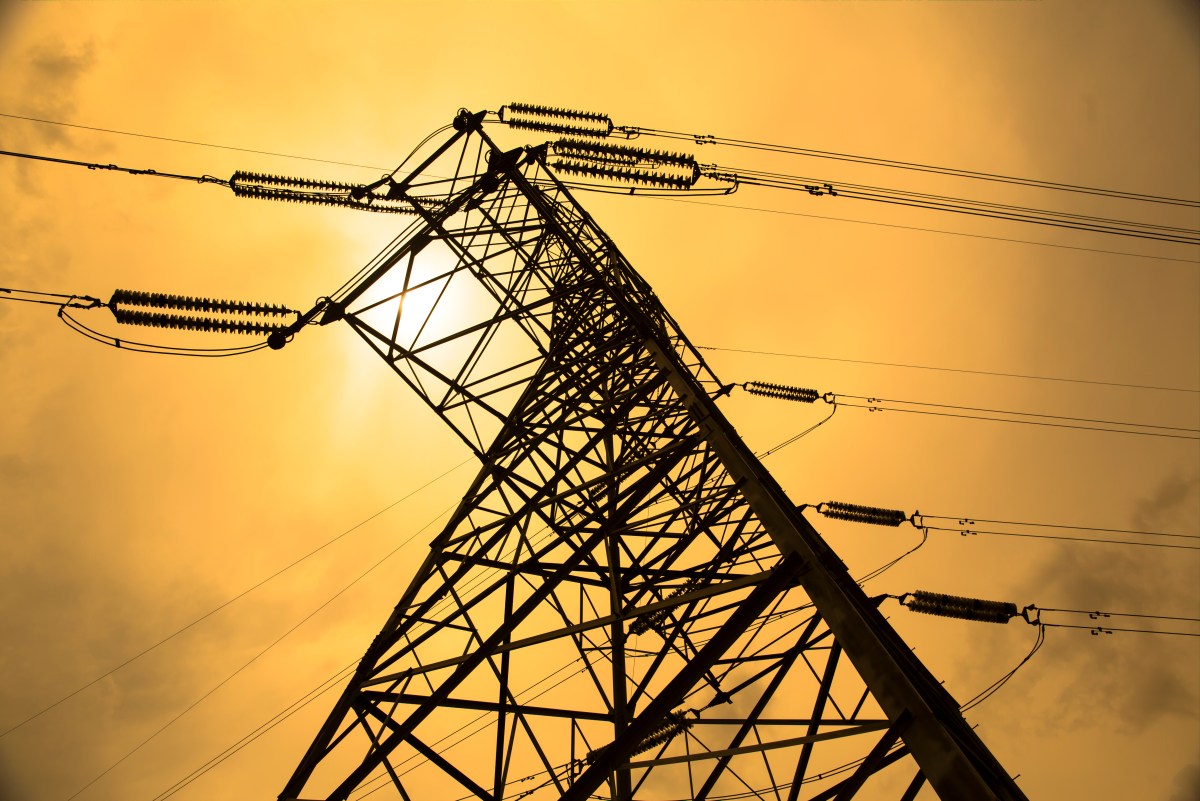
One downed power line near a Northern Virginia transmission corridor knocked an AI data center offline for six hours in early 2026. The cost? Somewhere between $2 million and $5 million in lost compute time, according to grid reliability reports cited by Data Center Knowledge. This wasn’t a freak accident. It was a preview of what happens when you build trillion dollar infrastructure on top of a grid designed for 1970s demand.
Why This Is Happening Right Now
AI training and inference require a staggering amount of power. We are not talking about streaming video or email servers. We are talking about GPU clusters running at 40 to 80 megawatts per facility, 24 hours a day, seven days a week.
According to the International Energy Agency, global data center electricity demand is expected to reach 1,000 terawatt hours annually by 2026. That is roughly equivalent to Japan’s entire national power consumption. According to Uptime Institute, power related issues account for 43% of all significant data center outages worldwide. And according to the Ponemon Institute, the average cost of a data center outage runs $9,000 per minute for enterprise operations.
The irony is brutal. Companies are pouring hundreds of billions into AI compute capacity while the physical grid feeding those facilities hasn’t seen meaningful upgrades in decades. Microsoft announced $80 billion in data center spending for fiscal year 2025. Google committed $75 billion. Amazon is not far behind. All of that capital, and a single fallen transmission line can wipe it out for hours.
The problem isn’t the data centers themselves. The problem is single points of failure at the grid connection level. Most hyperscale facilities in the US connect to the utility grid through one or two transmission lines. A storm, a wildfire, a squirrel in a substation, any of it can cut power before the diesel backup generators even spin up.
The Deeper Problem Most People Miss
Here’s what I find almost funny about this situation. The people building AI products and the people building AI infrastructure are not the same people. And the people responsible for grid reliability are a third group entirely. Nobody is connecting the dots until something fails.
The average small business or creator using AI tools has no idea their work depends on a power infrastructure that was never designed for this kind of load. You run your ads through AI. You edit your videos with AI. You draft your emails with AI. And all of that runs on servers that are one thunderstorm away from a multi-hour outage.
Rich operators understand redundancy. Poor operators assume the infrastructure just works. That is the mindset gap that costs people money when something like this happens.
The fix is not just better transmission lines, though those matter. The real fix requires a combination of on-site generation, battery storage, microgrids, and smarter workload distribution. Some larger data center operators are already building natural gas peaker plants directly on site. Others are pursuing nuclear power purchase agreements. Small modular reactors are now being seriously considered for co-location with compute facilities. That is not a future story. That is happening in 2026.
For businesses that depend on AI tools for daily operations, the lesson is simpler. Single-vendor dependency on one AI platform is the same structural risk as a data center with one power line. When that line goes down, your whole operation stops.
I’ve started recommending that any business spending more than a few hundred dollars a month on AI tools should have at least two platforms in their workflow. Not because any one platform is bad, but because outages and rate limits and pricing changes are all real. Diversification isn’t paranoia. It’s just how you run things when you actually depend on them.
Tools like AppSumo are worth looking at for this reason. Lifetime deals on AI software mean you own access rather than renting it month to month from a single provider. When one platform goes dark, you have options.
What This Means for You
If you run a business that uses AI tools daily, here is what I would do right now.
First, map your dependencies. Which AI tools would break your workflow today if they went offline for six hours? That list is your risk register. If it has more than two or three items and they all run through the same cloud provider, you have a concentration problem.
Second, build in manual fallbacks. Not forever. Just for the two or three tasks where downtime would cost you real money. Know what you’d do if your AI video tool went down during a product launch week. If you use InVideo AI for quick video production and turnarounds, have a template-based backup approach that doesn’t require live AI generation. The goal isn’t to avoid AI. It’s to not be paralyzed when the grid hiccups.
Third, pay attention to where your critical vendors host their compute. Some AI platforms are more transparent about this than others. A vendor running entirely on a single cloud region in Virginia is more exposed than one with multi-region redundancy. It’s worth asking.
Fourth, watch what the big data center operators do next. When Microsoft or Google makes a move on nuclear, on-site generation, or microgrid contracts, that tells you how serious they think the power problem is. Their capital allocation is the most honest signal in this space.
The grid situation isn’t going to get fixed overnight. Transmission upgrades take years to permit and build. Battery storage at the scale needed costs billions. In the meantime, the companies best positioned are the ones building redundancy into every layer, from power supply down to the software tools their teams use.
The Bottom Line
A fallen power line is not a freak event. It is a stress test that exposed what everyone in the industry already knows but doesn’t want to say out loud. We built a trillion dollar AI economy on top of a grid that wasn’t designed for it. The smart money is not betting on the grid getting better fast. It is betting on the operators who already built around the problem. That gap between those who planned for this and those who didn’t is where the next round of winners and losers gets decided.
Frequently Asked Questions
What caused the AI data center power outage in 2026?
A fallen transmission line near a major data center cluster in Northern Virginia disrupted power to multiple AI compute facilities. The incident highlighted how dependent large scale AI infrastructure is on aging grid connections with limited redundancy. According to Uptime Institute, power related issues are the leading cause of significant data center outages globally.
How much does a data center outage actually cost?
According to the Ponemon Institute, the average enterprise data center outage costs approximately $9,000 per minute. For AI compute facilities running GPU workloads at scale, that number can run significantly higher depending on the nature of the work being interrupted. A six hour outage at a major facility can represent millions in lost revenue and compute costs.
What are AI data centers doing to fix their power problem?
The leading approaches include on-site natural gas generation, large scale battery storage, microgrid buildouts, and long term power purchase agreements with nuclear providers. Some operators are pursuing small modular reactor contracts to co-locate power generation directly with compute capacity. These are not future plans; several agreements are already signed as of 2026.
How should small businesses prepare for AI infrastructure outages?
The most practical step is to avoid single-vendor dependency on any one AI platform. Maintain access to at least two AI tools for your most critical workflows and know what manual fallbacks exist for tasks where downtime would hurt your business directly. Outages are not a matter of if; they are a matter of when.
Is the US power grid capable of supporting AI data center growth?
Not without significant upgrades. According to the International Energy Agency, data center power demand is on track to reach 1,000 terawatt hours annually by 2026, a level the existing US grid was never designed to support in concentrated geographic clusters. Transmission permitting backlogs and aging infrastructure mean the gap between demand and supply will likely worsen before it gets better.