Chinese AI startup Moonshot AI grew Kimi to over 10 million monthly active users by mid-2025, according to Reuters. That number kept climbing. By the time Western media caught on, Kimi was already competitive on the benchmarks that matter to businesses. This is not a copycat story. It is a money story.
What Is Kimi and Why Should You Care
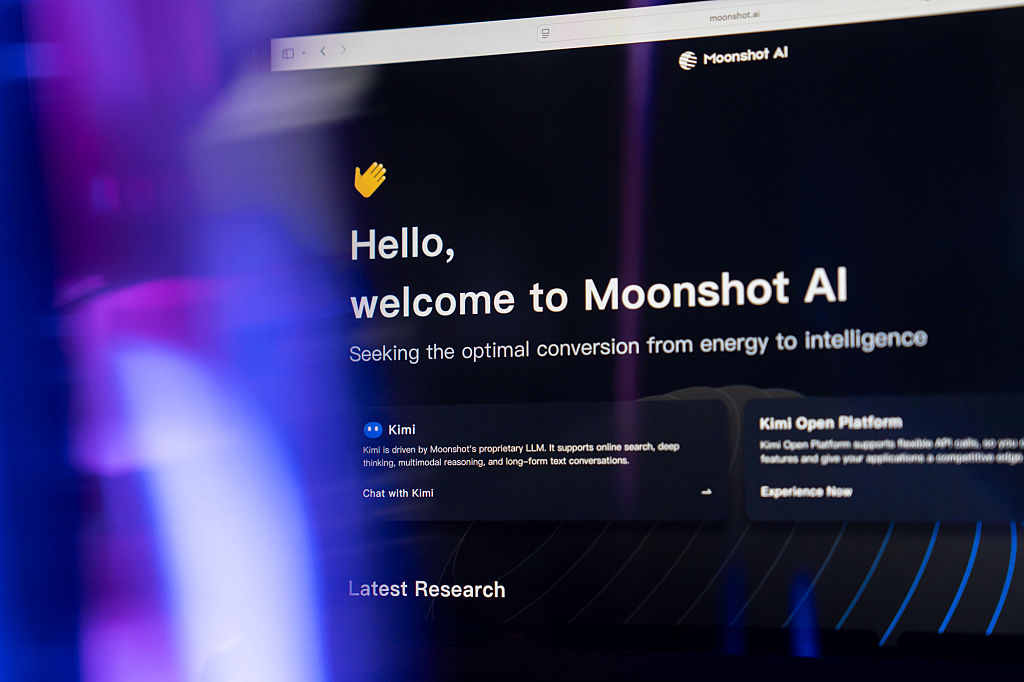
Kimi is the flagship AI product from Moonshot AI, a Beijing-based startup founded in 2023. It launched as a long context AI assistant and quickly became one of the most used AI tools in China. According to Bloomberg, Moonshot AI raised over $1 billion in funding by early 2025, with Alibaba and Tencent both backing the company.
The model handles context windows up to 1 million tokens, according to Moonshot AI’s published specs. That means it can read and reason over a full novel, a year’s worth of financial reports, or an entire codebase in a single session. OpenAI’s standard GPT-4o sits at 128,000 tokens. That gap matters to enterprise users who process large documents daily.
Kimi’s newer models, starting with Kimi k1.5 and the versions that followed, have shown up on global benchmarks in a way that is hard to dismiss. According to TechCrunch, Kimi k1.5 scored within 3 points of OpenAI’s o1 on several major reasoning and math benchmarks. That result forced a lot of people to stop treating Chinese AI as second tier.
The Real Question Is About Money and Control
Most people are asking the wrong question about Kimi. They ask “is it as smart as GPT-4?” The right question is: who will control the AI infrastructure your business runs on?
Moonshot AI is pricing Kimi’s API far below OpenAI. According to Moonshot AI’s published pricing from early 2026, Kimi’s API costs roughly 60 to 70 percent less per million tokens than comparable OpenAI models. That is not a rounding error. For a company running millions of AI calls per month, that difference is six figures per year.
The poor mindset says, “I’ll use whatever scores highest on a benchmark.” The rich mindset asks, “Which platform gives me the best output per dollar and won’t price me out the moment I’m dependent on it?”
American and European businesses are already quietly testing Kimi for tasks they do not talk about publicly. Why? Cost. Speed. And because in several benchmarks, Kimi does not just approach GPT-4. It beats it. According to data from HuggingFace’s Open LLM Leaderboard, Moonshot AI’s models have ranked in the top 10 globally for code generation tasks since late 2025.
Now here is where the threat angle gets real. China has a stated government goal of AI supremacy by 2030. Moonshot AI is not just a startup chasing profit. It operates inside a policy environment that actively subsidizes compute, talent, and research. American companies do not have that tailwind. They have VC money and quarterly earnings pressure.
I am not saying Kimi is a spy tool. I am saying that when you build your business on a foreign AI platform, you are making a geopolitical bet whether you know it or not. Most founders are not pricing that risk into their decisions right now.
If you are building video content at scale and watching your AI budget, InVideo AI is worth testing alongside whichever model you pick for generation. Getting the production layer right matters as much as picking the right model underneath it.
What This Means For You
I would not panic. But I would pay close attention starting today.
First, benchmark Kimi against your current AI provider for your specific use case. Do not assume OpenAI is the best option just because it was first. Run the same prompts through Kimi and GPT-4o. Compare output quality and cost side by side. Let the data tell you what to do, not brand loyalty.
Second, diversify your AI stack now. Depending on a single provider is like keeping all your money in one stock. If OpenAI raises prices or changes terms, you want options ready to swap in without rewriting your codebase. Kimi is one option. Anthropic is another. Build your stack to be provider-agnostic from day one.
Third, watch what enterprises do. When Goldman Sachs or JPMorgan starts quietly using Kimi for back office tasks, that is your signal the shift is real. Those teams do not move on hype. They move on cost per result and vendor risk assessments.
Fourth, sort out data sovereignty before you integrate anything. If you work in healthcare, legal, or finance, your compliance team needs to weigh in on where your data goes when you call a Chinese-hosted model. This is not a reason to avoid Kimi entirely. It is a reason to ask the right questions first.
For founders who want to stay nimble without getting locked into expensive monthly subscriptions, AppSumo is worth checking regularly. They run lifetime deals on AI-adjacent software tools that can keep your overhead low while the AI provider wars shake out.
The Bottom Line
Kimi is not a menace in the Hollywood sense. It is a serious competitor that is cheaper, faster on long documents, and catching up on nearly every benchmark that enterprise buyers care about. It is backed by billions and a government that wants it to win. If you are still operating as if American AI will stay on top by default, you are already behind.
Frequently Asked Questions
What is Kimi AI?
Kimi is the main AI product from Moonshot AI, a Chinese startup founded in 2023. It is known for its very long context window and low API pricing compared to OpenAI and Anthropic. The model performs well on math, coding, and document analysis tasks according to multiple public benchmarks.
Is Kimi better than ChatGPT?
On some benchmarks, yes. HuggingFace leaderboard data shows Kimi’s newer models ranking in the global top 10 for code generation. On general conversation tasks, the gap is smaller. The stronger case for Kimi right now is cost, with API pricing running 60 to 70 percent lower per million tokens than comparable OpenAI models.
Should I use Kimi for my business?
It depends on your compliance requirements and risk tolerance. Kimi offers strong performance at lower cost, which makes it worth testing for most use cases. If you are in a regulated industry, review your data handling requirements before integrating any third-party AI, Kimi included.
Is Kimi safe to use?
Kimi is a commercially available product with standard usage terms. The main concern for businesses is data sovereignty, since Moonshot AI is a Chinese company subject to Chinese law. Evaluate this the same way you would evaluate any foreign software vendor that handles your data.
How does Kimi compare on context window size?
Kimi supports context windows up to 1 million tokens, according to Moonshot AI. That is several times larger than most competing models in wide commercial use today. For tasks involving large documents, full codebases, or lengthy research threads, this is a real functional advantage.