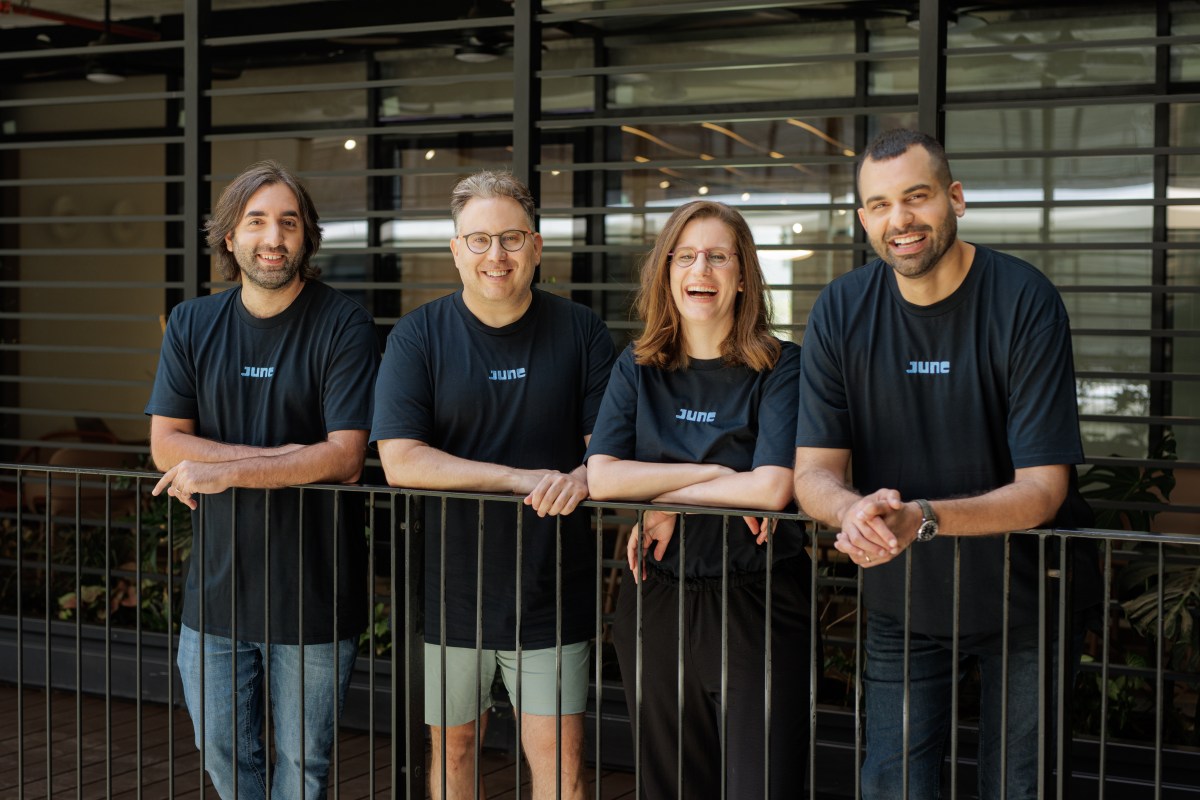
Enterprise AI agents are burning money on bad context. Jedify just raised $24 million to fix that. The startup’s Series A closed on June 10, 2026, bringing its total raise to $32.5 million since its 2023 founding, according to FinSMEs. The problem it’s solving is costing companies a fortune right now.
Why This Matters Right Now
Companies spent billions building AI agents in 2024 and 2025. Then those agents hit production and started failing. They stalled on tasks. They contradicted themselves because one tool defined “revenue” one way and another tool defined it differently. They hallucinated answers that looked right but weren’t.
That’s the problem Jedify built its product to solve. On June 10, 2026, the company announced a $24 million Series A led by Norwest, with strategic backing from Snowflake Ventures, Oceans Ventures, S Capital VC, and Cerca Partners, according to GlobeNewswire. Jedify operates as a model-agnostic context layer. It sits between your AI agent and your data. It makes sure the agent actually understands your business before it takes any action.
The company launched its enterprise “context graph” infrastructure in June 2026, according to SiliconANGLE. This connects structured data sources like CRMs and ERPs to unstructured knowledge like Slack threads, meeting recordings, and internal playbooks. That bridge is exactly what most enterprise AI stacks are missing.
The Real Problem No One’s Talking About
I’ve watched this pattern repeat for three years now. Companies buy the AI tool. They connect it to their data. They expect it to work. It doesn’t. Then they call it a failure and blame the technology.
That’s the wrong lesson.
The technology isn’t failing. The context is failing. Your AI agent doesn’t know that your sales team uses “ARR” to mean one thing and your finance team uses it to mean something slightly different. It doesn’t know that the Q3 numbers in your CRM don’t match the Q3 numbers in your ERP because of a timing difference in how deals close. It doesn’t know your vocabulary, your rules, or your business logic.
Without that context, even the best model in the world gets things wrong.
That’s what Jedify’s Semantic Fusion technology is built to address. The architecture automatically synthesizes fragmented systems into a single, live semantic model that tracks metric lineages, security permissions, and domain terminology, according to GlobeNewswire. It’s patent-pending. And it runs continuously, not as a one-time setup.
Now consider the cost angle. According to SiliconANGLE, without runtime context layers, enterprise LLM agents frequently stall or hallucinate due to misaligned definitions, driving up token costs on irrelevant processing. You’re paying your model provider to process garbage. You’re paying for tokens that produce wrong answers.
Now look at who has a conflict of interest here. Major model providers like OpenAI, Anthropic, and Google are already sending forward-deployed engineers to enterprise clients to manually build this context. According to GlobeNewswire and SiliconANGLE, industry analysts have flagged the misalignment: token vendors benefit financially from inefficient, token-heavy systems. The more tokens your agent wastes, the more money the model provider makes. That’s not a conspiracy. That’s just incentive math.
This is exactly where the rich versus poor business mindset plays out. Poor companies let their vendors define the terms. Smart companies know when their vendor’s incentives don’t match their own, and they bring in a neutral party to fix it. A model-agnostic layer like Jedify is that neutral party.
For teams experimenting with AI tools on tighter budgets, AppSumo regularly features lifetime deals on AI productivity and workflow tools that help small teams test and validate AI setups before committing to enterprise contracts.
What I Would Do With This Information
If you’re running AI agents in a production environment right now, here’s the playbook I’d follow.
First, audit your definitions. Pull up five tools your team uses and look up how each one defines your three most important business metrics. If the definitions don’t match, your AI agent is already making mistakes you haven’t caught yet. Fix the definitions before you fix anything else.
Second, track your token costs with real scrutiny. If your agents hit the same data sources multiple times, reprocess the same context on every run, or produce outputs that need human correction, that’s a token cost problem at the source. Jedify’s context graph addresses that before the query even runs.
Third, take the model-agnostic angle seriously. Jedify’s Model Context Protocol server and SDK let developers stream real-time operational context into multi-vendor LLM platforms like Claude, Cursor, and OpenAI without locking into one vendor, according to Jedify Documentation. The model market moves fast. Your context layer should be portable. Companies that bet everything on one model provider in 2023 found that out the hard way.
Fourth, if your company runs on Snowflake, watch the Jedify integration closely. The ability to operationalize business logic and governance structures natively inside Snowflake Cortex AI, including Cortex Analyst and Snowflake CoWork, according to Markets Insider, cuts out an entire middleware layer. That’s real time and real cost off the table.
For teams that need to explain these AI infrastructure shifts to non-technical stakeholders, InVideo AI makes it fast to turn technical briefings into short, clear video summaries that leadership and sales teams can actually follow and act on.
Jedify’s $32.5 million in total capital is being directed entirely toward product development and engineering headcount on a team of 18 to 35 people, according to Crypto Briefing. That team is going to grow fast. Watch what ships in the next 12 months.
The Bottom Line
The era of raw data pipelines running enterprise AI is over. The next fight is over who owns the semantic context layer between your business and your AI. Jedify just raised $24 million to win that fight. The companies that figure this out early will cut token costs, kill hallucinations, and run agents that actually perform in production. The ones that wait will keep paying model vendors to process bad context. I know which side I’d rather be on.
Frequently Asked Questions
What does Jedify do for enterprise AI agents?
Jedify provides a model-agnostic context layer that sits between AI agents and enterprise data systems. It automatically maps and connects structured sources like CRMs and ERPs to unstructured knowledge like Slack threads and meeting recordings. The goal is to give AI agents accurate, consistent business context before they act, so they don’t stall or produce wrong outputs.
Why do enterprise AI agents fail without a context layer?
Enterprise tools often define the same metrics differently, creating conflicts that AI agents can’t resolve on their own. According to SiliconANGLE, these misaligned definitions cause agents to stall or hallucinate, driving up token costs on irrelevant processing. A context layer like Jedify resolves those conflicts before the agent ever runs a query.
Is Jedify locked into one AI model or platform?
No. Jedify is built as a model-agnostic layer, meaning it works across multiple AI platforms. The company’s MCP server and SDK allow developers to stream operational context into platforms like Claude, Cursor, and OpenAI, according to Jedify Documentation. That flexibility is one of its strongest advantages over vendor-tied solutions.
How much has Jedify raised in total funding?
Jedify has raised $32.5 million in total funding since its 2023 founding, according to FinSMEs. The most recent $24 million Series A closed on June 10, 2026, and was led by Norwest with strategic participation from Snowflake Ventures, according to GlobeNewswire. The funding is earmarked for product development and engineering growth.
What is Jedify’s Semantic Fusion technology?
Semantic Fusion is Jedify’s patent-pending core architecture. It automatically synthesizes fragmented data systems into a single, live semantic model that continuously tracks metric lineages, security permissions, and domain terminology, according to GlobeNewswire. It’s designed to replace manual, one-time context-building efforts with a system that stays current as your business changes.